- Mattia Binotto wants F1 to tie engine development rights to championship standings.
- The FIA granted Mercedes development concessions despite the team winning every 2026 race.
- Audi has two upgrade opportunities, but Binotto warns results won’t come overnight.
Audi chief executive and team principal Mattia Binotto has called for a fundamental rethink of how Formula 1 manages engine performance convergence. He suggests that the sport should ditch its current measurement-based approach in favour of a standings-led framework already used on the chassis side.
Binotto made the proposal in Barcelona, speaking to the media, including RacingNews365. His comments came days after the FIA’s Additional Development and Upgrade Opportunities system produced a result that left much of the paddock baffled.
The ADUO findings that opened the debate
The FIA built the ADUO system to help trailing engine manufacturers catch up.
Under the 2026 power unit regulations, the FIA measures the internal combustion engine output of all five manufacturers and grants extra development allowances to those falling behind the benchmark.
A deficit of between two and four per cent earns a manufacturer one upgrade opportunity. A deficit above four per cent earns two, along with additional cost cap allowances ranging from $3 million to $11 million.
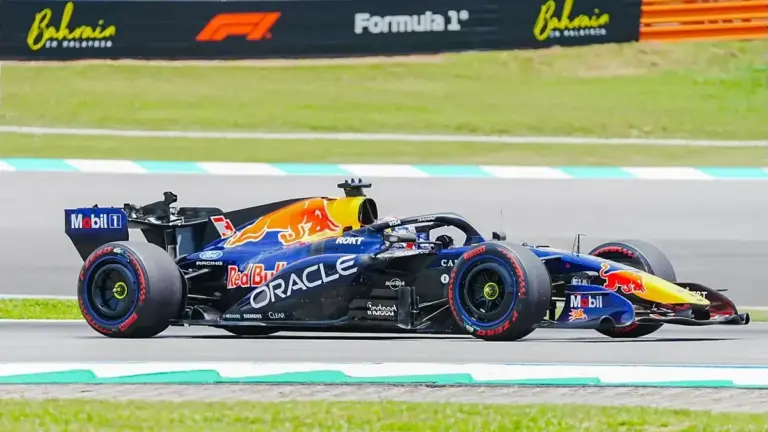
The FIA delivered its initial findings to the teams on the morning of the Monaco Grand Prix. It identified Red Bull Powertrains, not Mercedes, as the benchmark manufacturer. This was despite Mercedes having won every race in 2026 up to that point.
Mercedes was granted one upgrade opportunity after being judged more than two per cent behind Red Bull’s power unit output. Ferrari, Audi and Honda each received two upgrade opportunities.
The root of the confusion is what the ADUO measurement actually captures. It is based solely on the ICE component. It ignores the electrical elements of the power unit, which account for nearly half of the total output.
A manufacturer can lead the championship while still qualifying for development concessions because the system only looks at part of the picture.
Red Bull team principal Laurent Mekies was direct when addressing the media in Barcelona. “We do not see one single data sample that indicates that we would have an advantage over our friends at Mercedes,” he said.
The FIA subsequently agreed to review its calculations and verify the data from power sensors fitted to each car.
That review is ongoing. But the controversy gave Binotto an opening to raise a broader question about the system’s design.
Binotto’s case for a different approach
Binotto’s argument rests on a straightforward observation. Formula 1 already uses a standings-based convergence model on the chassis side.
The Aerodynamic Testing Restrictions give teams at the bottom of the constructors’ championship more wind-tunnel and CFD development time. The frontrunners receive less. It is a well-established mechanism, and the grid accepts it.
Binotto sees no reason why the power unit side should work differently.
“There is an ADUO as well for the chassis, which is called differently. But as a matter of fact, if you are behind on the standings, you’ve got more opportunity in wind tunnel timing, etcetera. And that’s a way for teams somehow to converge,” he told the media at Barcelona.
His concern with the current ADUO framework is that measuring raw kilowatts from the ICE alone produces a skewed picture.
“Now, when we discuss the power unit regulations, what would have been the way to assess it? It was decided pure kilowatts. Is that the right way to do it? We may argue again,” Binotto said.
His alternative would use championship standings as the basis for both power unit and chassis development allocations.
“So maybe we should do something very similar to the chassis, where you base it on standings of the previous seasons, because if the purpose of convergence is to have a closer field, maybe that’s the most straightforward, and you would have a unique system framework between chassis and power units,” he explained.
The practical appeal of that approach is clear. It eliminates the contradiction the current system has created, where the dominant team on track can simultaneously qualify for engine development help.
“So, the best teams not having advantages, the slowest teams or slowest manufacturers to have some more opportunities,” Binotto said.
Binotto was careful, though, not to position this as a challenge to the FIA. “But that’s the way the regulations are written today, and I think we need to fully trust the FIA,” he said.
He then pointed to the future rather than the present: “I’m sure that the FIA has done the right assessment. What should we do for the future? Should we establish a different type of ranking? Maybe yes.”
For Audi, the ADUO findings carry direct consequences. The team has been awarded the maximum two upgrade opportunities, but Binotto has been measured about what that means in practice.
“Often, maybe people may believe that once you’ve got ADUO, maybe the race after you may introduce 10 kilowatts. That’s not what will happen,” he cautioned.
Audi’s target remains sustained competitiveness by 2030, and Binotto sees the current regulatory conversation as part of building the right conditions to get there.