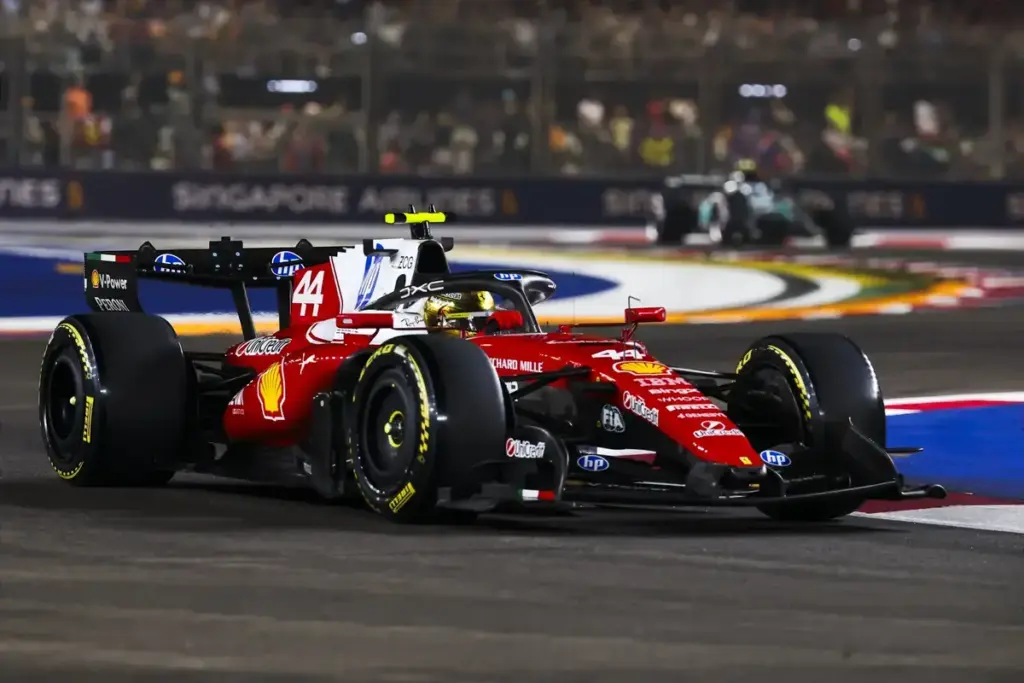

Formula 1’s proposed return to V8 engines is taking shape, with the FIA considering turbo-hybrid power units producing around 900bhp from the combustion engine.
The proposals form part of discussions over the next generation of F1 engine regulations, which could be introduced in either 2030 or 2031. According to BBC Sport, an FIA document sent to Formula 1’s six power-unit manufacturers outlines plans for a 2.0 to 2.3-litre turbocharged V8 combined with a less powerful hybrid system.
The aim is to produce simpler and cheaper engines while creating lighter, more responsive cars that place greater emphasis on the driver.
F1 targets lighter cars and lower engine costs
The proposed hybrid system would have a recovery capacity of 200kW, down from the 350kW available under the current regulations. Of that, 100kW – approximately 134bhp – would be continuously available, with another 100kW reserved for a push-to-pass or overtaking mode. The combustion engine would provide around 900bhp, while Formula 1 would continue using fully sustainable fuels.
Reducing weight is another major target, with the FIA seeking to make cars around 80kg lighter and address a long-standing concern over the size and weight of modern F1 machinery. Costs could also fall significantly. The proposal suggests the engine budget cap could eventually be cut by 50% as part of the drive to simplify the power units and make the regulations more attractive to manufacturers.
However, none of the details have yet been written into the regulations. Manufacturers must still agree on several areas, including whether the new formula begins in 2030 or 2031, before a final proposal can progress.
Discussions are expected to continue before the plans potentially go before the FIA World Motor Sport Council in December.
Source: BBC Sport
For the latest Formula 1 technical developments, team news and stories from across the racing world, follow all the motorsport news on Read Motorsport.




Comments.
Loading comments…