Ferrari is moving quickly after the opening round of the 2026 F1 season. The Italian team is sending three versions of its unusual “Macarena” rear wing to Shanghai for the next race, hoping the design can help it close the early gap to Mercedes.
The decision comes just days before the Chinese Grand Prix. According to Autoracer Italy, the team will test the first FIA-approved specification of the wing during the sprint weekend at the Shanghai International Circuit.
Ferrari sits second in the constructors’ standings after the first race of the season. Mercedes leads with 43 points, while the Maranello squad has 27.
Ferrari’s Australian GP result sets the tone
The season began with a strong showing for Ferrari at the Australian Grand Prix.
Charles Leclerc launched into the lead at the start, showing the SF-26’s early speed under the new rules. His teammate, Lewis Hamilton, also ran near the front throughout the weekend.
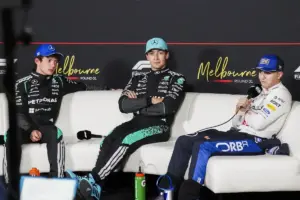
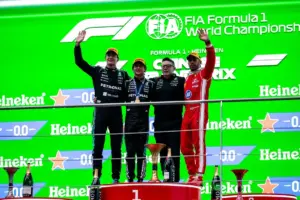
The race ended with a Mercedes 1-2 finish. George Russell won ahead of teammate Kimi Antonelli, while Leclerc and Hamilton finished third and fourth.
Team boss Fred Vasseur said the result gave the team a clearer picture of the fight ahead.
“Today we know a little more,” Vasseur said, according to Autoracer Italy. “The goal is to work harder and more intensely than the others, hurry up and get to Mercedes as soon as possible. We’ll have updates soon. Already in China? Difficult, only a week to go.”
What is the Macarena wing?
The Macarena rear wing is one of the most discussed designs to appear under Formula 1’s new 2026 rules.
The regulations now allow active aerodynamics. The flaps on the front and rear wings can open or close during a lap. When closed, they create downforce but also drag. When open, they reduce both drag and downforce to improve straight-line speed.
Ferrari’s version surprised teams during pre-season testing in Bahrain. When the rear wing opened on the straight, the structure appeared unusual.
The reason became clear in corner mode. The wing rotates fully back into its closed position. Reports say Ferrari found a rule gap that does not require the wing to stay upright when the active system operates. The team can effectively run the rear wing upside down on the straight, similar to an aircraft wing.
Vasseur jokingly named the system the “Macarena” because its movement looks like the arm motions from the dance.
Why the Macarena wing could make a difference
Ferrari designed the wing to reduce drag and create lift when it opens on the straight.
Lower drag can also reduce the load on the tyres. That can allow higher top speeds and more efficient straight-line running.
The system also works with another Ferrari idea, the exhaust wing. That component extends the diffuser area and uses exhaust gases to help push airflow toward the rear wing zone, increasing downforce.
The Macarena wing helps offset the drag that this exhaust-blown concept creates. Together, the two parts give Ferrari more flexibility when tuning the car’s balance.
Despite the attention during testing, Ferrari did not race the wing in Melbourne. The team chose a more standard setup at Albert Park to gather early race data with the SF-26.
Three specs heading to Shanghai
Autoracer Italy reports that Ferrari will now bring three versions of the Macarena wing to China.
Each version is part of the first FIA-validated specification of the concept. Shipping multiple variants for a race just one week after the opener is an aggressive move and suggests strong confidence inside the team.
The report also says Ferrari plans a more developed version of the wing for the Canadian Grand Prix in Montreal in May. The strategy appears simple: introduce the concept in Shanghai, collect data, and then bring a refined upgrade later.
Other factors also shaped the timing. Autoracer Italy noted that uncertainty around events in the Middle East could affect the April Bahrain races, which Ferrari had originally targeted for its first upgrades.
Shanghai may suit the new wing. The circuit has four dedicated straight-mode zones and a back straight that stretches about 1.2 kilometres.
Ferrari will face one major limit. The sprint weekend format allows only one practice session before qualifying.
That leaves little time to study the wing on track. Still, Ferrari’s early push shows the team believes the fight with Mercedes could tighten quickly.