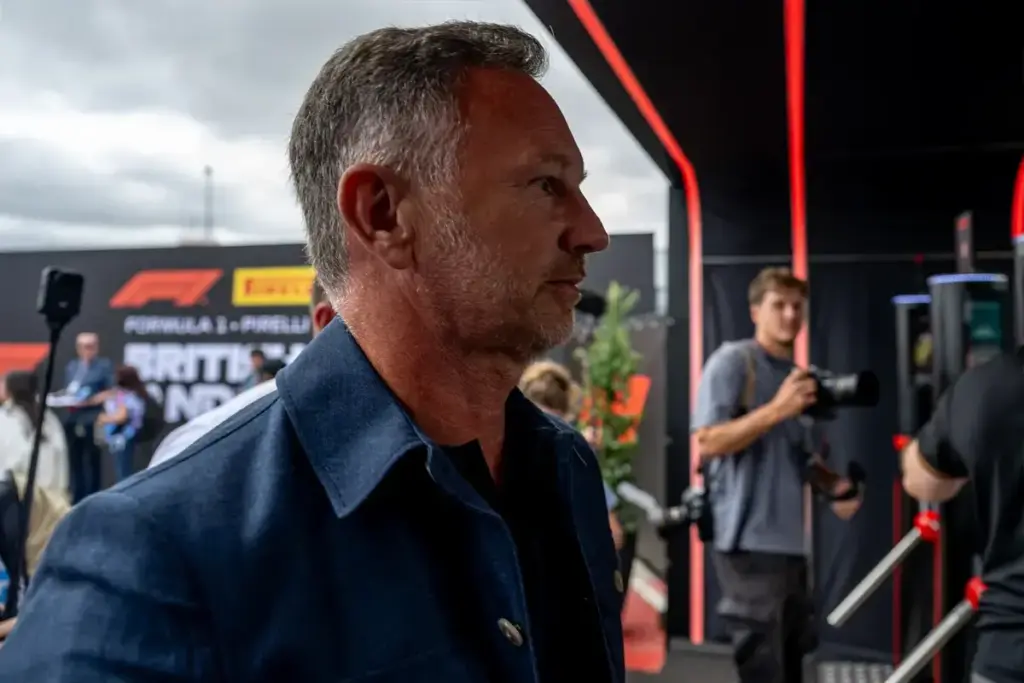

Former Red Bull boss Christian Horner believes Formula 1 has lost part of its traditional leadership culture as the role of team principal moves away from powerful, long-serving figures with a personal stake in their teams.
Horner spent 20 years in charge of Red Bull before leaving in 2025, having overseen the team through both the Sebastian Vettel and Max Verstappen championship eras. Speaking in an exclusive interview with Autosport, he reflected on how different the job had become by the end of his time in the paddock.
“The job title of team principal has morphed into something very different,” Horner told Autosport. Looking around the grid shortly before his Red Bull departure, he believed only a handful of senior figures still fitted what he regarded as the traditional model.
“I would probably say there was only probably Toto and myself, and to a degree Zak, as the old-school type of team leader,” he said. Horner was referring to Mercedes boss Toto Wolff and McLaren Racing chief executive Zak Brown.
Horner says F1 decision-making has changed
When Autosport put it to Horner that most modern team principals were now effectively employees, he agreed, but argued that the change had affected how decisions were made within the sport.
“Largely they are, but they’re also obsessed with self-preservation and competitiveness of their own entity,” Horner said. “And I think that’s what Formula 1 has lost, is that it’s not the stakeholders now that are making decisions.”
Wolff remains an obvious exception to the trend Horner describes. The Austrian combines his position as Mercedes team principal and chief executive with a shareholding in the team, giving him a different relationship with the business from many employed team principals elsewhere on the grid.
Brown also occupies a broader position at McLaren as chief executive of its racing operation, with Andrea Stella serving as F1 team principal. Horner’s reference appears to be to Brown’s influence over the wider organisation rather than his formal job title.
Horner’s own role at Red Bull grew considerably after he took charge when the team entered F1 in 2005. He remained at the helm as Red Bull developed from a new constructor into a multiple championship winner and later expanded its Milton Keynes operation to include Red Bull Powertrains.
That expansion reflects how much the structure of an F1 team has changed during the past two decades. Modern operations can employ more than 1,000 people, with technical, commercial and sporting responsibilities increasingly divided between specialist senior figures rather than concentrated around one team boss.
For Horner, however, the bigger change is not simply the size of the organisations. His argument to Autosport is that fewer of the people making decisions in modern F1 have the same direct stake in their teams as some of the figures who previously dominated the paddock.
For the latest Formula 1 news and analysis, visit Read Motorsport.


Comments.
Loading comments…