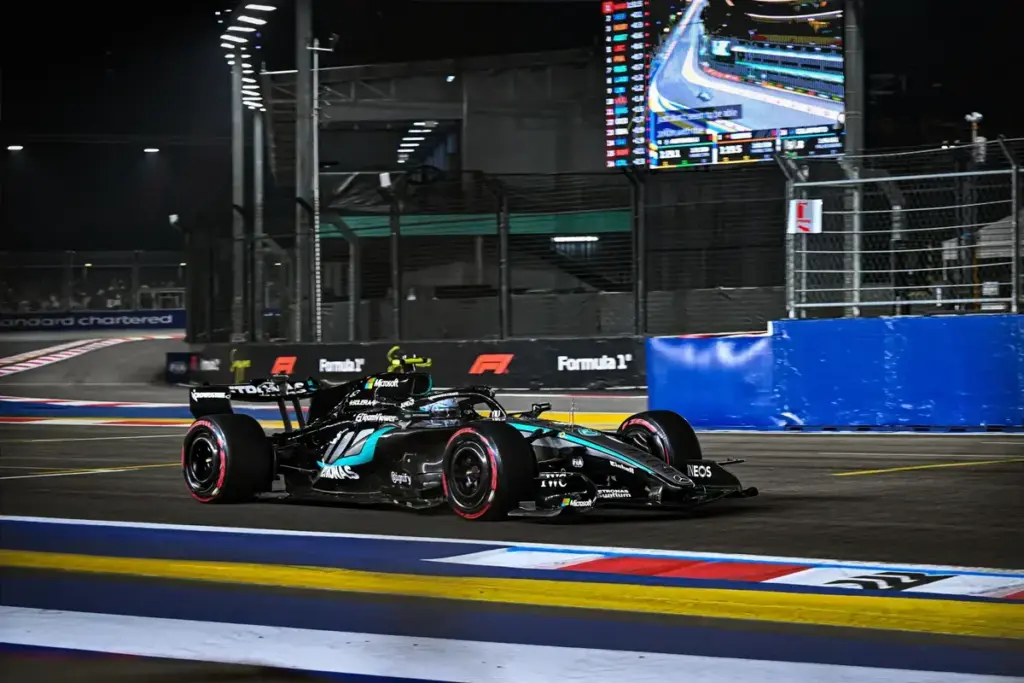

Mercedes arrived in Singapore with two versions of its W17 and an upgrade it still did not fully understand. By the end of the weekend, the team was convinced the newer car was quicker.
Kimi Antonelli kept the package introduced at Sepang, while George Russell returned to the older specification last used in Azerbaijan. On Friday, that comparison didn’t flatter the new parts: Russell led Singapore practice and later qualified second for the Sprint, with Antonelli down in seventh.
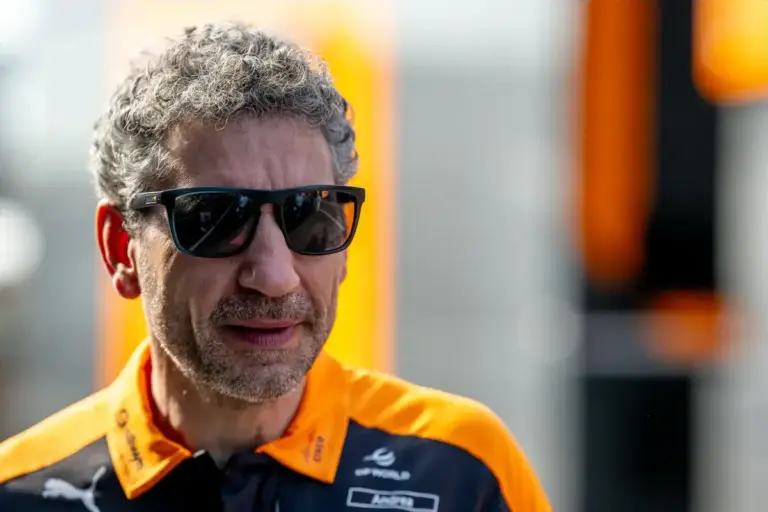
It was enough to raise an obvious question over whether Mercedes had actually improved its car. Trackside engineering director Andrew Shovlin’s verdict after the Grand Prix was emphatic: by the end of the weekend, Antonelli’s package was “clearly the faster of the two”.
Why Mercedes ran two different cars
Mercedes’ latest package features changes to the floor and sidepods, with the team looking for more performance through the faster sections of a lap. Sepang had given them a messy first look at it. Antonelli finished second, and Russell had been running third before an engine failure, but the abrasive track surface and behaviour of the tyres made it difficult to isolate exactly what the new parts had changed.
Singapore offered another chance, and Mercedes chose not to put both drivers on the same specification. Russell went back to what he already knew; Antonelli continued with the upgrade.
Russell’s car was easier to get into a competitive window almost immediately. Antonelli had a less comfortable time and described its behaviour as unpredictable during the Sprint part of the weekend, when Mercedes’ contrasting fortunes were among our five things learned from Singapore Sprint Qualifying.
Mercedes’ problem was not finding more downforce from the new package. It was giving Antonelli a car he could use consistently, with the Italian finding himself in a particularly narrow set-up window.
Mercedes changes direction
Rather than fine-tuning what it already had, Antonelli’s side of the garage made a much bigger change before Grand Prix qualifying. “We went completely opposite with the set-up, and the car was in a happier place,” Antonelli said.
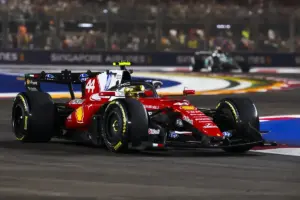
The difference showed quickly. He qualified fourth, less than two-tenths from Max Verstappen’s pole time, then finished third on Sunday behind Verstappen and Charles Leclerc.
Antonelli still wasn’t describing a forgiving racing car. The operating window remained “very small”, but Mercedes had finally found a set-up that allowed him to make better use of the revised package.
That was enough for Shovlin to nail the comparison. Russell had looked stronger with the old car early in the weekend, but Mercedes’ data and Antonelli’s later performance pointed towards the upgrade.
The result also gave the team something it had not managed cleanly at Sepang: a full race distance with the new specification. Antonelli’s third place came as Russell recovered from 19th on the grid to ninth, with the full classification in our Singapore Grand Prix report.
More time to work in Austin
Mercedes will take that information to a rather less compressed weekend in Texas. Singapore’s Sprint format gave teams only one practice session before competitive running began, whereas the United States Grand Prix returns to three practice sessions.
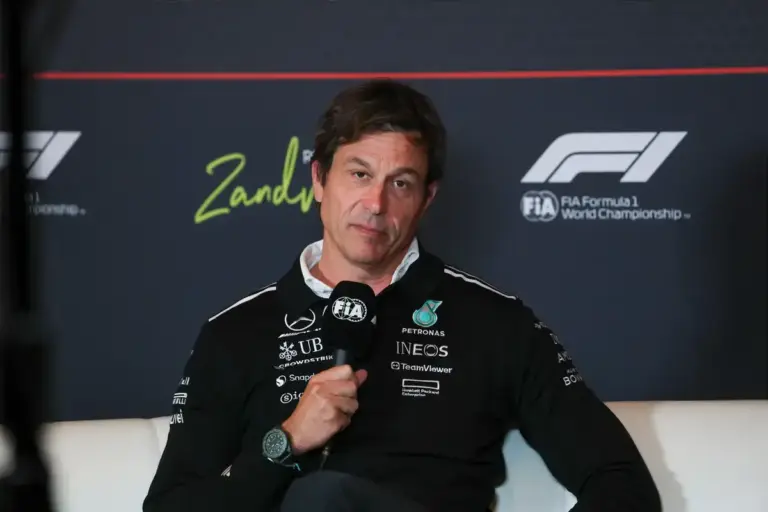
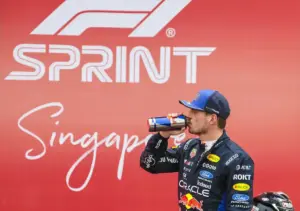
There is another reason Mercedes cannot afford to stand still. Max Verstappen has won consecutive Grands Prix at Sepang and Singapore, prompting Toto Wolff to describe the fight with Red Bull as “full on” after the Marina Bay weekend.
Antonelli has rather more immediate business in Austin. He heads to Texas 102 points clear of Russell and can win his first Formula 1 world championship there.
Our Austin title permutations set out what he needs from Russell and Lewis Hamilton, while the remaining 2026 F1 schedule has the dates and UK start times for the final six rounds.
For the latest Formula 1 news and analysis, visit Read Motorsport.

Comments.
Loading comments…