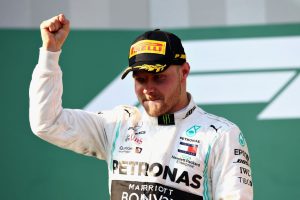
Formula 1’s 2016 season already felt like a turning point before Nico Rosberg stunned the paddock by retiring five days after winning the world championship.
It was the year Mercedes’ internal war reached its final act, Max Verstappen announced himself as something far bigger than a prodigy, Ferrari missed the step it thought it was ready to make, McLaren continued to search for daylight with Honda, and several teams fought for survival, identity or relevance in the midfield.
A decade later, 2016 looks even more significant. Some of its stories were dead ends. Others were the first pages of the F1 era we are still living through in 2026.
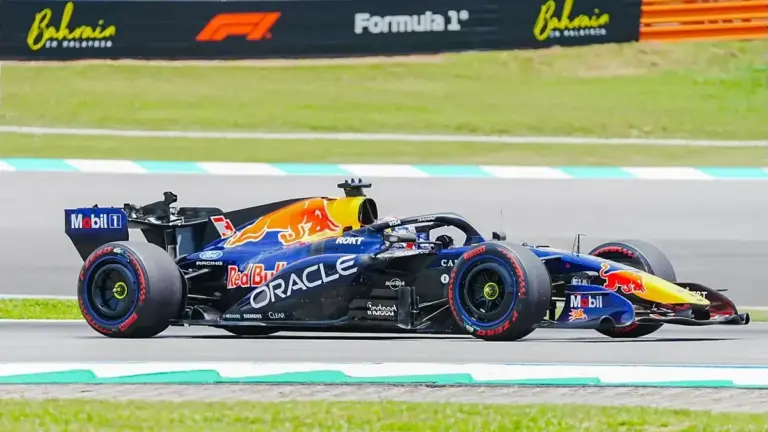
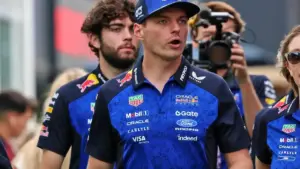
Read Motorsport’s original Max Verstappen becomes a megastar piece captured the moment most clearly. At the time, his Spanish Grand Prix win still felt almost unreal: an 18-year-old, newly promoted to Red Bull, resisting Kimi Raikkonen’s Ferrari and becoming the youngest race winner in world championship history.
With hindsight, Barcelona was not a shock result so much as a warning. By 2026, Verstappen had turned that first win into a defining modern F1 career, winning four world championships with Red Bull and becoming the reference point for a generation. The aggressive defending, the wet-weather feel seen so vividly in Brazil 2016, and the refusal to leave space unless forced to all survived. What changed was the machinery around him and the scale of the results.
The Red Bull fork in the road
Verstappen’s rise came at Daniil Kvyat’s expense, and that remains one of the sharpest sliding-doors moments of the decade. The original rise and fall of Daniil Kvyat feature was written when his Red Bull demotion was still raw, and when there was still a chance his return to Toro Rosso might become a reset rather than the beginning of the end.
It never quite did. Kvyat stayed in the Red Bull family, lost his seat, then returned with Toro Rosso in 2019 and produced a superb podium at the German Grand Prix. That day mattered because it proved the driver Red Bull had dropped was still capable of delivering when the race came alive.
But the long-term path had closed. Kvyat raced for AlphaTauri in 2020, was replaced by Yuki Tsunoda for 2021, and then moved into a wider racing life that included Alpine reserve work, NASCAR Cup appearances, Lamborghini’s Hypercar programme and Formula E tests. The Red Bull decision still looks brutal, but it also looks like one of the most consequential calls of the hybrid era.
The halo argument ended on impact
Few 2016 debates have aged as dramatically as the halo. The original Hello ‘Halo’ article caught the mood of the time: concern over aesthetics, questions over extraction, and unease about whether Formula 1 was about to change the visual grammar of an open-cockpit car.
The halo became mandatory in 2018. The argument did not disappear overnight, but the evidence arrived quickly. Charles Leclerc’s Sauber was protected when Fernando Alonso’s McLaren launched over it at Spa in 2018. Romain Grosjean’s Bahrain crash in 2020 then changed the tone of the debate completely, as the halo helped protect him when his Haas pierced the barrier and burst into flames.
Further incidents involving Lewis Hamilton at Monza in 2021 and Zhou Guanyu at Silverstone in 2022 only hardened the case. What looked like a compromise in 2016 became part of F1’s safety identity. The device that many feared would make the cars less recognisable became one of the clearest examples of the sport getting a life-and-death call right.
Rules, control and the FIA problem
The season also exposed how quickly F1 can make itself look confused when rule changes are introduced without clarity. The FIA ruling nightmare story focused on elimination qualifying, radio restrictions and track limits, three issues that managed to irritate fans, drivers and teams in different ways.
Elimination qualifying disappeared almost as quickly as it arrived. The radio clampdown was eased. Track limits, though, never really went away. By the 2020s, the sport had a more defined system for deleted laps and penalties, but also weekends where track limits became the story rather than the racing.
The broader governance theme also grew after 2016. Liberty Media’s arrival changed the commercial tone of F1, Ross Brawn helped shape the next wave of sporting reform, and the 2021 Abu Dhabi finale forced another reckoning over race control. The lesson from 2016 still applies in 2026: fans can accept complicated rules if they are coherent, but they lose patience quickly when the sport appears to be improvising in public.
Sauber’s survival became Audi’s entry
One of the most quietly important stories of 2016 was Sauber simply making it to the end of the season. The original Sauber battle back from the brink piece recalled a team that needed Felipe Nasr’s ninth place in Brazil to jump Manor and protect vital prize money.
At the time, Longbow Finance’s takeover looked like a rescue. In hindsight, it was the first step in keeping Hinwil alive long enough for a much bigger future. Sauber later raced under the Alfa Romeo name, gave Charles Leclerc his rookie F1 season, became home again for Kimi Raikkonen, and then moved toward its most significant transformation of all.
Audi chose Sauber as the base for its Formula 1 entry. By 2026, the Swiss operation had become Audi Revolut F1 Team, still rooted in Hinwil but now carrying the weight of a full manufacturer project. The contrast with 2016 is stark. The team that once survived by two points became the platform for one of the grid’s biggest strategic bets.
The midfield was the real theatre
The manic midfield was where much of 2016’s best racing lived. Force India, Williams, Toro Rosso, McLaren, Haas, Renault, Sauber and Manor all had different pressures, but together they made the season feel deeper than the Mercedes title fight alone.
That midfield has since been turned inside out. Force India reached impressive heights before collapsing into administration in 2018, then became Racing Point and later Aston Martin, whose current direction is now under fresh pressure through Aston Martin’s upgrade gamble. Williams fell hard, changed ownership and began rebuilding. Renault became Alpine. Toro Rosso became AlphaTauri, then Racing Bulls. McLaren went from Honda frustration to a full competitive revival and, by the mid-2020s, title-winning form again.
In 2016, the midfield was where drivers made reputations. In 2026, it is still where teams are made and unmade, but the budget cap has changed the meaning of being there. A strong midfield season can now look like a launchpad. A bad one can look like a warning siren.
Haas proved the model, then had to rebuild it
Haas arrived in 2016 with a model F1 had not seen in quite that form: a new American entrant leaning heavily on Ferrari partnership, Dallara chassis support and a lean operational structure. The original Haas make a mark in debut season article rightly treated sixth in Australia and fifth in Bahrain as remarkable.
The decade since has been less linear. Haas finished fifth in the Constructors’ Championship in 2018, then stumbled through car-concept problems, sponsor chaos, lean years and the sacrificed 2021 campaign. Kevin Magnussen’s shock Brazil pole in 2022 was a reminder of the team’s capacity to produce moments, but not yet proof of a sustained breakthrough.
The most important reset came when Guenther Steiner left and Ayao Komatsu stepped up as team principal for 2024. By 2026, Haas had Esteban Ocon and Oliver Bearman in the car and Toyota Gazoo Racing as title partner, even if Komatsu’s latest Haas warning after Barcelona shows how fragile the rebuild can still look. That does not erase the original question from 2016. It sharpens it. Haas has survived; the next challenge is becoming consistently more than a survival story.
Raikkonen, rookies and the careers that split apart
Kimi Raikkonen’s 2016 was framed at the time as a revival, and the rebirth of Raikkonen piece caught why. He was no longer just Ferrari’s quiet points collector. He had rediscovered enough sharpness to keep Sebastian Vettel honest and remind the paddock why Ferrari had kept faith.
His late Ferrari chapter still had one great moment left. Raikkonen won the 2018 United States Grand Prix, his first F1 victory since 2013 and his last in the championship. He then returned to Hinwil with Alfa Romeo, raced until the end of 2021, and left F1 with 349 Grand Prix starts. His post-F1 life, including selective NASCAR outings, has fitted the same pattern as his racing persona: low fuss, high interest, little appetite for theatre.
The rookie class of 2016 scattered even more dramatically. Read Motorsport’s rating the rookies introduction grouped Jolyon Palmer, Pascal Wehrlein, Rio Haryanto and Esteban Ocon together at the start of their F1 journeys. Ten years on, Ocon is the one who turned that chance into a long-term Grand Prix career.
Palmer’s Renault stint ended in 2017. Haryanto never returned to a full-time F1 seat. Ocon moved through Force India, Renault and Alpine, won the 2021 Hungarian Grand Prix, and by 2026 was part of Haas’s experienced core. Wehrlein’s path was the most revealing, because the original Wehrlein becomes the new Bianchi story reflected how highly he was rated inside the Mercedes orbit.
The Mercedes seat opened when Rosberg retired, but Wehrlein did not get it. He moved to Sauber, scored points, left F1 after 2017 and rebuilt in Formula E, eventually becoming a world champion with Porsche. His career did not become the F1 story many expected, but it became a serious works-driver success story somewhere else.
What 2016 really left behind
The easy version of 2016 is that it was Rosberg’s year. That is true, but it is not enough. It was also Verstappen’s arrival as an F1 force, Kvyat’s sudden derailment, the first public fight over halo, Sauber’s escape act, Haas’s proof of concept, McLaren’s long road back, and the beginning of several career paths that would look completely different by 2026.
It was a season full of unfinished business. Some of it was resolved quickly. Some of it took years. Some of it, like track limits and FIA consistency, still follows the sport around.
Ten years on, 2016 feels less like a closed chapter and more like the moment modern Formula 1 started showing its next shape. The cars, teams and names have changed, but many of the questions from that season are still recognisable. Who gets protected by the system? Which teams can turn survival into ambition? Which young drivers are real? How much control should the rule-makers have over the show?
Back then, those questions were wrapped inside a Mercedes title fight. In 2026, they look like the foundations of the F1 decade that followed.