

2016 saw the rise and fall of one of Formula One’s youngest and most tragic stars: Daniil Kvyat.
The 22-year-old entered the year off the back of a solid debut season with Red Bull Racing. The Russian outscored Daniel Ricciardo 95-92 and proved many of his critics wrong with a number of solid races including a maiden podium in Hungary.
However, some question marks still remained over Kvyat, particularly with Max Verstappen and Carlos Sainz waiting in the wings at Toro Rosso for their chance to drive for the big team. Helmut Marko sent out a stern warning pre-season, claiming he wouldn’t be afraid to drop one of Kvyat/Ricciardo if they didn’t perform.
Australia was a case of deja vu with another car failure on the way to the grid for the season opener, for the second consecutive year. In qualifying, he was eliminated in Q1, caught out by the new format and it was a similar story in Bahrain with a lowly 15th place in comparison, Ricciardo lined up fifth.
He made amends in the race with a brilliant fight back to seventh place, including a breathtaking move on Felipe Massa at the end of the race and then, in China, a ballsy start to the race saw him squeeze past the Ferraris into third place while his teammate leapt into the lead.
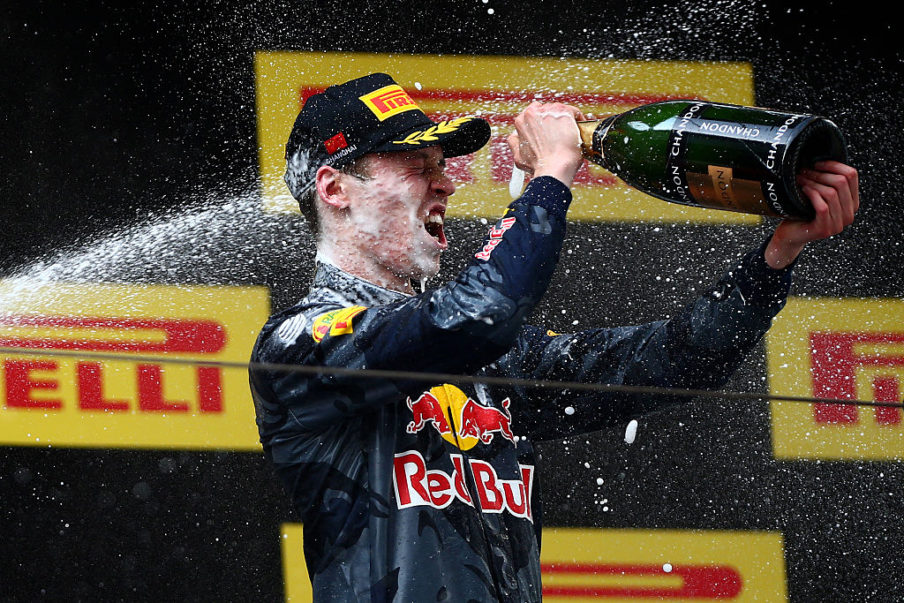
He would eventually lose out to Vettel but his teammate suffered a puncture while leading and the Russian scooped up his second career podium and first of 2016. He had a fiery exchange with Vettel post-race but held his own brilliantly and his efforts on and off the track earned him driver of the day.
Then came the Russian Grand Prix: a race that would provide the perfect excuse for Red Bull to promote their Dutch teenage superstar in order to fend off interest from Mercedes and Ferrari. Kvyat was just collateral damage but Red Bull clearly still had some faith in him, as he was handed the Toro Rosso seat for the rest of 2016.
This was arguably the most shocking story to come out the sport this season, bar Rosberg’s shock retirement. At the time, many questioned the decision and were sympathetic towards Kvyat. However, over the next 17 races, Red Bull was proved correct as Verstappen stole all the headlines and Kvyat faded into the background.
The Russian managed just three points finishes while at Toro Rosso in comparison his teammate Carlos Sainz who scored on eight occasions while as Kvyat‘s teammate. His second spell at Toro Rosso started reasonably well with a 10th place and the fastest lap at the Spanish Grand Prix.
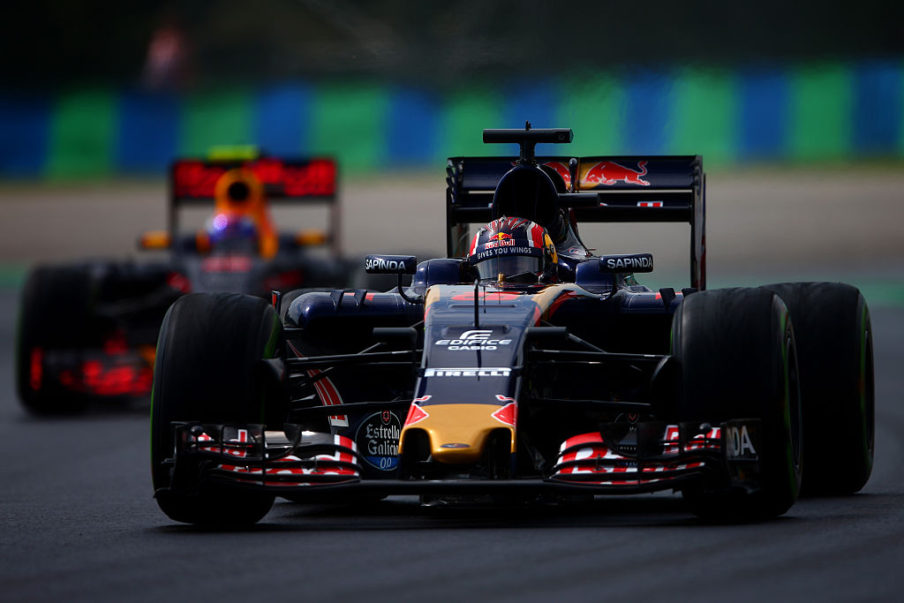 Though the tide soon changed, he hit Magnussen in Monaco while he was a lap down and earned himself a grid penalty for Canada. He looked set for points in Baku until his suspension failed. In Austria, he spun in qualifying and retired in the race with another mechanical issue.
His qualifying issues also continued as he was regularly eliminated in Q1 and was made to look distinctly average by his teammate Sainz. Singapore offered a much-needed confidence boost as he fiercly defended his position from Verstappen. This was proof that the 22-year-old wasn’t ready to give up on Formula One.
Despite most people believing Kvyat would be making way for Pierre Gasly in 2017, Toro Rosso announced in Austin that he would continue to drive for the Italian team next year. This provides the Russian with one more chance to prove he deserves to remain in the sport.
Kvyat still has youth on his side but faces a real uphill struggle next season. It might be more of a case of putting himself in the shop window for others teams rather than trying to convince Red Bull to re-sign him. Even if Verstappen or Ricciardo were to move on, it would be Sainz and not Kvyat that would get the first promotion.
What happened since 2016?
Kvyat did get more time in the Red Bull system, but the long-term picture proved just as unforgiving as it looked at the end of 2016. He stayed with Toro Rosso into 2017 before losing his seat, then rebuilt enough trust to return with the team in 2019.
That comeback produced one of the finest days of his F1 career: a podium at the chaotic 2019 German Grand Prix, giving Toro Rosso its first top-three finish since Sebastian Vettel’s Monza win in 2008. It was a reminder that the speed and racecraft had not disappeared, even if the Red Bull promotion path had closed.
Kvyat raced for AlphaTauri in 2020, scored a strong fourth at Imola, and was replaced by Yuki Tsunoda for 2021. Since then his career has moved into a broader motorsport chapter, with reserve work at Alpine, NASCAR Cup starts, Lamborghini’s Hypercar programme in the World Endurance Championship and Formula E rookie test outings with DS Penske. The rise-and-fall label still fits his Red Bull story, but it no longer tells the whole story of his racing life.

Comments.
Loading comments…