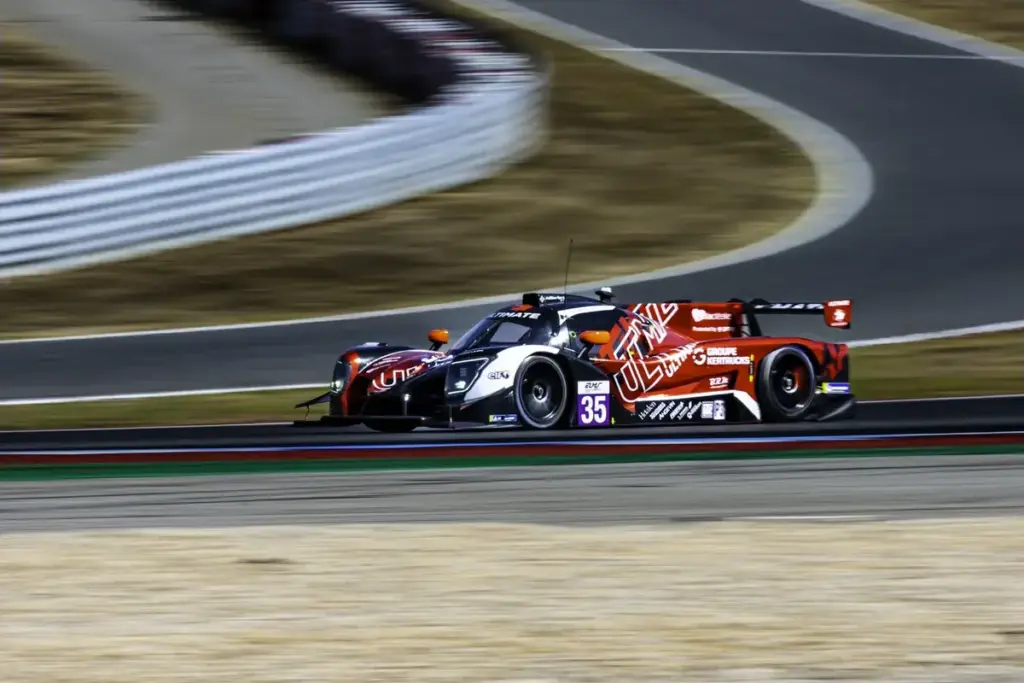

- Antonio Felix da Costa highlights the Formula E / Le Mans pathway.
- More Formula E stars are joining major Hypercar programmes.
- Manufacturers increasingly value Formula E’s technical driver skillset.
There was a time when Formula E was treated as motorsport’s slightly awkward cousin. Interesting? Definitely. Important? Maybe.
A destination for drivers still capable of winning some of the biggest races in the world? That was a harder sell.
Not anymore.
Antonio Felix da Costa’s move into Alpine’s Hypercar programme is another sign that Formula E and Le Mans are no longer living in separate universes. The Portuguese driver is a Formula E champion, a Le Mans LMP2 winner and now part of one of the most ambitious manufacturer projects in the World Endurance Championship.
That is not a novelty booking.
It is a clue.
Because da Costa is not alone. Stoffel Vandoorne remains part of Peugeot’s Hypercar plans, while Nick Cassidy has also joined the French manufacturer’s WEC line-up. Jean-Eric Vergne has been part of the same wider Peugeot picture too.
Suddenly, the pattern is difficult to ignore.
Why Le Mans makes sense
For Formula E drivers, Le Mans offers something different.
Formula E is sharp, technical and often brutally unforgiving. But its races are short, its circuits are tight and its wider profile still does not always match the quality of the drivers involved.
Le Mans is another beast entirely.
It has history. It has scale. It has darkness, fatigue, traffic, strategy and the small matter of trying to keep a hugely complex car alive for 24 hours.
Not exactly a gentle weekend away, then.
But that is precisely why it appeals.
For drivers like da Costa, Vandoorne and Cassidy, endurance racing offers a stage that rewards intelligence as much as speed. It asks for adaptability, patience and technical understanding.
That sounds suspiciously like the modern Formula E skillset.
Formula E’s quiet compliment
This is where the crossover becomes interesting.
Formula E drivers are not being picked up by WEC manufacturers because they have nowhere else to go.
They are being picked because they make sense.
They know energy management. They understand software-heavy racing. They are used to working closely with engineers and extracting performance from machinery where tiny margins matter.
In other words, they are useful.
Very useful.
That should be viewed as a compliment to Formula E, not a criticism of it.
For years, the championship had to fight for credibility. Now, some of its best drivers are being trusted with Hypercars at Le Mans.
That tells us plenty.
Formula E may still divide opinion. It probably always will.
But if Le Mans is motorsport’s ultimate test of speed, stamina and intelligence, then the growing number of Formula E stars heading there suggests one thing very clearly.
The electric championship is producing proper racing drivers.
And the rest of motorsport has noticed.



Comments.
Loading comments…