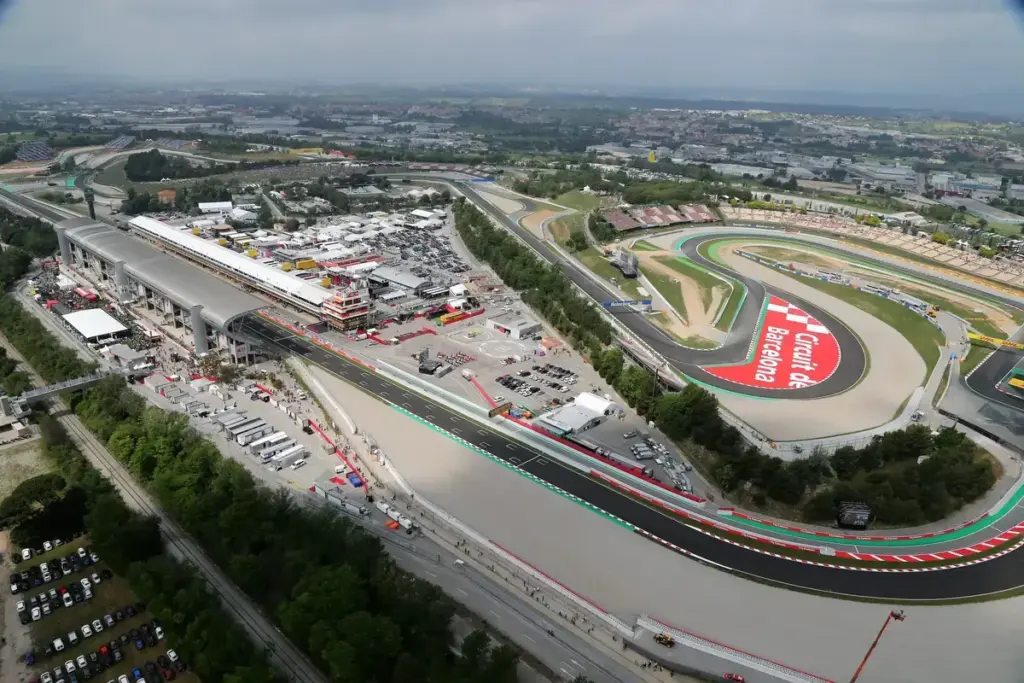

- The Circuit de Barcelona-Catalunya has hosted Formula One since 1991
- This weekend it hosts its final race under the Spanish Grand Prix name
- The race moves to Madrid in September – but Barcelona is not done yet
The Circuit de Barcelona-Catalunya has been on the Formula One calendar every single year since 1991. This weekend, it hosts a race under a new name – the Barcelona-Catalunya Grand Prix. The Spanish Grand Prix title has moved to Madrid. The circuit itself, happily, is going nowhere.
It is worth clearing up the confusion, because there has been plenty of it. This is not Barcelona losing the Spanish Grand Prix and waving goodbye.
The Montmelo-based circuit will continue as the Barcelona-Catalunya Grand Prix, alternating with the Belgian Grand Prix at Spa-Francorchamps, with races scheduled for 2028, 2030 and 2032. The name on the race has changed. The circuit’s place in Formula One has not.
The Spanish Grand Prix itself – the name, the prestige, the official title – moves to Madrid, where the brand new Madring circuit will host the race on 13 September. This semi-permanent street track in the Barajas district is 5.474km long, comprises 22 corners, and features what is set to become F1’s longest banked corner – the La Monumental curve – alongside a Monaco-esque tunnel. It promises to be a spectacular debut.
But this weekend belongs to Barcelona. And after 35 years, it deserves a proper appreciation.
A circuit built for testing, not always for racing
The circuit hosted its first Formula One race in 1991, just days after its official inauguration. Built at Montmelo, north of Barcelona, as part of the city’s broader Olympic transformation, it quickly became the sport’s go-to testing venue – smooth, technically demanding, and exacting on tyres in a way that exposed weaknesses teams could hide elsewhere.
Widely regarded as the perfect layout to assess the all-round capability of an F1 car, Barcelona has hosted more than 120 days of pre-season testing over the years.
The flipside was predictability. Overtaking was difficult, strategy often trumped spectacle, and the phrase “boring Barcelona” became a familiar paddock phrase. And yet when the circuit did produce drama, it produced it memorably.
Three races that produced…
That debut Grand Prix was instantly memorable, featuring a thrilling wheel-to-wheel duel between Ayrton Senna and Nigel Mansell down the main straight – a moment that has since become iconic in F1 history. Two of the greatest drivers of their era, side by side at racing speed, neither giving an inch. As opening statements go, the circuit could hardly have asked for more.
In 1996, Michael Schumacher was driving a Ferrari that was as slow as it was awkward-looking – and yet on a rain-soaked afternoon, he produced what many consider one of the greatest individual drives in the sport’s history.
He won his first race for Ferrari in extremely wet conditions by an extraordinary margin of 45 seconds. It was the afternoon that the watching world understood, properly, what Schumacher was capable of when conditions stripped everything else away.
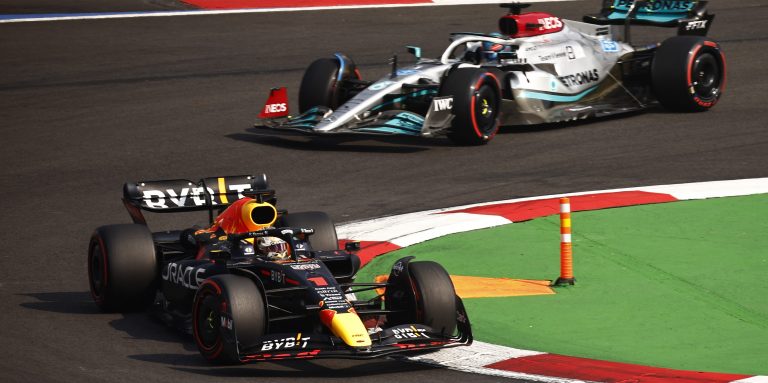
Then 2016. Max Verstappen, qualifying fourth, claimed his first Red Bull victory. At just 18 years and 228 days, he became the youngest driver to have won a Formula One race – promoted at the last minute from Toro Rosso, winning on debut for his new team, calmly picking through the chaos after his two Mercedes rivals collided at the first corner.
Nobody saw it coming. Nobody who watched it has forgotten it.
So yes – the Spanish Grand Prix name moves on. But Barcelona stays. The name on the door has changed. The track that produced those moments has not.


Comments.
Loading comments…