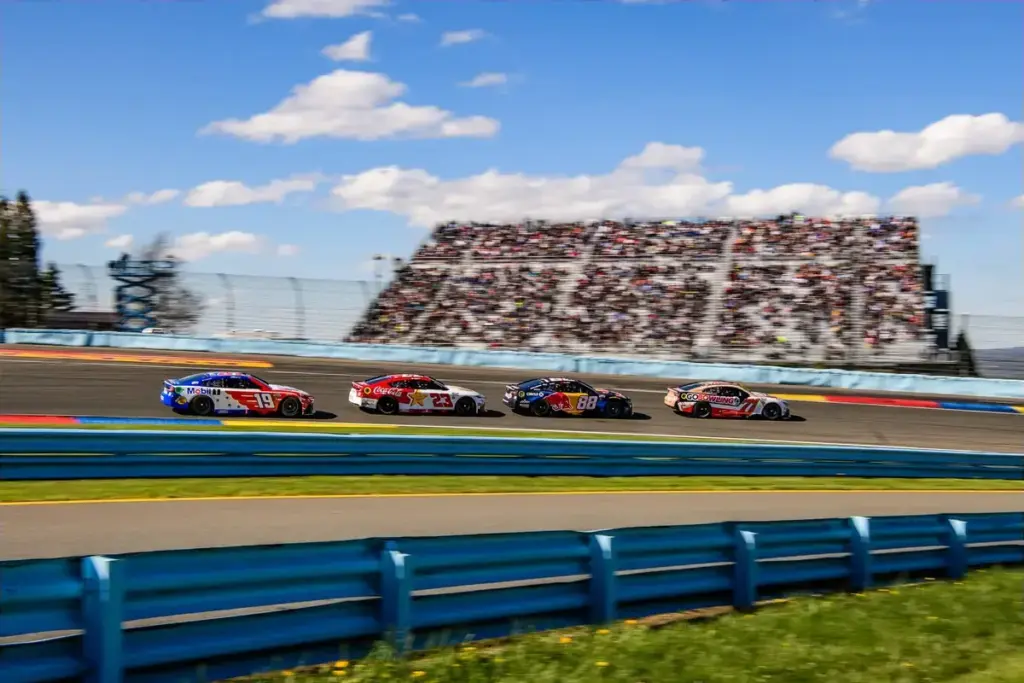

- NASCAR’s Cup Series on cable nearly tripled IndyCar’s audience on FOX network.
- O’Reilly Auto Parts Series outperformed IndyCar by 54%, exceeding 1 million viewers.
- NASCAR secondary series is major ratings winner, fueled by the rising rivalries.
NASCAR might be searching for complete consistency in its 2026 television numbers, but one thing became crystal clear after Watkins Glen weekend. Stock car racing still commands a significantly larger audience than North America’s biggest open-wheel series, the IndyCar, when the two go head-to-head.
And what makes the latest numbers particularly eye-catching is where they came from.
While IndyCar aired on the main FOX broadcast network for Saturday’s Sonsio Grand Prix at the Indianapolis Motor Speedway road course, NASCAR’s premier series was tucked away on cable television through FS1.
Yet despite the apparent disadvantage, Shane van Gisbergen’s Cup Series victory at Watkins Glen comfortably outdrew IndyCar’s weekend showcase.
NASCAR’s Watkins Glen numbers comfortably eclipse IndyCar’s FOX audience
According to the latest television data, Sunday’s Go Bowling at The Glen averaged a 1.06 rating and 1.928 million viewers on FS1, delivering a strong audience for Charlotte despite airing on cable television.
The race itself gave fans plenty to keep them invested. Ross Chastain captured Stage 1, while his Trackhouse Racing teammate Shane van Gisbergen dominated Stage 2, as Ty Gibbs mounted a late charge before the Trackhouse Racing star ultimately secured his first Cup Series victory of the 2026 season.
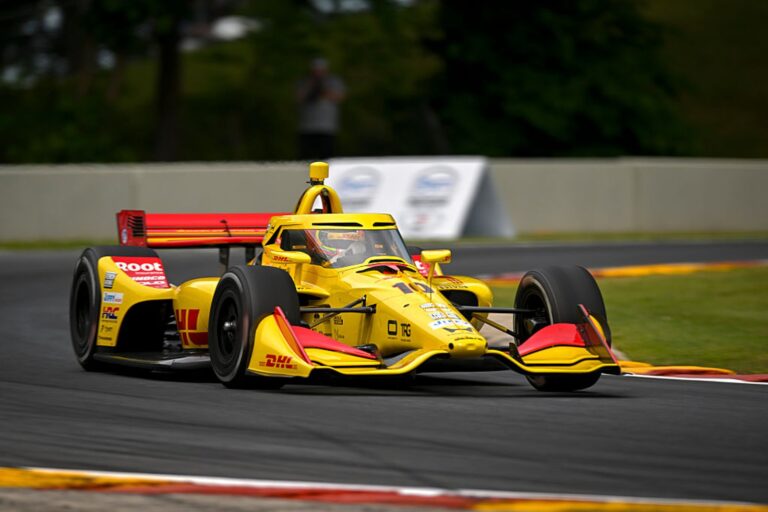
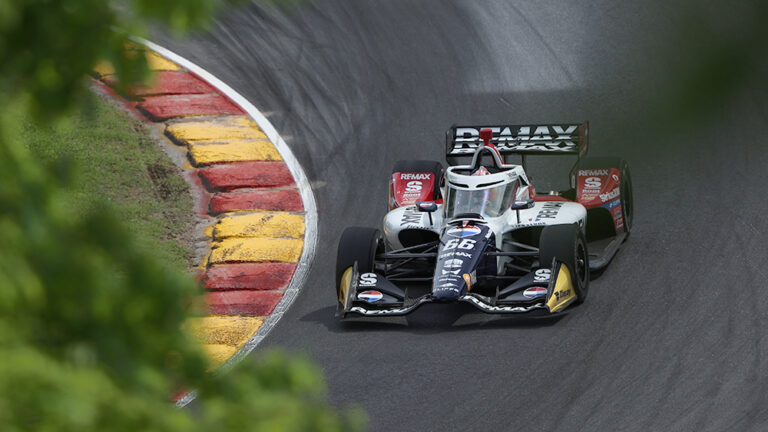
What stood out, however, was NASCAR’s performance relative to IndyCar. Saturday’s IndyCar Sonsio Grand Prix at the IMS road course averaged just 656,000 viewers on FOX, down from the 710,000 viewers the event drew the previous year.
Traditionally, broadcast television enjoys a major audience advantage over cable. Yet NASCAR nearly tripled IndyCar’s audience despite airing on FS1 rather than the primary FOX network.
Even more interesting, NASCAR’s O’Reilly Auto Parts Series continued its remarkable 2026 growth story, once again crossing the million-viewer mark and outperforming IndyCar by a significant margin. For a development series that not too long ago struggled for mainstream traction, the CW era is rapidly turning into one of the sport’s biggest success stories.
Saturday’s Mission 200 at Watkins Glen generated 1.013 million viewers on The CW, peaking at 1.188 million viewers during the closing laps as Connor Zilisch chased down Jesse Love to a dramatic finish.
In short, the data signifies that the first 13 O’Reilly races of the 2026 season have all eclipsed the one-million-viewer mark, even outperforming its own premier league, the Cup.
Not to mention, the CW’s O’Reilly broadcast reportedly outperformed IndyCar’s FOX audience by roughly 54 percent in total viewers.
The O’Reilly Series is officially on fire
While Cup Series ratings continue to draw scrutiny week to week, NASCAR executives have to feel encouraged by what is happening beneath the surface. Because the NOAPS is no longer behaving like a developmental product with niche appeal.
The combination of young stars, aggressive racing, shorter race windows, and The CW’s refreshing presentation style has created something NASCAR desperately needed: a consistently growing secondary platform that feels fresh instead of purely transitional.
On top of that, drivers like Zilisch, his friend/rival Love, and other emerging prospects are quickly becoming recognizable names among casual audiences, particularly as social media clips and highlight packages continue to circulate widely online.
For years, NASCAR’s lower-tier broadcasts constantly shifted between channels and time slots, making it difficult for casual viewers to follow consistently. Now, the CW has given the series stability and identity. And the ratings trend backs it up.
Just one week earlier at Texas Motor Speedway, the O’Reilly Auto Parts Series drew 1.110 million viewers on The CW, compared to the Truck Series’ 491,000 viewers on FS1.
Even the main event Cup Series race at Texas, which averaged 2.286 million viewers on FS1, highlighted just how impressive the secondary series has become relative to its platform and expectations. The Texas number also marked the most-watched spring Texas event for the series since 2018, further reinforcing that this is not a one-off spike tied to a single race or market.
Unlike the increasingly aero-sensitive nature of modern Cup racing, the O’Reilly field often delivers rawer, more chaotic battles where tire management, aggressive slide jobs, and younger drivers willing to take risks produce a far less predictable show.
The Watkins Glen finish perfectly captured that energy. Zilisch hunting down Jesse Love over the closing laps created the kind of natural tension motorsports executives dream about and viewers clearly stayed engaged until the very end.
At the Cup level, the numbers still remain somewhat complicated for NASCAR. Watkins Glen reportedly became the second-lowest-viewed Cup points race of the season, outside the Daytona Duels, though the event lacks a direct year-over-year comparison due to its scheduling shift from late summer to spring.
At the end of the day, the numbers tell a story IndyCar cannot afford to overlook. NASCAR not only outdrew the open-wheel series while racing on cable, but its O’Reilly Auto Parts Series also managed to beat IndyCar’s main-network audience.
Right now, that says everything about where the two brands stand in the battle for mainstream motorsports attention in America.



Comments.
Loading comments…