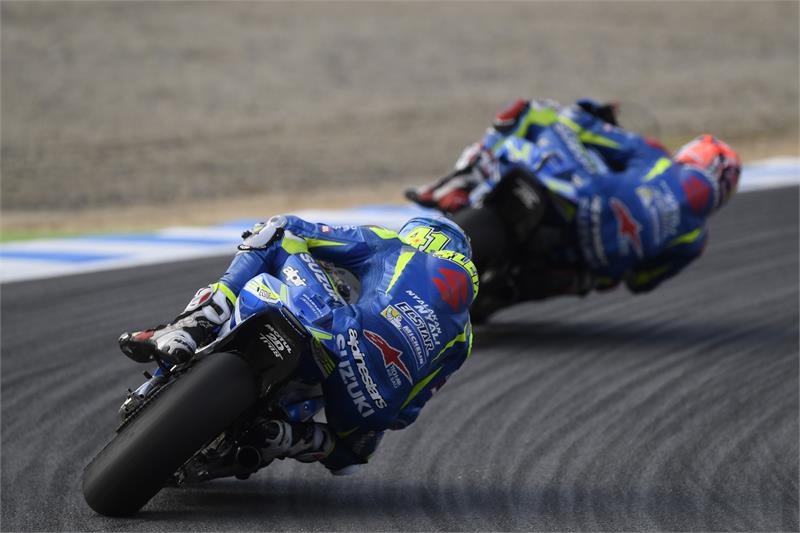

The 2016 MotoGP World Championship proved to be a breakthrough year for Suzuki Team Ecstar. After performing admirably in their debut season in 2015 on an underpowered GSX-RR, Maverick Vinales and Aleix Espargaro were rewarded with a more powerful engine and a fully seamless gearbox.
The GSX-RR could now stand up against the Honda RC213V and the Yamaha YZR-M1, and the improvements made to the bike were yielding results straight out of the blocks. Vinales put the GSX-RR third on the grid and within a tenth of pole man Jorge Lorenzo, though issues with drive grip saw the Spaniard drop to a distant sixth in the Grand Prix. Teammate Espargaro had been struggling all winter to get on with the 2016 bike despite its positive evolution and he failed to make the top 10 in the opening two races.
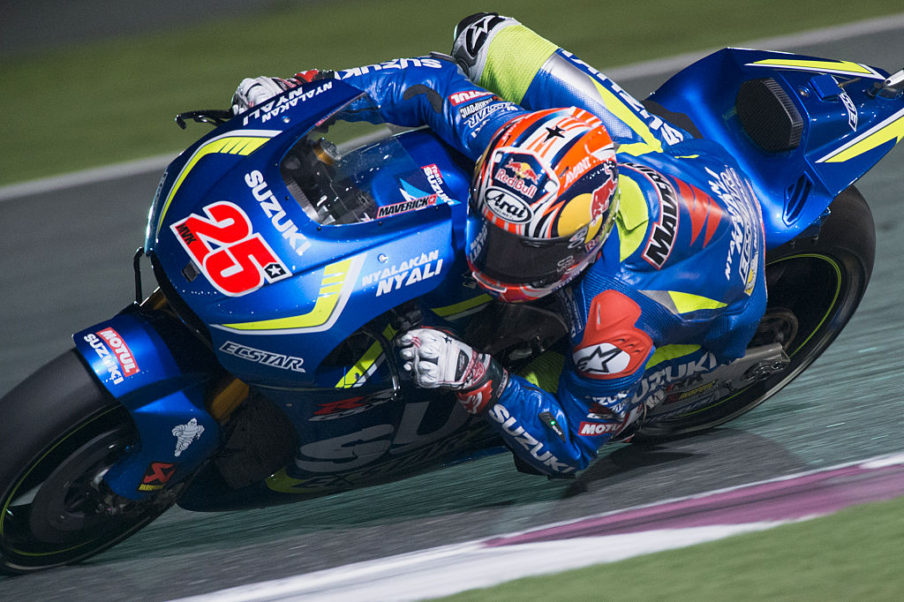
In Argentina, Vinales was running well in the second half of the race after his bike swap and was holding the two factory Ducatis at bay in third place. His maiden rostrum and Suzuki’s first since 2008 was in sight when he crashed in the closing stages. Austin yielded the team’s best double result since their comeback when Vinales and Espargaro, who was now beginning to feel a lot more comfortable on the bike, took the chequered flag in fourth and fifth, albeit 20 seconds off of the victor.
A fifth and sixth place finish followed in Spain for both riders, this time Espargaro getting the upper hand on his teammate. Had it not been for an electrical fault at the start of the French Grand Prix, Espargaro could very well have been the one to celebrate Suzuki’s first podium finish in eight years. Instead, it was Vinales who took the spoils, crashes for Marc Marquez and both Ducati riders promoting the young Spaniard up to third.
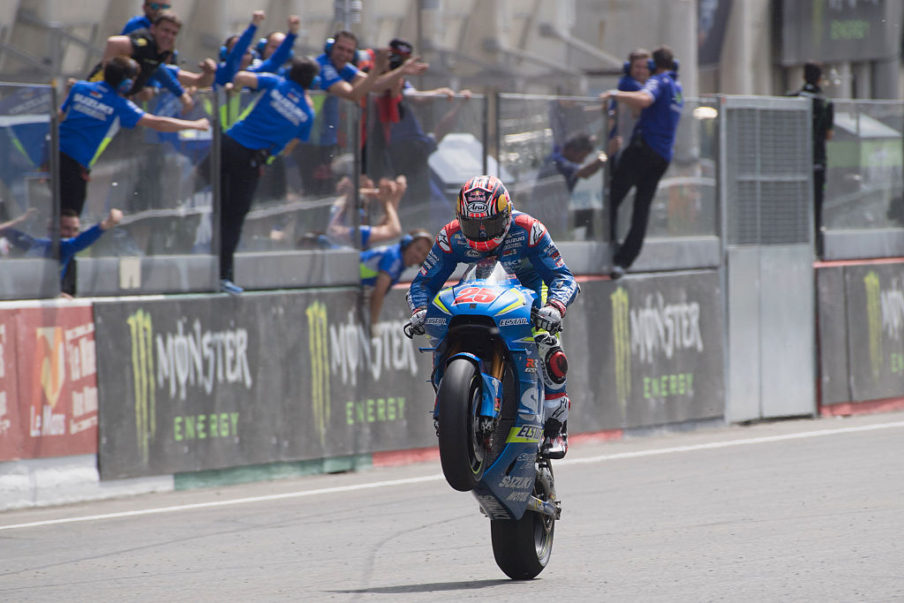
It would be two months, however, until Suzuki notched up another rostrum. The GSX-RR was still scrabbling for traction, the problem made even worse in wet weather. But a test in Brno following the Grand Prix, in which Vinales was ninth and Espargaro failed to finish, saw Suzuki make huge strides and headed to the British Grand Prix at Silverstone brimming with confidence.
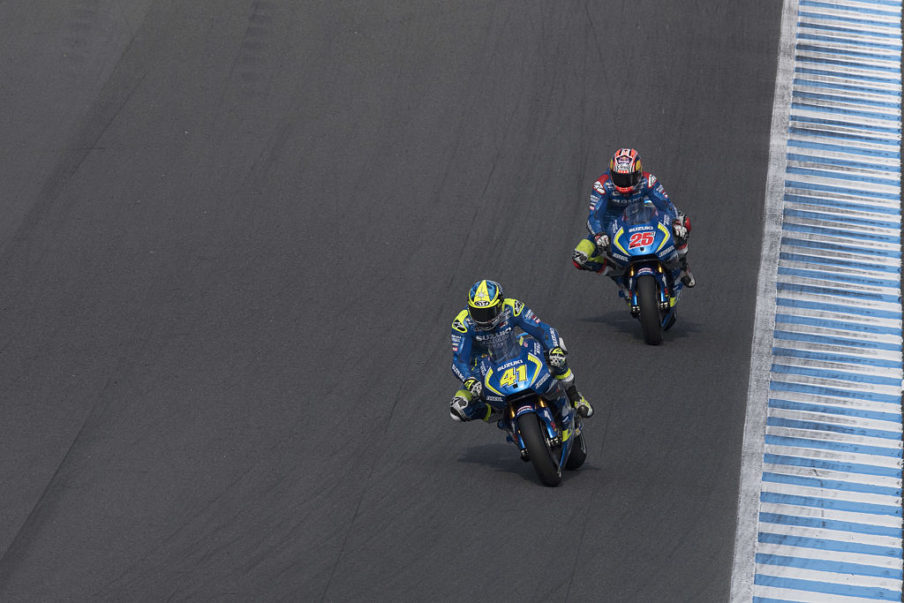
The GSX-RR was famed for its agility in 2015, something the bike retained for this season and something perfectly suited to fast and flowing Silverstone Circuit. With conditions cold for the entire weekend, Suzuki and Vinales were in their element. After Friday’s running, the team were coy over their chances but knew that the British Grand Prix presented its best opportunity yet. In a wet qualifying, Suzuki got the clearest indication yet that they had finally overcome their traction woes after Vinales put his bike on the front row.
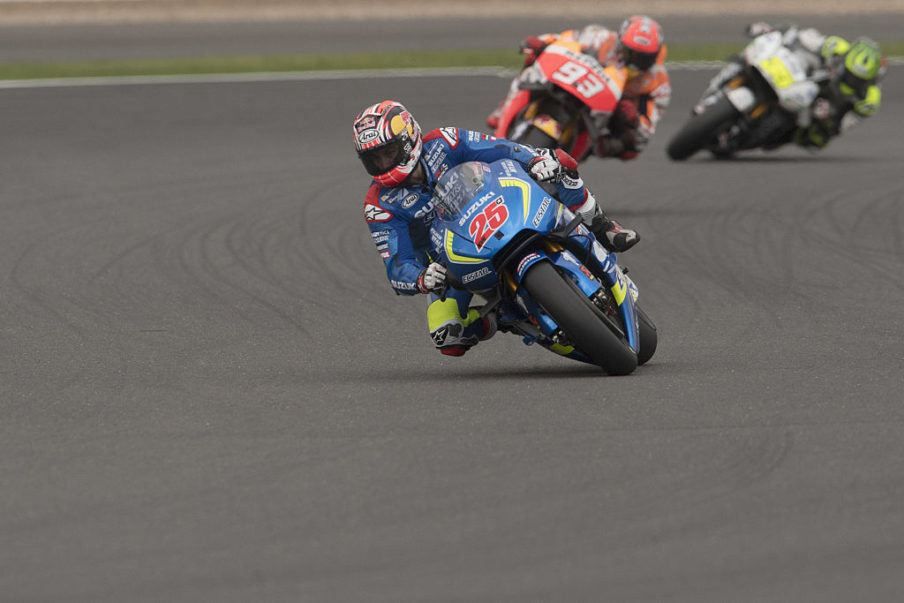
In the race, the number 25 darted off into the distance and didn’t falter once, bringing home Suzuki’s first win since the 2007 French Grand Prix and their first dry weather win since 2000. Whilst Vinales was able to reap the benefits of Suzuki’s improvements, Espargaro was still hitting a brick wall. At the same race, the Spaniard finished 16 seconds adrift in seventh and only took one top five finish in the remaining races – a fourth at the Japanese Grand Prix.
Vinales returned to the rostrum twice in the final races, claiming back-to-back thirds at Motegi and Phillip Island. The Suzuki rider could now see third place in the world championship standings, but a sixth and fifth in the remaining Grand Prix and a third and a win for Jorge Lorenzo meant fourth was the highest Vinales could achieve. However, Vinales’ 202 points tally is the greatest for any Suzuki rider in the MotoGP era. Espargaro ended the year 11th in the standings on 93 points, which is actually 12 less than he managed in 2015 highlighting how difficult he found the 2016 GSX-RR.
Suzuki’s leap in performance is something quite remarkable. At the end of their return season last year, both riders had amassed a total of 202 points and just 137 in the constructors’ standings. Fast forward 12 months and they’ve accumulated 295, just one shy of Ducati’s total, and 208 in the constructors’ table. Vinales’ victory and his three thirds also mean the team lose their technical concessions for 2017, putting them on a par with Yamaha, Honda and Ducati in terms of testing permitted and in-season engine development. That is an incredible achievement just two seasons into their return.
So why have Suzuki made huge strides in such a short space of time? Simply, the change to unified software for the entire grid has allowed the likes of Suzuki and Ducati to close the gap to Honda and Yamaha, who previously were the kings of electronics. With everyone now running electronics for safety rather than for performance gain, more emphasis has been put on the rider and Suzuki have had one of the brightest talents in their fold this year in Vinales. The technical concessions granted to new manufacturers have also allowed Suzuki to develop the GSX-RR’s engine throughout the season and conduct more testing than their rivals.
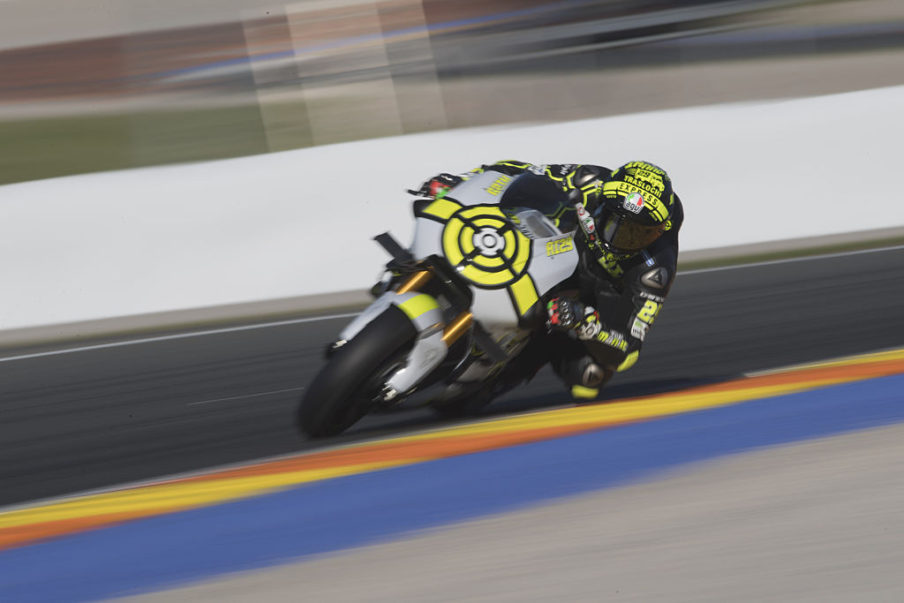
Whether Suzuki’s upward curve will continue remains to be seen. Vinales has packed his bags and is off to Yamaha for 2017, whilst Espargaro reluctantly makes the switch to Aprilia. In their place comes Andrea Iannone and Alex Rins. Iannone, for all his flaws, is a Grand Prix winner and a damn fast motorcycle racer. In the post-Valencia test, before suffering a big accident, the Italian had bonded with the GSX-RR instantly and if anyone is able to polish a rough diamond it’s team boss Davide Brivio. In Alex Rins they have potentially another future superstar, and if Suzuki’s recent history is anything to go by they won’t heap too much pressure on him in his debut season allowing him to gradually grow in confidence.
Entering their first season without concessions is the biggest unknown but given how much they’ve developed the GSX-RR and in particular its engine, the Hamamatsu factory are ready to stand on their own two feet. What will encourage Suzuki also is the fact that Ducati, in their first season without the concessions, managed to win two Grand Prix.
Provided they make further strides with the GSX-RR over the winter and mould their new line-up in the correct way, there’s nothing to suggest that Suzuki can’t emerge as championship challengers in 2017.
Comments.
Loading comments…