Chaos at Silverstone: Max Verstappen Slices Through 100 Karts
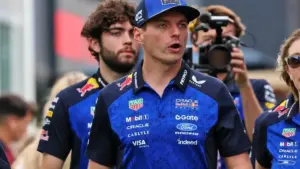
Max Verstappen turned a lighthearted exhibition into another display of his ruthless racecraft, sending a shockwave through a novelty event that briefly became a genuine talking point in Formula 1 circles. The four-time world champion started at the very back of a 100-kart grid at Silverstone and carved through the entire field inside just 14 laps.
The grid itself set this challenge apart from anything Verstappen faces on a grand prix weekend. Organisers filled it with television presenters, sports personalities and social media names rather than professional racing drivers, creating a genuinely amateur field for the Red Bull driver to hunt down on an adapted section of the Silverstone circuit.
The event was billed as a lighthearted exhibition rather than a serious championship contest, yet Verstappen’s approach to it looked anything but relaxed. That contrast between a laid-back format and a world champion’s competitive instincts is part of what made the afternoon such a talking point among those who watched it unfold.
Verstappen admitted the scale of the task caught him off guard before the lights went out. “When I went to the grid and I saw where I had to start, with 100 karts in front of me, I was a little bit worried,” he said. The size of the field made early contact almost inevitable, and the opening laps produced exactly that kind of carnage before Verstappen ever found space to breathe.
Once the dust settled, he found his rhythm and turned the challenge into pure entertainment. Supporters who have followed his recent championship form will recognise the same relentless overtaking instinct that has defined Verstappen’s recent Grand Prix form this season.
The Rules of Engagement: 35 Laps, 75 Minutes, Zero Charity
The organisers built the challenge around strict limits rather than a free-for-all. Verstappen had a maximum of 35 laps and 75 minutes to work his way past every kart on the adapted track, with no allowance for a longer chase if the clock ran out first.
The format also carried real consequences for the amateur drivers on track. Each competitor retired the moment Verstappen passed them, turning the event into a straightforward elimination race rather than a simple demonstration run. That structure meant the field thinned out quickly once Verstappen began finding gaps, even though the opening exchanges had been chaotic enough to force a brief suspension of the session while marshals cleared the track.
Verstappen made his intentions clear over race radio early on, telling the drivers still ahead of him that “it’s not a charity event.” The message summed up the mood of a driver who, even in an exhibition setting far removed from a points-paying weekend, wanted to be seen giving a proper account of himself, much as he has done in recent track action with Red Bull.
One further wrinkle applied only to the final three drivers left in the race. Jacky Martens, Lewis Osler and Zac Alsop, the last men standing, were each given an extra “fast lap” that let them cut a corner of the track. It was an official concession built into the rules of the exhibition, not any kind of shortcut or unfair advantage.
By the Numbers: How Verstappen Gained 36 Places on Lap One
The scale of Verstappen’s progress becomes clearest when the lap-by-lap picture is laid out in full. The opening lap alone accounted for much of the damage, as multiple crashes at the back of the field forced marshals to pause the session before Verstappen had even settled into a rhythm. By the time that lap one chaos cleared, he had already climbed into 37th place, a gain of 36 places that set the tone for everything that followed.
From there, the pace of his progress barely slowed. Verstappen reached tenth place by lap six, then broke into the top four by lap ten, working through the remaining amateur drivers with the same clinical overtaking fans recognise from race weekends. Each pass eliminated another competitor, tightening the field lap after lap until only a handful of names remained ahead of him.
The chase ended with Jacky Martens, the last driver still ahead of him on track. Verstappen overtook Martens to complete the challenge with 40 minutes and 21 laps still in hand out of his 75-minute, 35-lap allowance, finishing comfortably inside the limits organisers had set. Full details of the timings and the build-up to the event are covered in the BBC Sport report on the Silverstone karting challenge.
Reflecting afterwards, Verstappen described how his mindset shifted once the early chaos was under control. “After my first lap with all the carnage, I did think ‘OK, we have got this under control’. From there on, I could really have a lot of fun trying to hunt them all down,” he said. He added that the overtaking itself became the highlight of his afternoon: “Once I started getting into a rhythm and was able to overtake them one by one and saw the gap closing, that was really exciting.”
Grassroots Karting and the Elite Mindset of a Four-Time World Champion
Wednesday’s exhibition was a reminder that karting remains the foundation beneath even the most decorated careers in Formula 1. Verstappen has won four consecutive world championships, from 2021 through to 2024, yet an afternoon back in a go-kart clearly stirred something more personal than professional obligation.
“It was great to just be back in a go-kart again and go back to basics, it reminded me of racing back in the day,” Verstappen said. The comment underlines how closely karting circuits like Silverstone’s adapted layout connect to the grassroots scene that shaped him long before Red Bull colours became part of his identity. Readers curious about how engineering lessons travel between karting and the top level of the sport can find more in our look at motorsport technology developments.
Verstappen closed out his afternoon with a simple, satisfied assessment of both the track and the result. “It’s a really beautiful track and well designed. I had a great day and it was good to come out with the win,” he said.
For a driver used to fighting for championships, sweeping through a hundred-kart field of enthusiastic amateurs offered something rarer: a low-stakes afternoon that still demanded his full competitive attention. Exhibitions like this rarely reveal much about a driver’s future beyond the day itself. But they do reveal character. Verstappen’s willingness to treat a field of amateurs with the same intensity he brings to a grand prix says plenty about the mentality that has carried him to four titles in a row.