Another day for ReadMotorsport.com to review the talking points of the day. Today the sharpest questions sit at the point where performance, patience and long-term planning collide: Yamaha has confirmed the end of its current factory MotoGP line-up, Formula 1 is still unpacking a revealing Austrian Grand Prix, Formula E has put its Gen4 ambitions into a much bigger calendar, and the World Rally Championship has another reminder that even a veteran masterclass can be reshaped by the small print.
Yamaha’s MotoGP reset is no longer theoretical
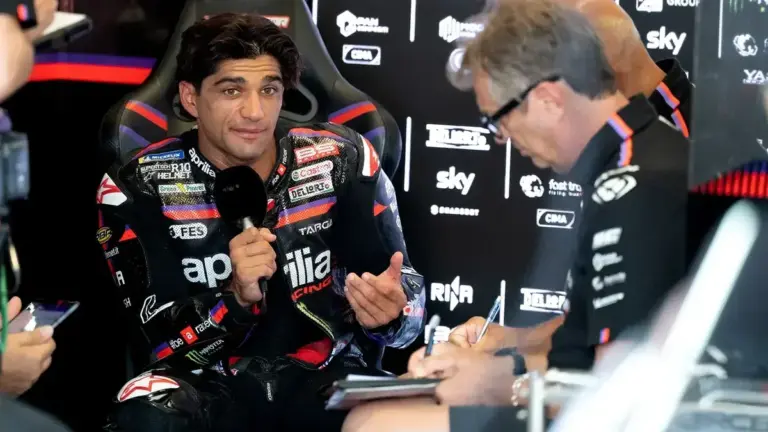
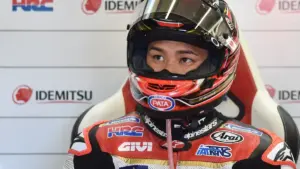
The most significant rider-market development of the day is not a rumour, a paddock whisper or an attempt to move pressure through the press. Yamaha has made it official: Fabio Quartararo and Alex Rins will leave the Monster Energy Yamaha MotoGP Team at the end of the 2026 season, with the manufacturer confirming the decision in its factory announcement.
That is a clean break with enormous competitive meaning. Quartararo has not merely been a Yamaha rider; he has been the reference point for the project since its last title-winning peak. His 2021 championship gave Yamaha proof that the M1 could still carry a rider to the top against deeper and broader European opposition. The years since have been much less forgiving, and the official separation now turns a long-running question into a concrete deadline.
For Yamaha, the issue is not only who rides the bike in 2027. It is whether the factory can convince elite riders that the technical direction is finally strong enough to justify belief. The move to a new engine concept has already made Yamaha’s rebuild feel more substantial than the patchwork fixes of previous seasons, but a full rider reset raises the stakes. If the next line-up arrives into a genuinely improved package, this can be sold as a necessary transition. If not, it risks looking like the moment Yamaha lost the rider who gave the programme its credibility through the difficult years.
Rins’ exit carries a different weight but points to the same conclusion. His spell with Yamaha never became the recovery story either side needed, and his departure underlines how little room there is for sentiment when a manufacturer is trying to catch Ducati, Aprilia and KTM in the most competitive MotoGP field of the modern era. Yamaha now needs more than names. It needs proof of acceleration.
Austria made Mercedes look stable, but not comfortable
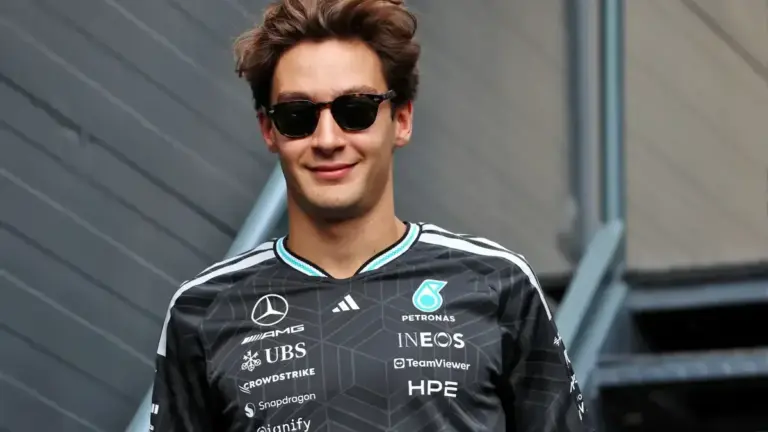
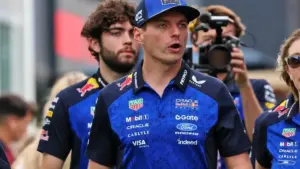
Formula 1’s Austrian Grand Prix was not just George Russell winning from pole. The bigger talking point is what that win said about Mercedes, Red Bull and Ferrari at a point in the season when momentum is starting to harden into evidence.
According to Formula 1’s official race report, Russell held off Max Verstappen by 1.611 seconds, with Kimi Antonelli only 0.375s behind the Red Bull in third. That finishing order matters because it did not flatter Mercedes into thinking the weekend was easy. Russell controlled the race well, but Verstappen’s late pace and Red Bull’s upgraded performance made the victory feel like a warning as much as a reward.
Mercedes can still take plenty from it. Russell moved back into second in the drivers’ standings, Antonelli kept a 40-point championship lead, and the team again looked capable of converting when the weekend came to it. Yet the shape of the race suggested Mercedes is not operating in a vacuum. Red Bull’s Austria response looked like the first convincing sign that Verstappen may have machinery capable of troubling the title picture more often, even if the points gap still gives Antonelli breathing room.
That makes Silverstone more than the next race. It becomes a test of whether Austria was a circuit-specific Red Bull rise or the first stage of a wider recovery. If Verstappen is this close again in Britain, Mercedes will have to treat Red Bull as a live strategic threat rather than an occasional disruptor.
Ferrari’s race pace problem is the awkward hangover
Ferrari’s Austrian weekend is the more uncomfortable F1 discussion. The grid position promised much more than the race delivered, and the final classification left Lewis Hamilton fifth and Charles Leclerc eighth. Formula 1’s team-by-team round-up noted that Ferrari struggled to preserve its tyres in the hot conditions and that both drivers were pushed into a three-stop race that was not the quickest route through the afternoon in the circumstances, as detailed in its race-day team notes.
The concern is not simply that Ferrari had a bad Sunday. Every front-running team has those. The concern is that Ferrari’s performance window still appears too narrow. When the car is in clean air and the tyre behaviour is under control, it can look like a proper Mercedes rival. When the race gets hot, turbulent and strategic, the weaknesses become painfully visible.
That is why Austria should sting. Hamilton’s recent high point in Spain made it possible to believe Ferrari had turned its best days into a repeatable platform. Spielberg pushed back against that idea. Leclerc fading from a front-row start into eighth will not be treated internally as a normal variance result; it was too stark for that. If Ferrari is to remain a title-race participant rather than a team of occasional peaks, it needs to stop leaving race pace mysteries for Sunday evening.
Formula E’s Gen4 calendar is a statement of scale
Formula E’s next era is beginning to look less like an incremental rule change and more like a relaunch. The FIA and Formula E have confirmed a 21-race 2026-27 calendar across 13 cities, with COTA, Zandvoort and Brands Hatch among the headline additions.
The Brands Hatch switch is particularly interesting because it changes the optics of the British round. ExCeL gave Formula E a distinctive London identity, but Brands Hatch gives it heritage, space and a different kind of motorsport legitimacy. For a championship preparing to introduce more powerful Gen4 machinery, that matters. The series wants to be seen not only as a city-centre technology showcase, but as a racing product robust enough for circuits that traditional fans already understand.
COTA is another statement. Formula E has been searching for the right shape in the United States for years, and Austin gives it a circuit with global recognition and a motorsport audience already trained to think internationally. The risk, as ever, is whether expansion produces clarity or clutter. A 21-race season demands depth from teams, calendar discipline from organisers and a sporting format that does not blur the identity of individual events. But if Formula E wants Gen4 to feel bigger, this is the kind of calendar it had to build.
Ogier’s Acropolis win keeps the WRC title question alive
In the World Rally Championship, the headline remains Sebastien Ogier’s latest reminder that he does not need a full-time programme to shape a title fight. Official WRC results list Ogier as the winner of Acropolis Rally Greece, and the championship’s own report described it as his 69th WRC victory after a dramatic final day, covered in its Acropolis Rally Greece review.
What makes this a talking point is the wider title tension. Ogier’s win keeps him relevant, but Elfyn Evans also strengthened his championship position after post-event penalties reshaped the final order. Motorsport.com’s reporting on the Acropolis seatbelt penalties showed how a rally can keep changing even after the final stage has finished.
That is rallying at its most unforgiving. Ogier produced the kind of performance that reignites talk of whether another title push is realistic. Evans left Greece with the points picture looking better than it had at the stop line. Neuville’s challenge was hurt by punctures. Fourmaux and McErlean were reminded that procedure can be as costly as pace. The championship now has a useful tension: Ogier is the cameo threat with title-level speed, Evans is the points leader trying to turn consistency into control, and the chasing pack cannot afford administrative damage on top of competitive losses.
The bigger picture
Across the day, the common theme is transition under pressure. Yamaha’s future has moved from speculation to construction. Mercedes has a lead to defend but a Red Bull response to respect. Ferrari needs to prove its high points are not fragile. Formula E is betting that Gen4 deserves a bigger stage. WRC has a title race in which both brilliance and detail are still moving the scoreboard.
That is what makes 30 June feel less like a quiet midweek news day and more like a hinge point. The next races will decide whether these are passing storylines or the first clear outlines of the second half of the season.