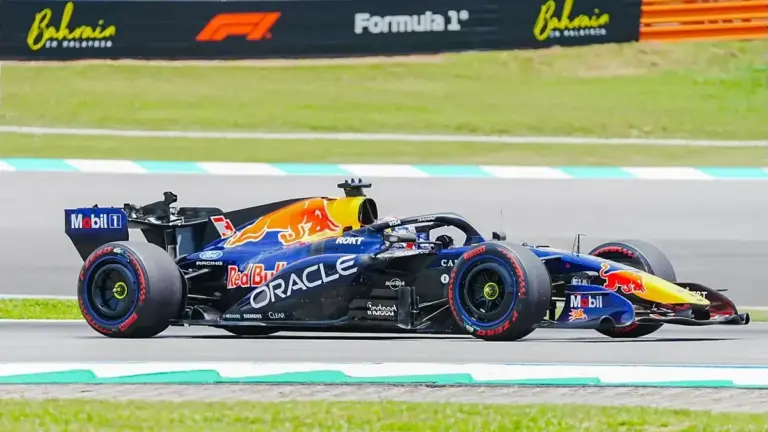
Formula 1’s next engine reset has arrived earlier than planned, and that alone says plenty about the pressure created by the 2026 rules.
The FIA, Formula One Management, teams and power-unit manufacturers have agreed a package of 2027 and 2028 changes that shifts more emphasis back toward internal combustion power. The aim is not to abandon the hybrid direction, but to make the cars less dominated by energy management and more natural to race at full commitment.
That matters because the first season of the new power-unit era has already exposed a tension between technical ambition and spectacle. F1 wanted more sustainable fuel, more electrification and closer racing. What it also got was a championship in which drivers, including Max Verstappen, have repeatedly questioned whether the balance has moved too far away from instinctive racing.
The Rule Change Is A Compromise, Not A U-Turn
The key detail is the staged power shift. According to Formula 1’s official update on the proposed regulatory changes, the package rebalances the contribution from the internal combustion engine and energy recovery system across 2027 and 2028.
The scale of the change is modest but meaningful: the current near 50-50 split between combustion and electric power is set to move to 58-42 in 2027, then 60-40 in 2028, with internal combustion output increasing through changes to fuel energy flow. That does not suddenly turn the cars back into the old V6 turbo-hybrid formula, but it should reduce the moments when drivers are visibly shaped by charge management rather than track position. It is a phased correction rather than a dramatic rewrite.
For Red Bull, Mercedes, Ferrari, Audi, Honda and the other manufacturers, that distinction is crucial. A sudden hardware revolution would punish programmes that have already spent heavily under the current framework. A two-step adjustment gives engineers a route to improve driveability while protecting the cost and supply structure of the new era.
Why Drivers Pushed F1 Toward This Point
The driver concern has never been simply that the cars are slower in a straight line or different to manage. The deeper issue is rhythm. When too much of a lap is shaped by harvesting, deployment and fuel-flow compromise, the racing can become more about systems than bravery.
That is why this matters for Verstappen and the rest of the grid. The Dutchman has become the most visible reference point in the debate, but he is not alone in wanting a formula that rewards attack rather than constant energy calculation.
Read Motorsport has already tracked how the new rules are shaping race weekends, from F1’s revised overtake mode to the wider Austria rules test. The engine compromise fits the same pattern: F1 is trying to keep the best racing features of 2026 without letting energy management become the dominant story every weekend.
The Real Test Comes In 2027
The immediate effect is clarity. Teams now know the direction of travel, manufacturers have a timetable, and drivers can see that their feedback has cut through. That is useful before development choices become locked in.
The longer-term question is whether the change creates better racing without reopening a power-unit arms race. More combustion output should make qualifying more aggressive and reduce the sense that drivers are managing a battery ledger from corner to corner. But it may also expose differences between manufacturers more sharply, especially if one power unit adapts faster to the new fuel-flow window.
That is the edge F1 has to manage. The compromise is sensible because it recognises a flaw without tearing up the whole project. But from 2027, the sport will need proof on track: fewer awkward energy compromises, more flat-out laps and a field that still looks competitive rather than split by engine politics.
For now, the message is clear. F1 is still committed to its hybrid future, but it has accepted that racing has to feel like racing first.