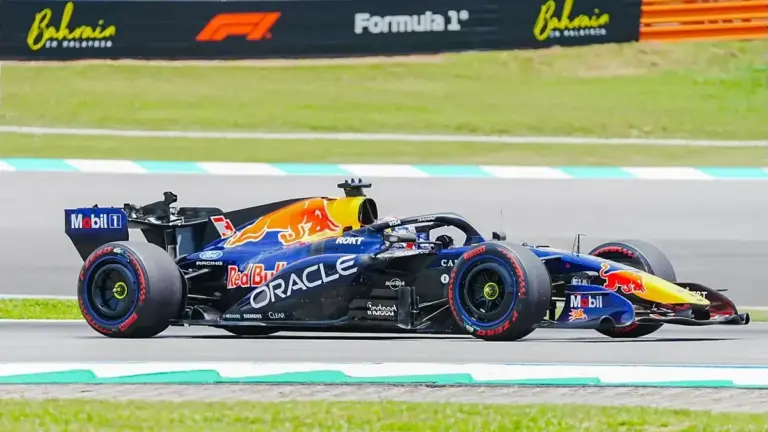
Formula 1’s 2026 rules are often sold as a technical reset, but the most important change for the racing may be much easier to understand: drivers will have to think harder about when to spend energy, when to save it and when to attack.
The latest Formula 1 guide to the 2026 regulations puts Recharge and Boost at the centre of the new vocabulary. That matters because the old, familiar rhythm of DRS-assisted overtaking is giving way to a more layered hybrid contest. For Lewis Hamilton, Max Verstappen, George Russell and the rest of the grid, racecraft is about to become more electrical.
The rule change is not just about smaller cars
The headline figures are dramatic enough. F1’s 2026 cars move towards a roughly 50-50 power split between combustion and electric energy, with the MGU-K output rising sharply and the complex MGU-H disappearing. The official explanation says cars will be able to harvest energy under braking, on part throttle, when lifting off and even through super clipping at the end of straights.
That means the fastest driver will not simply be the one who presses the button at the obvious moment. The new challenge is how much energy a driver can recover without surrendering track position, tyre temperature or rhythm. A small lift in the wrong place could protect the battery but invite pressure. A bold deployment might complete the move but leave the driver exposed next time around.
That is why the topic connects directly to recent competitive threads on the site, from Hamilton’s Ferrari win changing the title picture to Mercedes weighing team rules after Russell and Antonelli’s Barcelona flashpoint. The 2026 tools could make those intra-team and title-race moments sharper, not simpler.
Recharge could become the hidden battleground
Recharge sounds passive, but in racing terms it is a decision. The driver behind may have to decide whether to sit in the wake and harvest, or spend early to force the car ahead into defensive energy use. The leader may have to sacrifice a fraction on one lap to avoid becoming a target on the next.
The important detail is that energy recovery is no longer a background engineering story. It becomes visible through pace patterns. A driver who lifts early into a braking zone may not be making a mistake; they may be preparing an overtake two corners later. A driver who fails to attack despite being close may be waiting for the battery to come back into the right window.
That is a richer kind of strategy than the old one-second DRS trigger. It asks more of the driver, but also more of the pit wall. Teams will need to tell drivers when to harvest, when to defend and when to accept short-term pain for a long-term run plan.
Boost changes the shape of overtaking
The companion Formula 1 explainer on the new rules also highlights how the power unit shift is designed to make F1 more relevant to manufacturers while keeping the spectacle intact. That is the commercial logic. The sporting logic is Boost.
If Boost gives drivers a more deliberate attacking tool, the best overtakes may come from preparation rather than proximity. Verstappen’s aggression, Hamilton’s patience and Russell’s race management could all be tested in different ways. The driver who can manipulate battery state, corner exits and active aero modes together will have more ways to create an opening.
The risk is complexity. Fans will need clear broadcast graphics and sharper commentary to understand why a car is suddenly vulnerable or suddenly flying. But if F1 gets that presentation right, the 2026 rules can make overtaking less automatic and more personal.
That is the real promise of the regulation reset. Recharge and Boost are not just glossary terms. They could become the new language of pressure, defence and timing in Formula 1.