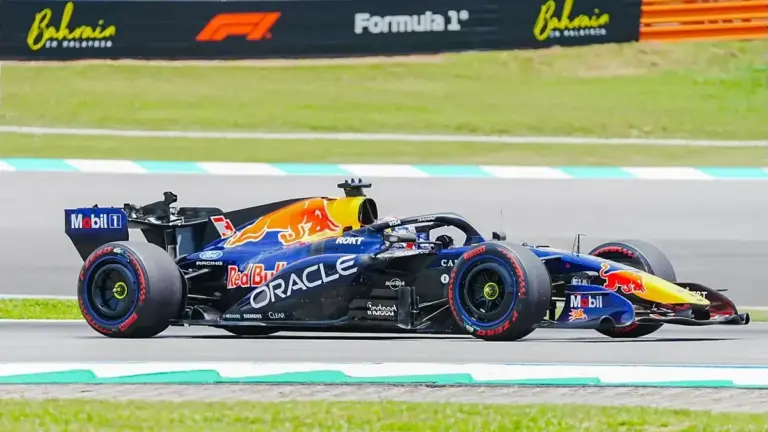
As the 2026 Formula 1 calendar heads towards the Canadian Grand Prix later this month where race followers will get to enjoy the sights of the Gilles Villeneuve circuit in Montreal, it is fair to say that the many changes that had taken place ahead of the current season have had some interesting ramifications, but not everybody is happy.
Red Bull’s Max Verstappen has been quite the public dissenter about his take on the new engines and power units and how he feels that the sport is no longer racing and more like managing spreadsheets with power consumption and use, and there is also the wider curiosity that there is a tendency for the driver in pole position to come away with the overall win – however Team Mercedes have Mr Luck with them again and have the fastest car it seems, with Kimi Antonelli in particular skewing the results on this so far.
Given the wider complaints that have been aired across the board when it comes to the new power units that were introduced this year though, F1 bosses have now agreed to engine design changes for the 2027 season to calm those particular tensions. The current 50/50 split between internal combustion and electrical power has seen complaints that energy management requirements have seriously diminished the challenge during qualifying stages. Following a recent meeting between teams, commercial rights holders and the governing body, a decision in principle was agreed upon that would theoretically increase the total proportion of the peak power coming from the internal combustion engine by 50KW (67bhp). There would also be an identical reduction in the electrical power output by the same amount.
This would naturally tip the balance back in favour of a more conventional and known way of driving during the qualifying stages. Further, it is argued that the current need for energy management techniques (recovering energy whilst on full throttle and the speed drop off on corners and fast curves) would be completely eliminated by this percentage change in the engine on all but the most energy starved tracks.
The final package is yet to be completely agreed and a statement from the FIA confirmed that whilst the decision was unanimously reached, that they still needed to hold full discussions with teams and power unit manufacturers in technical groups to iron out those details.
Some of the elements that these technical groups will also need to consider will include those teams who do not want the cost of again redesigning their chassis, but now need to provide for a slightly larger fuel tank next year, and obviously improved ways of harvesting electrical power will also be on the table and open to additional discussions.
The drivers themselves will be largely pleased with the outcome of the meeting, the changes agreed upon and the new direction of travel as they largely echoed the almost unanimous comments that were expressed after the weekend in Miami where engine operation changes had been considered to be ‘a step in the right direction’ for a more natural driver experience where world champion and Miami runner up Lando Norris pointed out that drivers were not penalised as much when pushing the car.
This year was always going to be a transition on the engine front, but hopefully we are now on the way to a much better middle ground.
Image Source: unsplash.com