- Verstappen’s shift to GT3 racing stems from one thing: a level playing field.
- Ratel explains how Balance of Performance puts the driver back in control.
- From Zanardi to Rossi to Verstappen, GT3’s crossover appeal keeps growing.
Max Verstappen will make his debut at the Nurburgring 24 Hours on 16-17 May, sharing a Red Bull-liveried Mercedes-AMG GT3 with factory drivers Jules Gounon, Dani Juncadella and Lucas Auer.
The four-time Formula 1 world champion has been building a full GT3 programme since 2025, one that now includes his own team and a multi-year Mercedes deal.
Stephane Ratel, the founder of SRO Motorsport Group and the creator of the GT3 category, says the move reflects something fundamental about who Verstappen is as a racer.
Ratel told Motorsport.com that F1 ultimately rewards engineering as much as driving.
“You can be the best driver in the world, but if you are not in the car of the year, you’re going to have a hard time,” he said. “Formula 1 is most and foremost an engineering exercise.”
GT3, by contrast, was designed to do the opposite.
A competitor to his very DNA
The central feature of GT3 is its Balance of Performance system. Organisers apply performance adjustments across manufacturers so that no single car holds a structural advantage over another.
A Mercedes, Ferrari, Porsche, and Aston Martin can all race competitively on the same weekend because of it.
Ratel is direct about what this means for drivers. “We have developed an extremely accurate Balance of Performance,” he said.
“It’s a category where really drivers do make the difference. It’s about the drivers because the cars themselves are very much balanced.”
That distinction matters when thinking about Verstappen’s career.
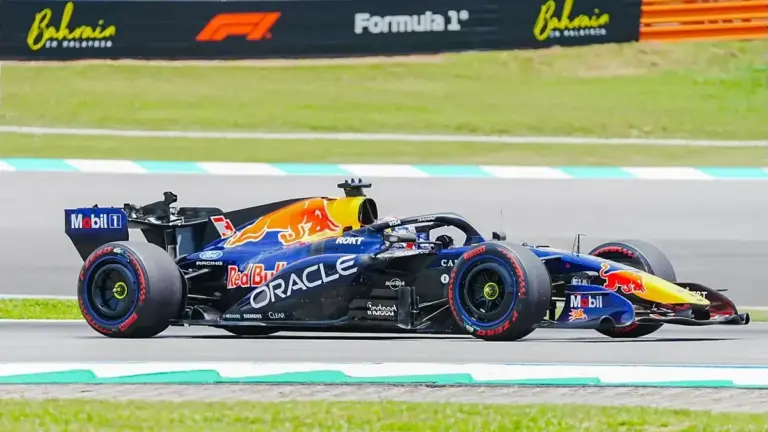
His F1 dominance has always come with a question mark attached, because his Red Bull machinery has, for much of his title-winning run, been the fastest on the grid.
GT3 removes that variable. Ratel connects this directly to what draws Verstappen to the category.
“Drivers at heart, like Max, like Valentino [Rossi], who are competitors to the very, very DNA, appreciate a category where they are sure they can make a difference,” he said.
From the Nordschleife to the 24-hour grid
Verstappen’s entry into GT3 was deliberate and low-key.
In May 2025, he tested at the Nurburgring Nordschleife in an Emil Frey Racing Ferrari 296 GT3, using the pseudonym “Franz Hermann” to avoid attention. He broke the circuit’s GT3 lap record in that first session.
By September 2025, he had already won on his GT3 debut, racing in the Nurburgring Langstrecken-Serie alongside Chris Lulham, a GT racer Verstappen selected from his sim racing team, Team Redline.
The Nurburgring 24 Hours this month marks the biggest step yet.
His sim racing background has shaped the programme in practical ways. Lulham’s selection reflects Verstappen’s stated interest in creating a route for talented sim racers into real GT3 seats.
A legacy bigger than any one driver
Ratel was careful not to place Verstappen at the centre of GT3’s story. He spoke about the category’s history in the context of a recent loss.
Alex Zanardi, the two-time IndyCar champion and four-time Paralympic gold medallist, died on 1 May 2026 at the age of 59. Ratel cited him as the first major figure to bring GT3 to a wider public.
“Max is great. He has brought a very positive contribution to the class. But he is not the first one and the only one,” Ratel said.
He named Valentino Rossi alongside Zanardi as others who shaped the category’s public profile before Verstappen arrived.
On Verstappen’s specific contribution, Ratel was measured but clear. “It’s a huge appeal,” he said. “And it brings just another step in the general public recognition of GT3 racing.”
Verstappen’s GT3 ambitions are running alongside, not instead of, his F1 career for now.
But with his public frustration over F1’s 2026 regulations growing, and his investment in GT3 deepening, the category he is racing into this month may come to matter more to him than it once seemed possible.