- F1 rule changes have left top drivers, including Verstappen, questioning their future.
- Lewis Hamilton calls for more driver involvement in discussions.
- Changes aim to boost qualifying and reduce large speed gaps in races.
Formula 1 has made quite a few rule changes in response to concerns related to the engine regulations introduced for this season.
The level of energy management required with the new power units, which split output near 50-50 between internal combustion and electrical systems, has drawn complaints from drivers who feel their role has been reduced.
Max Verstappen and Lewis Hamilton, however, have not held back in their response, offering blunt views on the changes.
Max Verstappen dismisses F1 fixes as “a tickle”
Four-time world champion Max Verstappen has labeled the new formula “anti-racing,” compared the cars to Mario Kart, and suggested his dislike runs deep enough to make him consider walking away. He has even said he is weighing his future in the sport due to his dissatisfaction with the cars.
A string of technical tweaks has been introduced with two aims: to return qualifying to a flat-out test and to reduce closing speeds in races. But Verstappen said:
“It’s a tickle. It’s not what we need yet to really make it flat out. Like I said, it’s complicated to get everything to agree. I just hope that next year we can make really big, big changes.”
He added that he has made no call on his future: “I still have time, and I’m taking my time.”
Hamilton urges greater driver influence on regulations
The sport’s V6 hybrid turbo engines have placed a heavy focus on electrification, making the generation and use of battery power central to performance.
The rules were agreed upon by teams, Formula 1, the FIA, existing manufacturers, and new entrants such as Audi, which joined on the promise of hybrid engines with road relevance. Drivers, however, were not part of that process.
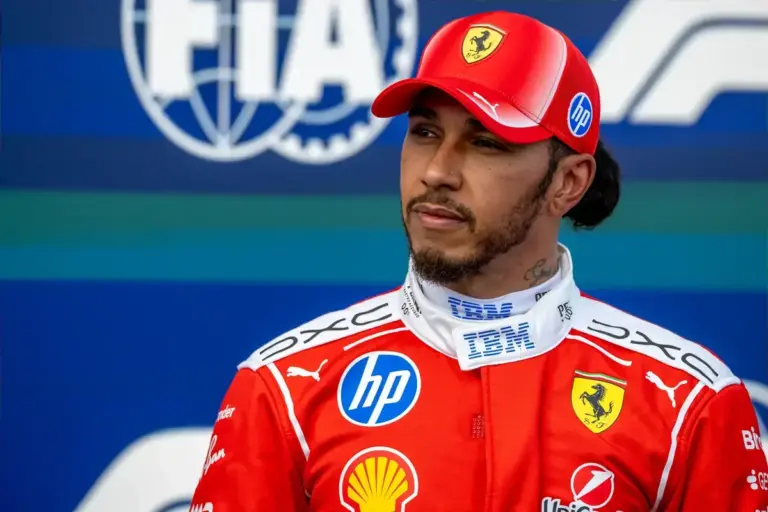
Speaking ahead of Sunday’s Miami Grand Prix, seven-time champion Lewis Hamilton said that gap must be addressed.
Hamilton said, “All the drivers, we do work together, we all meet, but the fact is we don’t have a seat at the table. We do engage with the FIA and F1; F1’s more often a little bit more responsive.”
“But being that we’re not stakeholders, we don’t have a seat at the table currently, which I think needs to change. I say to them, when I was doing the Pirelli [tire] test, ‘You guys should come and speak to us and collaborate with us, we don’t want to be slagging off the Pirelli tires, we know you can build a good product.’”
He pointed out that feedback often comes from those who have not driven the cars, urging the sanctioning body to work with drivers to approach the FIA and shape a better outcome. He added that drivers do not want to speak against the sport and want it to succeed as much as anyone involved.
What are the changes?
The changes form a wide set of revisions to engine operation, aimed at allowing drivers to push in qualifying and reducing the risk of large speed gaps in races. Such gaps can arise when one car deploys full engine and battery power while another runs without electrical charge, a difference of up to 470bhp.
The updates cover several areas, and most will be introduced at the Miami Grand Prix on May 1-3. They were approved at a meeting of the F1 Commission, which includes team bosses, Formula 1, and the FIA, following talks among technical staff and between drivers and the FIA.
They now await approval from the FIA World Council.
- In qualifying, drivers had been forced to lift and coast, easing off the throttle before braking, even during a timed lap, a practice drivers have called “counter-intuitive.”
- The total permitted recharge per lap has been reduced from 8MJ to 7MJ, cutting the energy that must be recovered and the time spent doing so.
- The maximum power recovered when a driver is on full throttle without deploying the battery, known as “super-clipping,” has been raised to 350kW from 250kW.
- Formula 1 has also increased the number of circuits where a lower energy limit of 7 MJ may be used from 8 to 12. These tracks are those where energy recovery is hardest, often featuring long straights and few corners.
Boost mode to be capped
- Meanwhile, the in-race changes aim to prevent sudden speed differences between cars in different deployment states from becoming a risk.
- This issue played a role in the crash involving Haas driver Oliver Bearman in the Japanese Grand Prix, when he avoided the Alpine of Franco Colapinto after Colapinto moved off line to block a pass.
- The maximum power of the “boost” mode will be capped at 150kW, or the car’s current deployment level if higher.
- Cars will be allowed to use the full 350kW of electrical power out of corners but will be limited to 250kW elsewhere on the lap.
- The output of the engines under full deployment had raised concerns about car behavior in wet conditions.
- New rules, based on driver input, allow for an increase in tire blanket temperatures to improve grip and performance in the wet.
- Maximum levels of electrical deployment will be reduced to limit torque and aid control, though the exact cap has not been disclosed.
- A simplification of rear light systems will provide clearer signals to improve visibility and reaction time for drivers in poor conditions.
In Miami, changes to the race-start procedure will be tested. Teams will trial a low-power start detection system that can identify cars with low acceleration.
In such cases, the MGU-K will deploy without the usual restrictions at low speeds, ensuring a baseline level of acceleration without offering an advantage. Teams will also test a warning system using flashing rear and side lights. Adjustments to energy limits have also been made to prevent cars from reaching the grid with low battery levels.