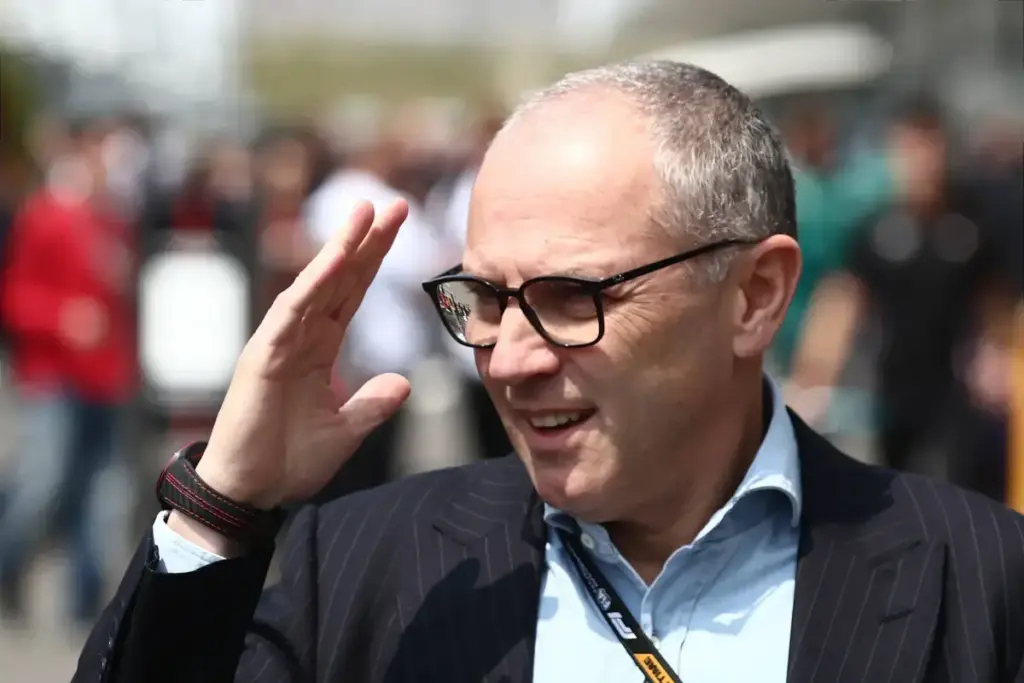

- F1 boss Stefano Domenicali defends the 2026 rules despite fierce driver backlash.
- Verstappen calls the racing a joke; Domenicali calls it a lesson learned.
- Sold-out races mask deeper questions about what fans are actually watching.
Stefano Domenicali, president and chief executive of Formula 1, has mounted a forceful defence of the sport’s new regulations, dismissing widespread driver criticism and public scepticism as misplaced.
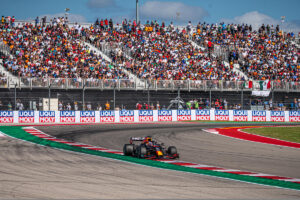
Speaking during the April break, three rounds into the most sweeping rule changes in the championship’s history, he said the sport was in “great shape” and pointed to sold-out races as proof.
The 2026 rules overhaul changed both the aerodynamic package and the power unit architecture. The changes have drawn sharp reactions from drivers.
Max Verstappen called the racing “a joke” and compared it to “playing Mario Kart.” Defending champion Lando Norris, when asked what he enjoyed about the new cars, paused for seven seconds before saying, “No, not really.” Fernando Alonso went further, calling F1 the “battery world championship.”
Domenicali told the media that the sport’s leadership had a duty to communicate its position “in a very positive way, because otherwise we will shoot ourselves in the foot.” He rejected the idea that F1 was in a defensive crouch.
“Formula 1 has not any problems. Formula 1 is in great shape, just to make sure that is clear to everyone,” Domenicali said via Crash.net.
The sold-out argument
Domenicali’s central defence rests on commercial data. Every race this season has sold out, he said, and ticket sales continued strong even after the new cars began racing.
“No, no, no. Even now, so far is all good,” he told journalists who suggested fans had bought tickets before seeing the regulations in action.
He also took a swipe at how the criticism was being framed. He said that media and technical observers were approaching the racing with an engineering mindset, and argued that ordinary fans simply want action and competition.
The implication was clear: the loudest critics may not represent the sport’s broader audience.
That argument has limits. Sold-out venues measure demand, not satisfaction. Whether fans who attended the first three races left happy is a separate question Domenicali did not directly answer.
A “lesson learned” on driver criticism
The most visible flashpoint of the season came at Melbourne, when Charles Leclerc’s radio message comparing a battery boost to “a mushroom in Mario Kart” spread rapidly across social media.
Verstappen then amplified the joke at a press conference, saying he had “swapped the simulator for my Nintendo Switch” and was “practising with Mario Kart.”
Domenicali conceded that the management of driver feedback had gone wrong. “There’s been too much focus on comments on certain drivers that have been taking a lot of discussion of the hardcore fans in that direction,” he said. “That is something that is a lesson learned.”
His position is not that the drivers were wrong to have opinions. He believes those opinions should have been raised inside the paddock rather than aired in public.
He told Motorsport.com that Verstappen had been “subtly informed” that it would be more constructive to raise his concerns “in the right forum”, having already made them known publicly.
The Verstappen question
Verstappen’s dissatisfaction runs deeper than jokes at press conferences. The four-time champion has said the current rules are “not helping the longevity of my career in Formula 1.”
After the Japanese Grand Prix, he hinted that he was considering leaving the sport after the 2026 season.
Domenicali is not worried. He told Sky Sports earlier this year that his relationship with Verstappen gave him confidence.
“I know him very, very well. I spend a lot of time with him. That is the reason, full stop. And he loves Formula 1, there’s no doubt about it,” he said.
He also stepped back to a broader point. The sport is in its 76th year, he said, and has outlasted many individuals who once seemed central to it.
He added that Verstappen, despite his public complaints, was now engaging constructively behind closed doors on potential improvements.
The bigger picture
Domenicali wants F1 to be judged on its direction of travel rather than on the friction of a new regulatory cycle.
“Look at the bigger trajectory. Look at the bigger picture,” he said, pointing to overtake numbers as evidence that the racing was delivering action.
That claim has a catch. Critics in the paddock argue that many of those overtakes are a product of energy management differences between cars rather than genuine wheel-to-wheel racing.
The question of what counts as a real overtake has become one of the defining debates of the season.
He also addressed the rising attention given to rival series. GT racing had drawn more eyes recently, he acknowledged, but attributed that largely to Verstappen’s own participation there.
Remove Verstappen from the equation, his argument went, and the interest follows him rather than the series.
The Miami Grand Prix on 3 May will offer the first test of whether adjustments to the regulations can quiet some of the complaints.
Domenicali, for his part, does not appear to be waiting anxiously. His tone throughout the April break was consistent: the critics are wrong, the data is positive, and the sport is solid.
Whether that confidence holds after Miami, or whether it begins to look like complacency, may be the real story of this season.

Comments.
Loading comments…