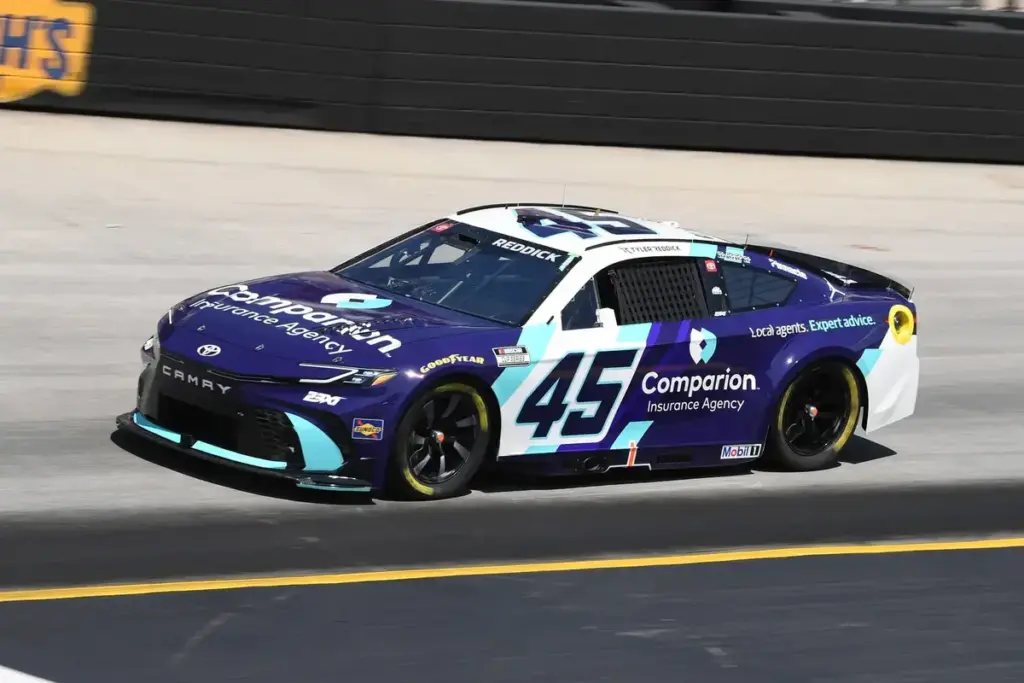

- Toyota drivers have led this season, with 3 of the top 5 in standings coming from the OEM.
- Reddick’s fifth win of the season gave Toyota a commanding lead over Ford and Chevrolet.
- Talladega, though, could pose a challenge for Toyota drivers going forward.
Toyota’s climb to the top tier of stock car racing began after the manufacturer entered the NASCAR Craftsman Truck Series in 2004 with the Tundra, then stepped into the Cup Series in 2007 with the Camry, after announcing its intent in early 2006. That move marked the return of a foreign manufacturer to NASCAR’s premier division for the first time since the 1950s.
The brand’s roots in motorsport stretch back to the early 1970s, with programs in Formula 1, IndyCar, and other disciplines. In 2026, Toyota also added Supercars to its portfolio.
Yet, it is in NASCAR where the manufacturer has turned heads in recent seasons, rising to the front of the pack so much so that even veterans like Kevin Harvick have placed their trust in Toyota’s system to develop the next generation, including his son Keelan Harvick.
Toyota leads the charge in the Cup Series
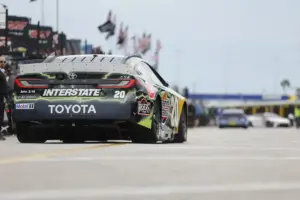
If numbers tell the story, then Toyota has been writing the script in 2026. The manufacturer has won 7 of the first 9 races, accounting for 77.7% of wins so far. It is a start not seen since 2007 for any manufacturer, driven in large part by Tyler Reddick’s run and a technical edge that runs through every Toyota-backed team.
Reddick, behind the wheel of the No. 45 for 23XI Racing, rewrote the record books by becoming the first driver to win the opening three races of a season, taking the Daytona 500, Atlanta, and COTA. And on Sunday, he added a fifth win at Kansas Speedway, further tightening his grip on the standings.
Toyota drivers took four of the top five spots, with Reddick leading the charge, followed by Chase Briscoe in third, Denny Hamlin in fourth, and Bubba Wallace in fifth. It was the second race in a row at Kansas where Toyota placed four cars in the top five, and the 16th time the manufacturer has achieved that feat in Cup Series history.
Toyota drivers led 188 of the 274 laps, or 68.6% of the race distance. Hamlin paced the field for 131 laps, Christopher Bell led 47, and Reddick added 10 laps at the front.
Further down the order, Ty Gibbs crossed the line in ninth, extending his streak of top-10 finishes to seven, a run that now stands as a mark in his career. Both Gibbs and Reddick lead the series with seven top-10 results this season. 23XI Racing also hit a milestone, placing four Camrys in the top 15 for the first time, with Reddick, Wallace, Riley Herbst in 14th, and Corey Heim in 15th.
In addition, across the standings, Toyota’s footprint is hard to miss. Three of its drivers sit in the top five, and five are in the top 10. Hamlin has already added a win at Las Vegas, while Gibbs continues to string together results week after week.
The addition of Legacy Motor Club to the fold has further strengthened the camp, adding more cars, more data, and more drafting partners to the mix.
The 2026 adjustment, raising horsepower to 750 on tracks under 1.5 miles and on road courses, has aligned with Toyota’s engine mapping and chassis setup.
Chevrolet and Ford are left chasing
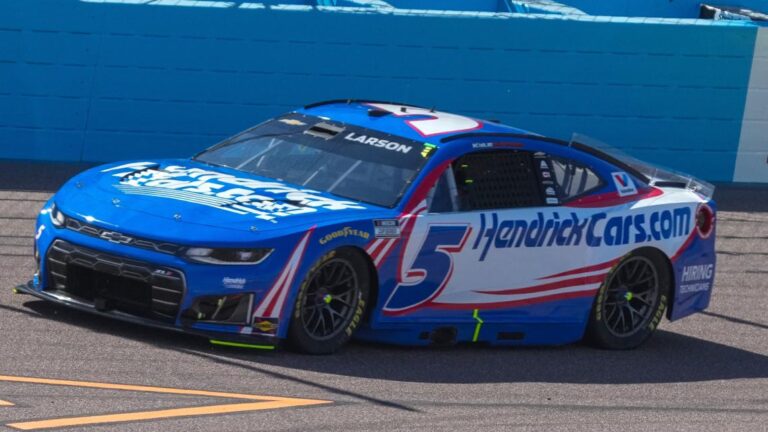
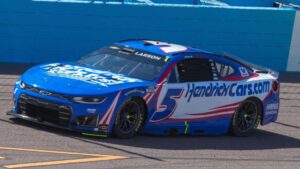
While Toyota has been molding the pace, Chevrolet and Ford have been left to pick up the pieces. Chevrolet, despite fielding the most cars, has only one win to show for its efforts, courtesy of Chase Elliott at Martinsville. Kyle Larson leads the charge in points for the bowtie brigade but is still searching for his first win this season.
Ford’s story reads along similar lines. Ryan Blaney delivered the brand’s only win at Phoenix, but beyond that, Ford teams have struggled to match Toyota’s pace, particularly on intermediate tracks such as Kansas and Las Vegas.
Blaney stands third in the standings, 120 points behind Reddick, while Brad Keselowski sits ninth, trailing by 193 points. For Chevrolet, Larson remains the only driver inside the top five, 143 points adrift of the leader.
Talladega will be the next test
Next on the schedule is Talladega Superspeedway on April 26, and Toyota arrives with momentum on its side. Still, the super Speedway is a different beast.
Toyota has already shown it can handle the draft, with Reddick’s Daytona 500 win standing as proof. Yet Talladega’s width and the larger presence of Ford and Chevrolet entries will present a fresh challenge.
Among active drivers, Keselowski holds the edge at Talladega with six wins, underlining Ford’s strength at the track, particularly with the Mustang Dark Horse package. Hendrick Motorsports, representing Chevrolet, carries the best average finish of 7.0 in the Gen-7 era at the venue.
Toyota, meanwhile, leans on strategy. Its pitting-in-formulation approach has often paid dividends, with its cars diving to pit road together and returning as a single pack, gaining track position in one sweep. It is a move that can leapfrog rivals still trying to stretch fuel runs.
However, NASCAR has stepped in to shake things up. After fuel-saving tactics at Daytona saw Toyota drivers control the pace, the sanctioning body has shortened the final two stages at Talladega for 2026. The change aims to force the issue and push teams into making moves instead of driving in line to save fuel.
That adjustment could take the edge off Toyota’s approach, but the numbers suggest the manufacturer will still be one to watch.
Comments.
Loading comments…