
- Mike O’Gara joins IndyCar as VP of Competition.
- O’Gara will lead the rollout of the 2028 Dallara IR28 chassis.
- Initial 2028 car tests begin this summer using current engines.
The timing couldn’t be more significant for IndyCar. With the championship entering a new phase of growth and a next-generation car looming on the horizon, the series has made a move that signals intent as much as it does stability.
Into one of its most influential roles steps a familiar name from the paddock. After more than a decade helping shape success at Chip Ganassi Racing, Mike O’Gara is moving to the other side of the pit wall as IndyCar’s new Vice President of Competition.
IndyCar hands technical leadership to O’Gara
On Wednesday, IndyCar confirmed that O’Gara will take on the role of Vice President of Competition, placing him at the center of the series’ technical and competitive direction. In other words, he becomes the senior authority on everything from race engineering to rulemaking, overseeing both the NTT IndyCar Series and Indy NXT.
Over the past three decades, he has built a reputation as one of the sport’s most respected engineering minds. His most recent chapter came with series frontrunner CGR, where he spent more than a decade in leadership roles. During that time, the team enjoyed sustained success across disciplines, including championship runs in the series with drivers like Scott Dixon and Alex Palou.
O’Gara also played a key role in building Ganassi’s Cadillac endurance racing program, a project that delivered major victories across marquee events in sports car racing. Beyond the announcement itself, the timing says just as much about where IndyCar is headed.
New chassis for 2028
The North American open-wheel racing giant is already laying the groundwork for its next major technical evolution, centered around the introduction of a new chassis in 2028. And now, O’Gara will be responsible for guiding that process, not just from a design standpoint, but in how it fits the broader identity of the series.
That includes balancing innovation with cost control, ensuring parity across teams, and maintaining the kind of close competition that defines IndyCar racing.
“I am thrilled to take this next step in my career and honored to join IndyCar in this critical role for the series,” the 54-year-old said. “This is truly an exciting time for the sport with a new car on the horizon and the opportunity to build on a growing focus and interest in Indy NXT.”
“I know my prior experience has set me up to successfully contribute and help mold the future of North America’s premier open-wheel racing series. I cannot wait to get started.”
O’Gara will have respect in the paddock
That said, his role won’t be just about long-term planning, either. On a daily basis, O’Gara will be involved in everything from overseeing technical regulations to working closely with teams and manufacturers. He’ll also serve as a key link between engineering decisions and what plays out on track.
Having worked across IndyCar, IMSA, and endurance racing, O’Gara brings a perspective shaped by multiple disciplines, but still rooted in the realities of competition.
IndyCar President J. Douglas Boles emphasised that point, noting that O’Gara’s experience and leadership style have already earned respect throughout the paddock. If anything, it’s an endorsement that reflects not just what he’s accomplished, but how he’s gone about it.
Huge experience
“Mike’s vast experience in motorsports will make a substantial impact to INDYCAR’s competition and engineering team,” Boles said, as per IndyCar source. “It is clear that his impressive list of accomplishments, engineering acumen and proven knowledge of building high-performance teams and operations have the respect of the INDYCAR paddock and will continue be a real asset for our sport in this new role.”
“We look forward to working with Mike as we look toward building competition, innovation, safety initiatives and INDYCAR’s world-class racing.”
Before his recent success at CGR, the Hoosier’s career path included stops at teams like Sarah Fisher Racing and Dreyer & Reinbold Racing, along with earlier engineering roles that helped shape his technical foundation.
IndyCar’s 2028 chassis testing to begin without next-gen engine package
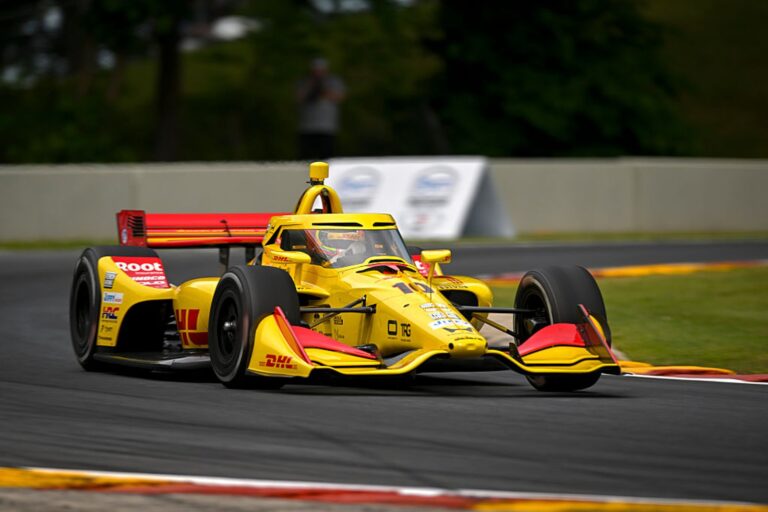
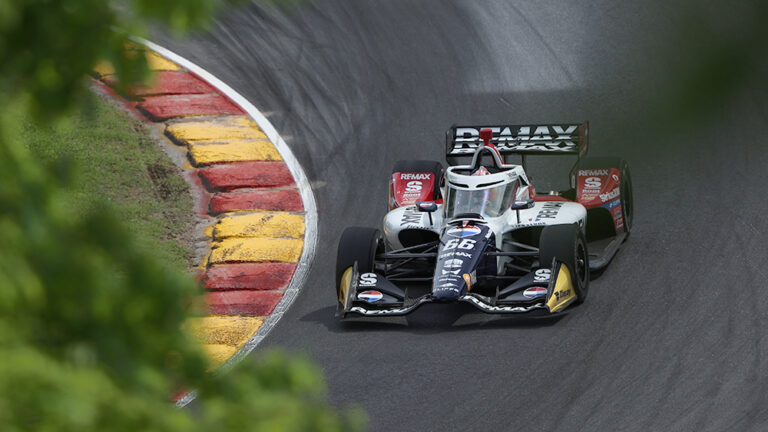
IndyCar Series is moving ahead with its development timeline for the 2028 car, even though not every piece of the puzzle is in place just yet. Early testing of the new Dallara IR28 chassis is still expected to begin this summer, but it won’t feature the final engine configuration the series plans to introduce.
The delay stems from ongoing discussions around the next set of powertrain regulations. Until those rules are finalized, manufacturers like Honda and Chevrolet can’t fully commit to building the new-generation engines. As a result, IndyCar will rely on existing solutions to get the initial test program underway.
For the early runs, teams are expected to use either the current 2.2-liter twin-turbo V6 engines or older 2.4-liter units that were previously shelved.
“We’ve had very regular meetings, both virtually and in person, at basically every event this year,” Boles stated. “Honda and Chevrolet and the series are aligned on the importance of getting those rules decided quickly. And I feel really good about the progress and the collaborative spirit of both Honda and Chevrolet to get us there.”
2028 hybrid system not ready for initial tests
There are other gaps as well. The more powerful hybrid system planned for 2028 won’t be ready in time for these first tests. To compensate, engineers are likely to simulate its impact by adding ballast to the car, helping replicate the weight and balance the final package will carry.
He added, “I can’t give an exact timeline, but it’s getting closer, and they’ve been really fruitful conversations. And even talking separately with Honda or Chevy, both of them are very happy with the collaborative nature of the process.”
Even with those workarounds, the approach allows IndyCar to keep development on schedule. By the time the full engine and hybrid package is ready, much of the groundwork on the chassis side will already be complete, thus streamlining the path toward the series’ next era.


Comments.
Loading comments…