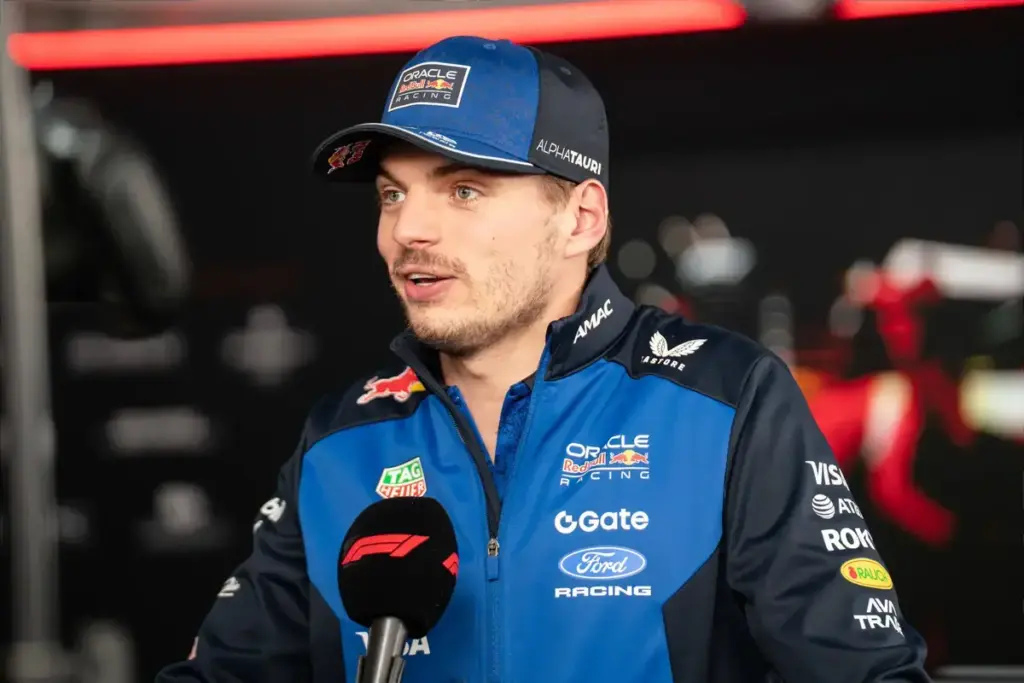

- Verstappen ejected Guardian reporter from a Red Bull media session at Suzuka.
- Grudge over a smirk and a pointed question spiralled into an FIA intervention.
- Red Bull has heard the FIA’s concerns. Verstappen, has no plan to meet journalist.
The FIA has stepped in after Max Verstappen ejected a British journalist from a Red Bull media session at the Japanese Grand Prix in Suzuka.
The four-time world champion ordered Guardian reporter Giles Richards to leave before he would speak to the assembled press. What started as a private grudge has now become a question the sport’s governing body feels it cannot ignore.
What happened at Suzuka
The session had barely begun when Verstappen stopped it. He looked across the room, spotted Richards and made his terms simple.
“One second. I’m not speaking before he’s leaving,” Verstappen said.
Richards asked whether this was because of a question he had asked at the Abu Dhabi Grand Prix the previous December. Verstappen confirmed it was.
“Yep. Get out,” he said.
Then, once Richards had walked out, “Now we can start,” he added.
The room fell quiet. Journalists who had gathered for what they expected to be a routine media day found themselves watching something else entirely, a driver using his platform to decide who got to be in the room.
The roots of the dispute stretch back to December 2025, after the title-deciding Abu Dhabi race.
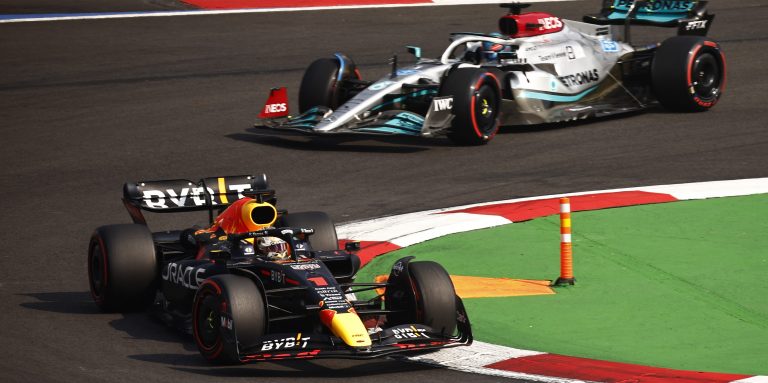
Verstappen had clashed with Mercedes driver George Russell earlier in the season in Barcelona, driving into the side of Russell’s car after a penalty had frustrated him.
The stewards handed him a 10-second penalty, which dropped him from fifth to 10th and cost him nine championship points.
It was a moment that had real consequences for how his title fight with Lando Norris ended.
When Richards raised that incident in Abu Dhabi in the post-race press conference, Verstappen bristled.
“You forget all the other stuff that happened in my season,” he said.
“The only thing you mention is Barcelona. I knew that would come. You’re giving me a stupid grin now.” He carried that grievance with him for three months, all the way to Japan.
Max Verstappen justifies his stance
After the Suzuka session, Verstappen spoke to Dutch broadcaster Viaplay and tried to explain the difference between a hard question and what he believed Richards had done.
He said he had no problem with difficult questions.
“I get asked a lot of questions, a lot of stupid questions as well, but I answer them. That’s fine. It’s not always that a question is great or whatever, but that’s part of Formula 1,” the Dutchman said via comments shared by GPBlog.
But his complaint was not about the topic itself. He said he had addressed the Russell incident many times and always explained his thinking in full.
What crossed the line, in his view, was how Richards posed the question at Abu Dhabi.
“After the final race, when you ask that question, and you start laughing in my face while asking the question, it’s clearly done with bad intent to ask the question,” Verstappen said.
“At that point, it shows a massive lack of respect.”
Verstappen has long felt that British media coverage tilts against him. That feeling hardened during and after his 2021 title fight with Lewis Hamilton, and it has not softened much since.
Richards’ side of the story
Richards wrote about the Suzuka incident in The Guardian. He noted that the encounter at Suzuka was his first with Verstappen in 2026.
He had not expected three months to have done nothing to soften what had happened between them in Abu Dhabi.
In his account, he described how the confrontation played out.
“After being told he would not speak unless I left, I asked if it was because of the question in Abu Dhabi,” Richards wrote.
“He said it was. Once more, I was taken aback.” He pushed a little further. “You’re really that upset about it?” he asked. Verstappen’s reply was short: “Get out. Yeah. Get out.”
On the suggestion that he had been grinning or mocking Verstappen, Richards offered an honest reflection.
“I’m not sure I had a stupid grin,” he wrote.
“I was certainly taken aback by the vehemence of his reply, and it might have prompted a nervous smile. But I did not think it was funny, nor was I enjoying myself at his expense.”
He described what followed after he left the room. Within two hours, a hostile email arrived in his inbox.
“You’re the problem, you’re the toxic dipshit who’s responsible for the whole British bias in F1. You’re the worst,” it read.
Despite all of it, Richards kept his tone measured in the piece.
“I still admire Verstappen, and I hope we can enjoy a better relationship in the future,” he wrote. “Sometimes, difficult, awkward questions have to be asked. That’s the job that comes with the privilege.”
FIA involvement and the media advisory council
The incident did not remain a paddock talking point for long. It moved through formal channels quickly.
The matter was raised within the F1 Media Advisory Council, a body that includes a number of leading Formula 1 reporters.
Richards discussed the situation with the group. A subsequent meeting with the FIA followed, and the governing body then conveyed its concerns to Red Bull Racing directly.
According to GPblog, Richards has since spoken with Red Bull’s head of communications. Verstappen, however, has not met with Richards and, reportedly, has no intention of doing so.
The episode prompted a broader conversation about press access in Formula 1.
On the Sport Unlocked podcast, New York Times global sports correspondent Tariq Panja, The Times chief sports reporter Martyn Ziegler and global sports correspondent Rob Harris all said they would have walked out in solidarity had they been in the room.
Panja was direct about what he believed should have happened.
“Look, I would hope to think that the two of you would leave with me if I was thrown out of a room and we would do that for each other because it’s not on, is it?”
The implicit criticism was aimed not only at Verstappen but at the journalists who stayed behind and let the session continue.
Former world champion David Coulthard also questioned why the FIA had not reprimanded Max Verstappen. He argued the governing body should have acted rather than simply raised the matter with the team.
Many in the paddock have noted that Verstappen’s frustrations on track this season are beginning to show up off it too, and that the Suzuka session may say as much about where he is right now as anything he has done behind the wheel.

Comments.
Loading comments…