- Red Bull Racing enters 2026 as 4th-fastest team, paying for a championship gamble.
- Verstappen won 6 races in 2025’s final stretch, but each one cost development time.
- Hadjar calls this year’s chassis “terrible.” Mekies calls the sacrifice worth it.
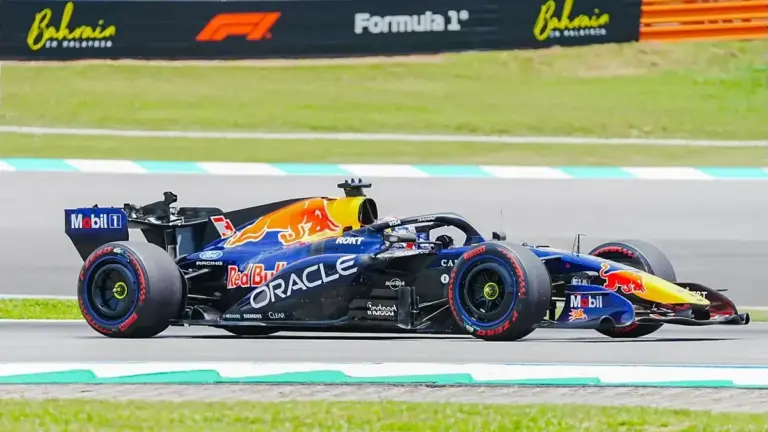
Red Bull Racing is paying a steep competitive price in 2026 after choosing to chase Max Verstappen’s fifth world championship deep into the 2025 season.
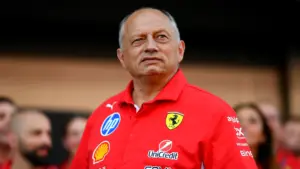
Team principal Laurent Mekies has openly acknowledged the cost. Three races into the new era, the Milton Keynes outfit sits sixth in the constructors’ standings, 119 points behind Mercedes.
The decision made sense at the time. Verstappen trailed Oscar Piastri by 104 points with nine races to go in 2025. Most teams in that position quietly shift their engineers toward the next season. Red Bull Racing did not.
Instead, the team kept pushing. It brought its last major performance upgrade as late as the Mexican Grand Prix in October. Verstappen responded by winning six of his last nine races and came within two points of Lando Norris in the final standings.
F1 2025: A season defined by Red Bull’s fighting spirit
The late push carried a cost that the sport’s financial and technical rules make unavoidable. The budget cap limits spending. The Aerodynamic Testing Restrictions cap wind tunnel and CFD time.
Every hour spent developing the RB21 in the final weeks of 2025 was an hour not spent on the RB22 concept. Mekies explained the thinking on the Beyond the Grid podcast.
“Nobody wanted to give up,” he said, as quoted by Motorsport. “We thought, and we still think, it was the right thing to do, because we felt that turning the page to ’26 would have been a little bit of an easy escape and a wishful thinking that next year will be better, even though we didn’t fully understand what were the limitations of ’25.”
The logic makes sense. A team that walks away from a struggling car without understanding why it struggled risks carrying those same problems into the next design. Red Bull Racing believed it needed to exhaust the RB21 before it could honestly move on.
The cost of commitment
Mekies did not dress up the consequence.
“The time and energy we invested for the late push last year, does it have an impact on where you start ’26? Of course, it does,” he said. “So, of course, we pay a bit of the price today. Do we use it as an excuse? No.”
Candour like that is uncommon in Formula 1. Teams rarely name their own vulnerabilities so plainly. That Mekies did it without deflection says something about the culture he is building at Red Bull.
The contrast with Alpine makes the trade-off vivid. The French outfit sacrificed much of its 2025 season to concentrate on the new regulations early.
Pierre Gasly outqualified Verstappen in both China and Japan in 2026. The gamble has paid off, at least so far.
What the 2026 season has looked like so far
The RB22 is currently the fourth-quickest car in the field. Mercedes, Ferrari and McLaren are all ahead. The team’s start to 2026 is its worst since 2015.
Verstappen has been candid about where the car sits. After the Japanese Grand Prix, he said he feels Red Bull is “more in that midfield battle than up at the front.”
His new teammate, Isack Hadjar, went further. “We have a good power unit. The engine is good. The chassis side is terrible. We’re just slow in the corners,” the 21-year-old said.
The data backs Hadjar up. The RB22’s biggest losses against Mercedes come in high-speed corners, particularly in sections where the 2026 hybrid system’s energy deployment interacts with the new active aerodynamics.
That is exactly where the new regulations demand the most. Red Bull is weakest precisely where the new rules put the most pressure.
A gamble with no clean answer
There is no obvious villain in this story. Red Bull Racing chose to fight in 2025, and that fight produced one of the great second-half revivals in recent memory.
The rivals who walked away from their 2025 campaigns earlier are now ahead, but their fans watched those seasons fall flat without a proper contest.
The team that defined the previous regulation cycle, winning multiple constructors’ and drivers’ titles, now faces a genuine rebuild at the start of a new era. The aerodynamic philosophy has shifted. The power unit mantra has changed. The gap to the front is uncomfortably large.
Mekies knows the work ahead is significant. But the spirit that refused to give up in 2025, the one that kept fighting when the points gap looked insurmountable, is still the same spirit running through the factory.
Whether it is enough to close the gap in 2026 is the question the season will answer.