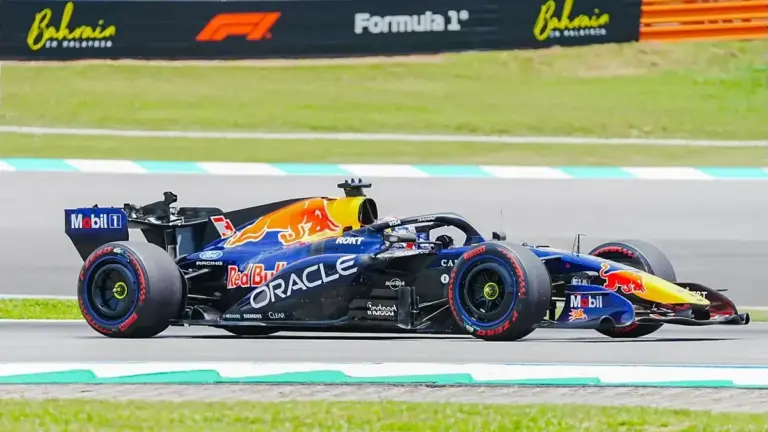
F1 leaders are reviewing the sport’s new 2026 regulations after a tense start to the season. Officials from the FIA, Formula One management, and team representatives plan to study the issue after this weekend’s race at the Chinese Grand Prix.
The review follows the season-opening Australian Grand Prix, where several drivers questioned both the quality of racing and potential safety concerns under the new technical rules.
If the data shows problems, changes could arrive as early as the Japanese Grand Prix on March 29. The plan is to gather more evidence before acting. Officials want to understand how the new cars behave across different circuits before making adjustments that could affect the championship.
Discussions between the FIA, FOM, and teams had already begun between Bahrain testing and the Australian race. Those talks produced a timeline for how the sport will review and adjust the rules if needed.
A deliberate, data-driven approach
Formula 1 officials insist the review reflects a calm, planned response rather than panic. Teams and regulators agree that the balance between energy harvesting and deployment may not be correct, but they also believe rushing changes would risk creating new problems.
The decision to wait also reflects the nature of the season opener. The Australian Grand Prix is one of the most difficult circuits for energy management during the year.
Officials felt reacting to that single race would not give an accurate picture of the cars’ true performance. FIA’s single-seater director, Nikolas Tombazis, said teams supported a cautious plan.
“The team’s unanimous position was that we should stick to the current arrangements for the first few races and to review the matter when we have a bit more data,” Tombazis shared via GPblog.
“Our intention is after China to be reviewing the energy management situation. We have a few tricks up our sleeves, which we didn’t want to introduce ahead of the first race as a knee-jerk reaction and which we will review with the teams after China,” he added.
If the data shows urgent issues, the governing body could approve quick adjustments before the Japanese Grand Prix on March 29.
The schedule may also help the process. The expected cancellation of the Bahrain Grand Prix and Saudi Arabian Grand Prix because of regional conflict could give teams more time to refine any changes before the Miami Grand Prix in May.
What changes Formula 1 is targeting
The main focus of the review is the energy system that powers the new cars. Teams and officials are studying whether the rules for harvesting and deploying electrical energy need adjustment.
One option is to increase the strength of “super clipping,” which would help drivers recharge their batteries more easily during a lap. Another possibility is to lower the level of electrical power that drivers can deploy.
Reducing deployment would slightly cut peak horsepower. However, it would allow drivers to keep the boost for longer periods instead of using it in short bursts. According to The Race, officials are also exploring whether the internal combustion engine could receive a modest power increase.
Right now, the system limits super clipping to 250 kW and sets deployment at 350 kW. Many inside the paddock believe those figures may not produce the best racing.
Tombazis also addressed criticism from drivers following the Australian GP. He argued that memories of previous rules often look better in hindsight.
“I didn’t hear any of the drivers speaking particularly good of the last cars and saying it was the best car,” he said. “So we tend to be very nostalgic in looking at past events.”
While he acknowledged that driver opinion is a valid and important perspective, he was clear that the primary measure of success for Formula 1 is whether fans find the racing exciting.
“One perspective is the view of the drivers, which is an important perspective,” Tombazis added. “Stefano [Domenicali] would say that the single matrix that matters to him is whether the fans like it.”
The Chinese Grand Prix will now provide the next set of data. Once teams review those results, Formula 1 leaders will decide whether the 2026 rules need small tweaks or larger changes before the season continues.
The early review shows that the new era of F1 remains a work in progress.