
The FIA has revised its F1 Penalty Guidelines for 2026, granting stewards the explicit authority to disqualify drivers or impose race suspensions for “very extreme” instances of deliberate or reckless collisions, bypassing the standard time penalties that have historically capped on-track punishment.
The change broadens the tools available to stewards as F1 enters a new regulatory cycle. Under previous guidelines, even the most dangerous driving typically resulted in five-second or ten-second time penalties, with penalty points accumulating toward a suspension only over multiple offences.
The 2026 framework allows stewards to act immediately when the severity of an incident warrants it, targeting both intentional contact and manoeuvres deemed to show a complete disregard for the safety of other competitors.
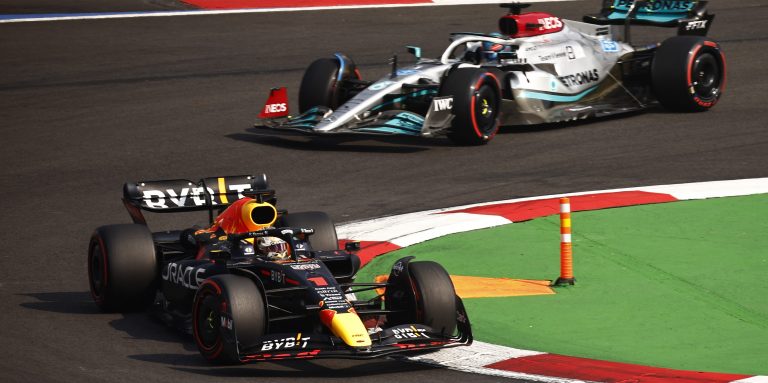
The updated guidelines also address two other areas. The definition of forcing a rival off-track has been broadened, giving stewards a wider basis for penalising drivers who leave insufficient room during side-by-side combat. Previously, the standard was defined more narrowly around car width at the apex.
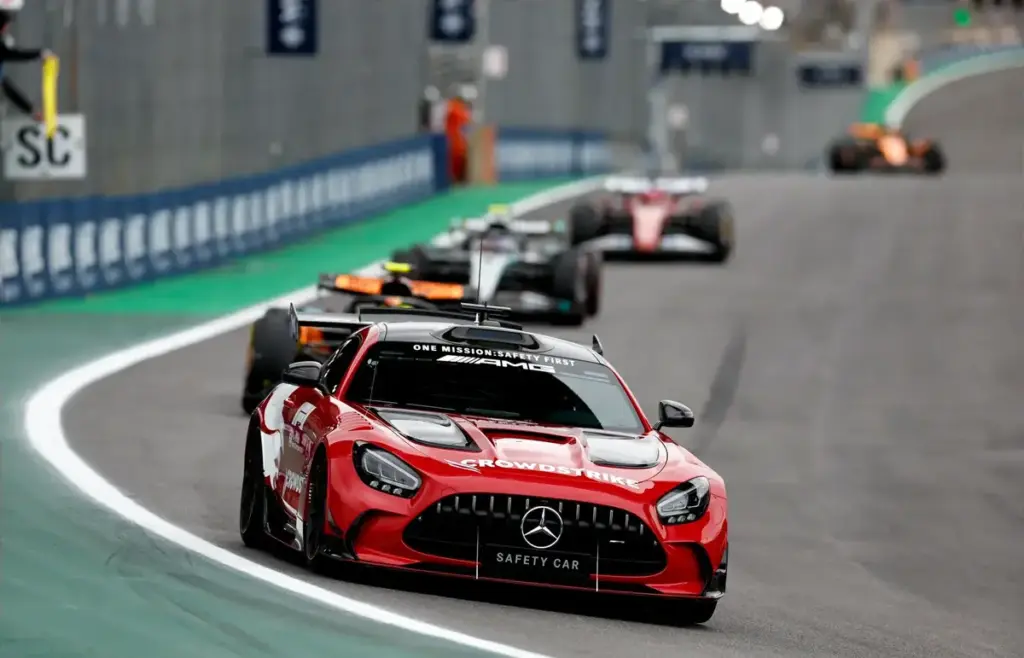
And regulations governing the gaps maintained between cars during Safety Car and Virtual Safety Car periods have been tightened, targeting both marshal safety and the strategic positioning that has surrounded restart timing and delta management.
Why the changes were made
The tighter VSC and Safety Car protocols follow incidents during the 2025 season that exposed weaknesses in existing procedures.
At the Mexico City Grand Prix, Racing Bulls driver Liam Lawson narrowly avoided striking two marshals crossing the track at Turn 1 on Lap 3. Later, on Lap 70, Carlos Sainz spun and stopped in an exposed position in the stadium section, with race control deploying a VSC after reports of fire from his Williams.
The FIA said at the time that marshal intervention was required because of the car’s position and the fire risk. “His car came to a halt in an exposed position,” the governing body said. “The car subsequently began smoking and race control received notifications of fire, making it clear that marshal intervention would be required for recovery.”
But the deployment neutralised the race at a critical moment, preventing potential overtakes for both Oscar Piastri and Max Verstappen in the closing laps.
Piastri was denied a chance to pass Oliver Bearman that could have kept him at the top of the drivers’ championship, while Verstappen had closed a 20-second gap to Charles Leclerc and was within DRS range when the VSC was triggered.
The 2026 gap regulations are designed to reduce the scope for drivers to manipulate spacing while marshals are trackside or while restart conditions remain sensitive.
How consistently stewards apply the new powers, particularly around disqualification and race bans, will only be tested once the 2026 flashpoints begin. And they will.
Watch this space.

Comments.
Loading comments…