Image courtesy of Scuderia Ferrari.
Yesterday, we started with a cocktail napkin doodle of a new front wing and turned it into a computer model. Today, that computer model is going to become a real front wing.
More Simulation and Maybe the Wind Tunnel
Until now, it’s likely the front wing concept has not been inserted into a full car model for CFD simulations. For one, you need to know which configuration of the car you intend to feature this new wing concept. This information requires input from all the affected design teams. The new wing concept may not perform as intended when combined with the complex aerodynamics of the full car. Or, there may be other unexpected results as the new front wing impacts an area of the car that was not anticipated. Unexpected results lead to redesign, which takes us back to the beginning of the process. But, we’ll be optimistic and say the front wing concept integrates perfectly with the entire car design. The CFD simulations show a projected lap time improvement.
Since we’re talking about the front wing, however, we’re not likely to manufacture a new piece based solely on CFD. That means we have to make a physical model for the wind tunnel. That means we need to schedule wind tunnel time, fund the tests (as some teams don’t have their own wind tunnel), analyze the test results, and compare the wind tunnel results to the CFD results. The results may differ. If they differ, much time will be lost determining the cause of the “deltas” (areas where the test results differ). The wind tunnel model will have to be examined to ensure it matches the computer model. If the wind tunnel model matches, this could point to a problem in the algorithms of the CFD simulations. This would be a very bad situation. Or even worse, maybe the test results of the wind tunnel are the erroneous ones. Or, the wind tunnel results are correct, and the front wing concept needs to be revised. Back to the cocktail napkin.
But We’re Optimistic…
…so the wind tunnel results look fantastic. The new front wing concept is producing the exact results in the wind tunnel we expected. We have validated the new front wing, and it’s ready to go on the car. Well, that is, as soon as it’s manufactured. The front wing is a complex piece, not just aerodynamically but mechanically as well. Because of the front wing deflection of Red Bulls past, the front wing has to be structurally rigid in certain axes, but potentially not in others, which some teams have thought to exploit. These are complex structural properties that further complicate an already complicated process of manufacturing a carbon fiber front wing. If the new front wing concept requires aggressive structural properties (it probably does), it may take multiple iterations of the manufacturing process to get it right. But our guys are good, so they get it right the first time. Ready to race, right?
Logistics
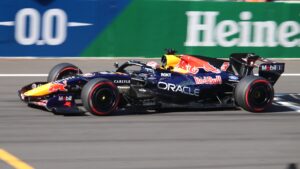
Do I need to even answer that question? Because we’re in the middle of the season, the cars and the people are constantly on the move. Shipping a new component from Europe to say, Asia, takes time. The piece has to get from the factory to a shipper, which then trucks the piece to distribution centers. From there, the piece likely ends up on a plane where it flies halfway across the world just to be loaded back on a truck in hopes of finding the team. This process alone could take a few days. Case in point, during today’s testing at Jerez, Daniil Kvyat damaged the front wing of the RB11. Red Bull did not have a spare wing. Logistics will determine how soon Red Bull can get a new wing to Jerez, and how soon Red Bull can resume their testing program.
Free Practice
Our logistics partner did a good job and got us the new front wing in only a few days. The wing is sitting on a stand, ready to be fitted to the car for free practice. Everything is going well, until it rains. Running the new wing in the wet won’t give us comparable data. So, we’ll run it in the next practice, except that now it’s dry and no time has been dedicated to setup work. Unfortunately you have to run the old wing. The last free practice is the last chance before qualifying, so no opportunity to run the new wing either. We’ll have to wait until the next race. So even though the new front wing was sitting on the stand ready to race, the team couldn’t run it because of the weather. Yet another delay until we find out if that new front wing is really two tenths faster.
But How Long Did It Take?
Weeks? Months? Half a season? All three? It all depends on how efficiently the teams function. Red Bull is thought to be a well-oiled machine, pumping out new components whenever they need them, even though they only had one wing today at Jerez. Ferrari, on the other hand, have been haunted for years with speculation that this process, or the lack of a process, is the very root-cause of their struggles. If you’re a smaller team, however, you may not be able to afford to perform all these steps. If a wind tunnel model doesn’t produce the expected results, the team may not have the money to restart the process leading to another wind tunnel model.
All these scenarios emphasize why preseason testing is so important. Whatever the teams find at Jerez , they have over a month to make changes until the first race. These changes don’t have to worry about being shipped halfway across the world either. In addition, the car is in its most standard configuration now. Everyone is at the same point with their designs, as in step 1. It’s easier to coordinate a development process with the various design teams as everyone is on the same cycle. In short, a successful preseason testing program can put a team on the path to success for the rest of the season. An unsuccessful program will put the team behind schedule. With the advantage Mercedes held in 2014, no team can afford to come to Melbourne already behind schedule.
In part 3, we’re going to take what happened in Jerez, and estimate where each of the teams may be in their development cycle.