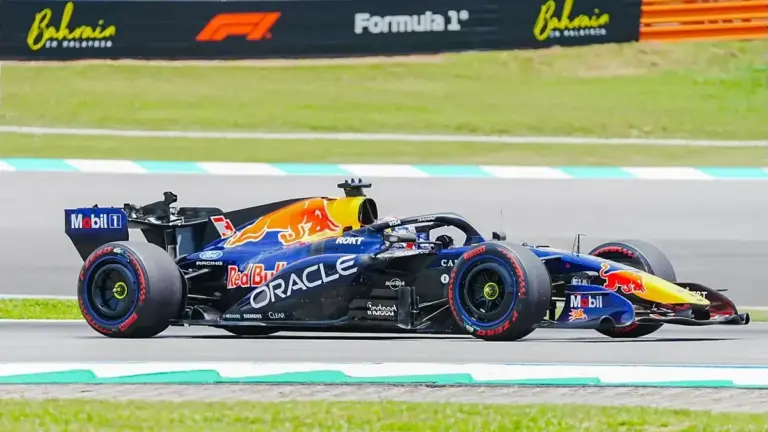
The Kimi Antonelli Baku weekend started badly and never really settled down. He lost 45 minutes of running in first practice and another 35 in second practice. Then he crashed out of Q1 and had to start 16th on the grid for the Azerbaijan Grand Prix.
He finished fifth after 51 laps. On almost any other weekend, that result would have stung. Speaking ahead of the Bahrain Grand Prix, the young championship leader explained why that drive mattered more than the finishing position suggests, and what it taught him about a weekend that refused to go his way.
The Core Revelation / Overlooked Data
Antonelli has built his season on attacking every lap. Switching into damage limitation mode did not come naturally to him. “First of all, I didn’t really like it, driving under the limit,” he said, looking back on the stretch of the race where he chose caution over speed.
He felt the pace deficit throughout. “I felt a bit too slow, but I think the learning was that sometimes you have to accept this kind of situation,” Antonelli said. That kind of acceptance runs against instinct for a driver who has spent the season pushing to win, not just to finish.
After our qualifying crash report covered the Q1 shunt that wrecked his grid slot, there was little choice left but to manage the race rather than chase it. “You have to accept to settle for a result that even you didn’t expect or you didn’t want, you know, settle for a P5 before,” he said. It’s a blunt admission from a driver who usually aims higher than fifth.
Statistical Proof & Expert Dissection
The numbers from that Friday tell their own story. Antonelli missed 45 minutes in FP1 and 35 more in FP2, the two sessions drivers rely on to find a car’s limits before qualifying. Our FP2 recap captured just how disrupted that running was before he even reached Saturday.
Then came the Q1 crash that dropped him to 16th on the grid, far from where Antonelli or Mercedes had planned to start. Climbing from there to fifth across 51 laps took patience as much as pace.
Antonelli said the race taught him plenty about his own reactions under pressure. “And also I think in the race I kind of learned even more about myself, I think. How I react to certain things,” he said.
In practice, that meant holding back when every instinct told him to attack. He told Motorsport.com in the original interview: “And trust me, it was very hard to make that decision after the start of the race to just sit back and kind of like… take it, I wouldn’t say easy,” he said. “But take the least amount of risks as possible because I’ve been used to all season to just push. Go for it.”
It shows how calculated a title contender’s approach to risk has to be. The Baku race report looked at that same weekend from a different angle.
Future Implications & Debate Trigger
For Antonelli, the point of Baku was never really where he finished. It was finishing at all. “What I just needed was finishing the race with a decent result just to move on and focus onto the next one,” he said.
He found some lightness in it afterwards too, joking to Sky Sports F1 that he had been driving a bit like his grandmother, in damage save mode. “She went back to Italy,” he said. “I booked a flight. She went back home.”
The joke doesn’t hide the point underneath it. Restraint is a skill a championship leader needs as much as raw speed. The Kimi Antonelli Baku weekend forced him to find it fast, under pressure, with the title fight still live. Bahrain is next, and it will show whether that discipline becomes a habit rather than a one-off reaction to a bad weekend.