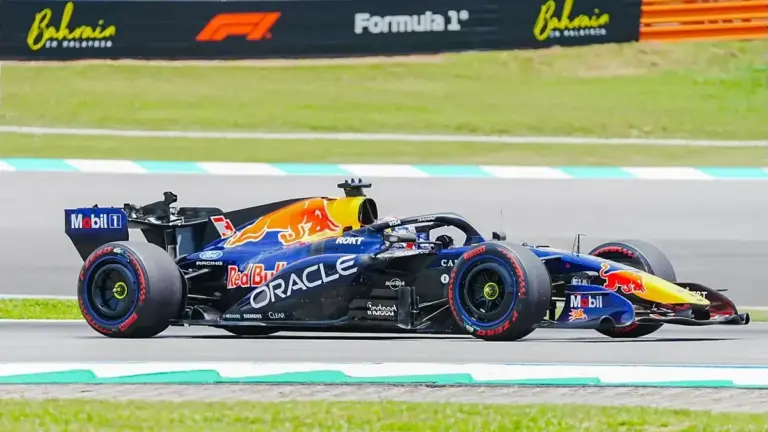
The Sepang F1 return 2026 is confirmed. Malaysia’s old grand prix venue steps back onto the calendar for a single race, acting as a proxy host for the Bahrain Grand Prix. It’s an unexpected fixture, and one that closes a gap rather than opening a new era for the circuit.
Sepang spent eighteen years on the calendar before Malaysia ended its hosting deal a season early, back in 2017. Nobody has staged a championship grand prix there since, until now.
This is strictly a one-off booking. Nothing points to Malaysia returning as a permanent fixture beyond 2026, and there’s no suggestion of a longer-term deal attached to it.
Pirelli Compound Choices and the Nine-Year Gap
Pirelli has nominated the C2, C3 and C4 compounds for the Sepang F1 return 2026, a trio pulled from the firmer end of its range. That’s notable in itself. Sepang’s long, committed corners have traditionally punished rear tyres hard, and Pirelli’s choice suggests it expects similar demands from cars it has never actually tested there.
Pirelli grades its compounds from C1, the hardest, to C5, the softest, and picks the band it believes suits a track’s abrasiveness and energy loads. Nine years is a long gap by any measure. The compounds themselves have changed generation more than once since 2017, and so has the car running on top of them. Pirelli’s engineers usually lean on years of sensor data and known degradation curves when nominating a set for a circuit. At Sepang, that archive stops dead at the last visit, leaving simulation and data from similar circuits to fill the gap.
That makes the C2 to C4 selection an educated guess rather than a settled formula. Teams arrive with no current baseline either, which raises the stakes on Friday practice more than usual.
Sepang Historic Data Meets Modern Ground-Effect Cars
Sepang built its reputation on long, committed corners, a sweeping final sector, and heat that punishes cars and drivers in close to equal measure. Fernando Alonso claimed his first Formula 1 pole position there in 2003, a result that still stands as one of the defining moments in the circuit’s history.
The track kept hosting other championships after Formula 1 left. MotoGP continued to use Sepang for testing and racing, including previous testing action at Sepang, and the venue produced dramatic victories hosted at Sepang long after the grand prix circus moved on.
What’s different in 2026 is the car. Formula 1 switched to ground-effect aerodynamics in 2022, a philosophy built around underfloor airflow rather than the high-rake approach that raced at Sepang in 2017. Underfloor venturi tunnels generate most of the downforce now, rather than the bargeboards and wide front wings that defined the cars Sepang last saw. Ground-effect cars behave differently in traffic, through fast changes of direction and over bumps, drawing on modern motorsport engineering principles that barely existed in their current form nine years ago.
Sepang’s layout rewards a car that rotates well through long, committed corners rather than one that simply carries raw speed. Teams have a lot of simulation data and nothing from an actual session on this exact combination of track and car. That’s a rare situation on the current calendar, where most circuits get at least an annual refresh.
What the One-Off Return Means for the 2026 Title Fight
The lack of recent data points to a weekend that’s harder to predict than most. Autosport reports fans and teams should expect unpredictability for F1’s Sepang return, with far fewer reference points for setup work than at a typical calendar stop.
A single unpredictable weekend carries more weight when the championship is still close. A circuit nobody has current data for can scramble the usual form book, at least for one race, and a bad Saturday at an unfamiliar track costs exactly as many points as one at a circuit raced every year. Related coverage has set out paddock expectations for Sepang’s return, and the general view points to teams leaning heavily on practice running rather than pre-event simulation.
None of this makes Sepang a permanent fixture again. It stays, for now, a single race filling a gap left by Bahrain, built on history rather than a fresh long-term deal. For one weekend in 2026, though, it puts every team back in territory it hasn’t raced in nearly a decade.