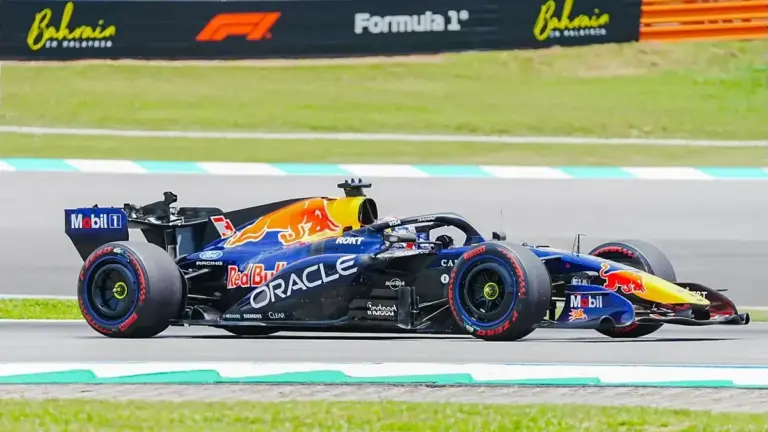
The FIA has declared a heat hazard race for this weekend’s Bahrain Grand Prix in Malaysia. Forecasters expect temperatures above the 31 degree Celsius threshold that triggers the rule. Storms are building around the Sepang International Circuit too, adding thick, heavy air to an already testing weekend.
That designation brings a familiar set of safety measures into force. Cars will carry extra weight for cooling equipment. Drivers must choose between wearing a cooling vest or running extra ballast instead. Supporters heading into the race weekend can catch up with our preview of the race weekend for the wider context.
The 5kg Weight Increase and Cooling Vest Mandate
Under FIA safety rules, a heat hazard declaration adds 5kg to the minimum weight of every car on the grid. The extra allowance covers the hardware needed to cool a driver down: tubing, a pump and a vest worn under the race suit. It’s simple in principle.
Drivers are not forced to wear the vest. Anyone who opts out carries the same 5kg as ballast instead, so no one gains a weight advantage either way. It’s a straightforward trade: lower body temperature, or a fixed lump of weight a team can at least place where it wants on the car.
George Russell has worn the system before and admits it takes some getting used to. “Not everybody finds the top comfortable, but I think some find it more comfortable than others, and of course over time you’ll be able to adjust it to your own preferences,” he said. The cooling hardware itself sits alongside other advanced motorsport technical innovations that have found their way from the track onto the road.
Qatar 2023 Legacy and Humidity Statistics
The heat hazard rule traces back to the 2023 Qatar Grand Prix. Extreme heat and humidity at Lusail left several drivers struggling physically during that race. It pushed the FIA to build a proper framework for hot weather events, rather than reacting to each one as it happened.
Malaysia becomes the fifth race on the calendar to carry the designation. Singapore and the United States were the first two, added last year. Austria and Italy joined them this season. Sepang’s tropical climate, close to the equator and prone to sudden storms, makes it an obvious candidate for heat hazard race status.
Russell has described just how hot it gets inside the cockpit in these conditions. “The cockpits are getting on for 60C,” he said, “it’s a bit of a sauna inside the car, so I think we all welcome it.” Few drivers argue against the need for extra cooling when conditions reach that level, even if the added weight is unwelcome everywhere else on the car.
Full details of the regulation first emerged in a Crash.net report on the heat hazard declaration, which set out the thresholds and the thinking behind them.
Splitting Heat Hazards and the Tactical Ballast Dilemma
A 2026 tweak to the rule gives the FIA more flexibility on sprint weekends. The governing body explained the change in its regulations:
“The declaration of a Heat Hazard may now be split between Sprint and Race. A Heat Hazard will still be declared, for Sprint, Race or both, 24 hours prior to the start of the Competition.”
That matters because conditions can shift sharply across a weekend. A storm front might cool Saturday’s sprint while Sunday’s race still bakes in the sun. Teams need clarity by race morning on which sessions carry the extra weight.
For engineers, the ballast decision isn’t simple. Vest hardware and compensating ballast weigh the same, but ballast can be shifted around the chassis to fine-tune balance, while the cooling system has to sit wherever the plumbing allows. Some teams will treat the vest purely as driver welfare. Others will quietly prefer the ballast, for what it does to the car’s weight distribution.
That kind of debate echoes previous paddock technical debates over where every kilogram on an F1 car should sit. Malaysia’s heat hazard race will only sharpen the argument this weekend.