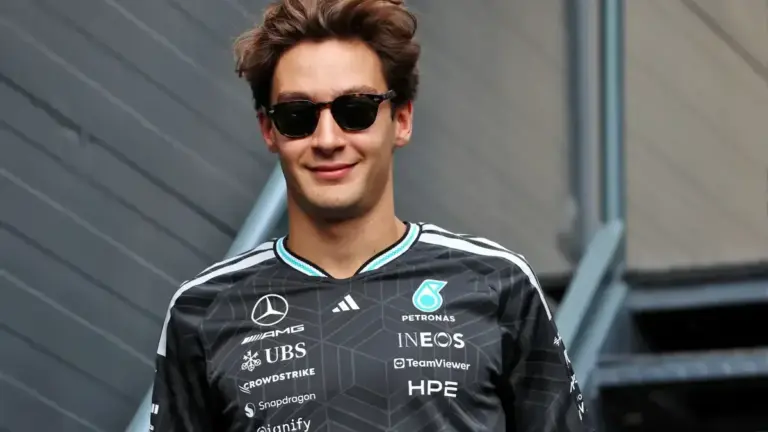
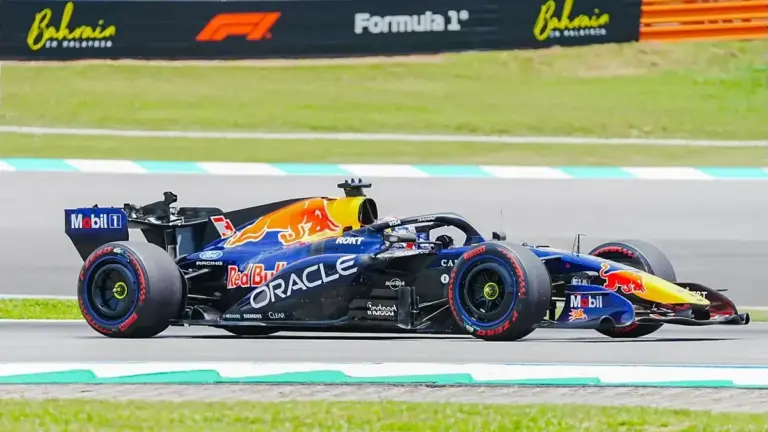
Lando Norris became the target of a fresh wave of abuse on social media after the Azerbaijan Grand Prix, and the fallout has reopened a familiar argument in Formula 1. The Will Buxton F1 online abuse comments, made on the Up To Speed podcast, put the responsibility for that toxicity squarely on the drivers whose fans dish it out.
The trouble began in Baku when Franco Colapinto locked up during a safety car restart. He collided with Pierre Gasly, who was then knocked into Norris. All three cars were out of the race within seconds, and none of them finished.
Norris didn’t hide his frustration afterwards. He said some drivers shouldn’t be in Formula 1 at all and called for Colapinto to be hit with a race ban. He later apologised for the remarks, but by then his words had already reached Colapinto’s fanbase, and Norris found himself on the receiving end of targeted abuse online.
Buxton’s Up To Speed Podcast Revelations
Buxton didn’t mince his words when he addressed the episode. He argued that staying quiet while your fans pile on another driver isn’t a neutral position. It’s a choice, and a damaging one.
It’s [incumbent] on any public figure, particularly sports people, if their fan base engages in this kind of rhetoric against other fans, against other sports players or public personalities or whatever within this social media space. I think it is absolutely incumbent on them to call it out,
That line sets out his central claim plainly. If you have a platform and a fanbase capable of organised abuse, Buxton believes you also have an obligation to speak up when that fanbase crosses a line. Silence, in his view, is never really neutral.
Analyzing Driver Accountability and Fan Dynamics
Buxton went further, framing complicity as the direct result of inaction rather than intent. Drivers don’t need to start the abuse to be part of the problem; they just need to let it happen without comment.
It is incumbent on the drivers whose fan bases are making these comments to stand up, say something and say, ‘You do not represent me, and I do not want you making these comments,’ and if you don’t, then you are complicit in it continuing.
It’s a blunt standard, and one that applies well beyond this single Baku incident. Fan culture in Formula 1 has grown sharper and more tribal as the sport’s popularity has grown, and drivers now sit at the centre of followings that behave more like football ultras than casual motorsport fans. Our Lando Norris driver profile traces how that following has built up around him over the past few seasons, and why his every post-race comment now carries weight far beyond the paddock.
Buxton isn’t asking drivers to police every comment on every platform. He’s asking for something simpler: a public line in the sand, drawn clearly enough that toxic fans can’t claim to be acting on their favourite driver’s behalf.
The Broader Impact on Driver Speech and Online Culture
Buxton closed his argument with a direct challenge to anyone who claims to want change but won’t say so publicly.
You have to take a stand. If you truly want people to believe that you want to see it end, then you have to take a stand and you have to take a position because being silent is complicity in it.
That challenge lands at a moment when online abuse across Formula 1 has become harder to ignore. Drivers’ social media accounts are now a frontline for fans venting after every contentious race, and Baku was only the latest flashpoint. We covered several of the wider tensions building through the season in our recent F1 talking points piece, and the pattern Buxton describes isn’t new; it just rarely gets named so directly by someone inside the paddock.
What makes this debate different is the demand for drivers themselves to act as the first line of defence. Stewards can penalise dangerous driving, and teams can manage their drivers’ public statements, but neither can stop a fanbase from turning on a rival overnight. Buxton’s argument, laid out in full in Motorsport.com reporting, puts that burden on the drivers themselves, whether they asked for it or not.
Norris has already apologised for his own comments after Baku. Whether Colapinto, or any other driver whose fans turn abusive, follows Buxton’s call to speak out directly remains to be seen in the races ahead.