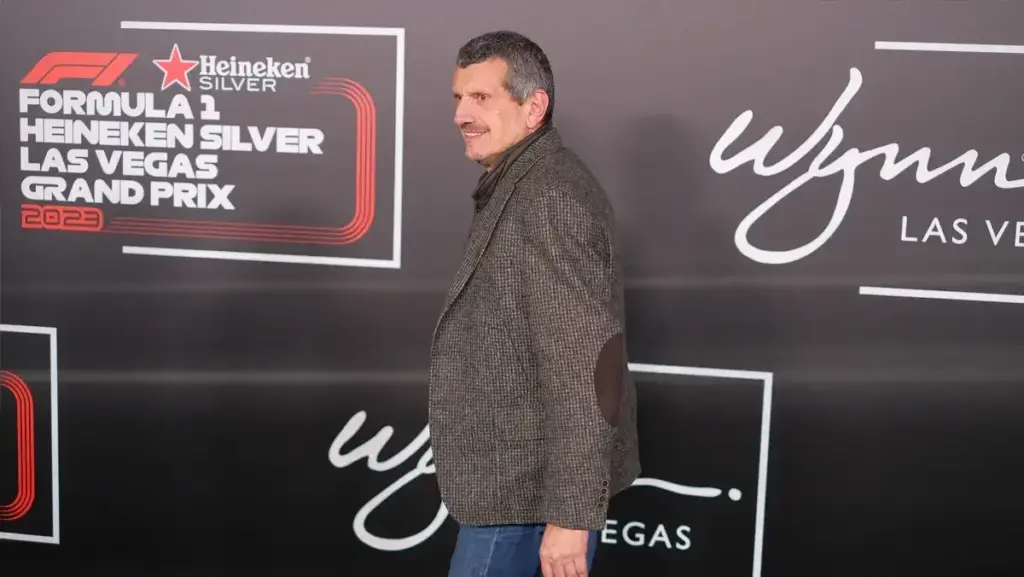

Madrid arrived on the 2026 calendar with more hype than almost any new venue in recent memory. Then the lights went out on race day and virtually nobody overtook anybody. Guenther Steiner, never a man to soften his words, says the Madring circuit has a serious problem that must be fixed before 2027.
From Initial Excitement to Madring Backlash
The inaugural Spanish Grand Prix at the new Madring circuit was supposed to be one of the highlights of the season. Instead, it produced a processional race with almost no meaningful overtaking, and the criticism arrived fast and hard. Fans who had waited years for a street circuit in the Spanish capital were left underwhelmed by a layout that simply didn’t allow cars to race each other.
Guenther Steiner, the former Haas team principal turned broadcaster, addressed the backlash on The Red Flags Podcast. Steiner has become one of the sport’s most trusted voices since leaving Haas, and he’s rarely shy about naming problems where he sees them. His verdict on Madrid was blunt: the track needs work, and it needs it soon.
It isn’t the first time Steiner has passed judgement on a team or project this year. Regular readers will remember Steiner’s verdict on McLaren’s engine setup earlier this season, which showed the same willingness to say what others in the paddock were only thinking.
How Madrid Mirroring Las Vegas Offers Hope for 2027
Steiner didn’t just criticise Madrid though. He drew a direct comparison with the early struggles of the Las Vegas Grand Prix, a race that has since become one of the most popular weekends on the calendar. In his view, growing pains are normal for a brand new venue.
“It was exactly the same in Vegas, the first year, ‘Oh, why would you go to Las Vegas? That’s the most stupid thing to do.’ It has become a very good thing, and some things work straight away, and some things need some fine-tuning,” Steiner said.
He went further, recalling just how chaotic that first Las Vegas weekend actually was behind the scenes. “You remember Vegas the first year with the drainage covers coming up. We were there at 6am, ‘This is a disaster, they don’t know what they’re doing.'” It’s a fair point. Few races have had a rockier practical start than Vegas did, and yet it’s now spoken about as one of the calendar’s crown jewels.
“So there was negativity there, but now Vegas has become almost an iconic race already. It seems like it’s been there forever because it’s so cool,” Steiner added. That’s the template Madrid will hope to follow: a rocky debut followed by rapid improvement once the layout and logistics are sorted properly.
The 10-Year Contract Dilemma and Overtaking Deficit
The comparison with Vegas only goes so far though, because Vegas’s early problems were mostly logistical. Madrid’s problem is more fundamental: the track itself doesn’t seem to allow overtaking. A drainage cover can be fixed overnight. A layout that produces a procession needs proper redesign work, and that takes time and planning most circuits don’t have between one September and the next.
Steiner made the stakes clear when he pointed to Madrid’s long term commitment to the sport. “If next year Madrid is not sorted out, I would see it as a failure because it’s a 10-year contract. It needs to be fixed. There cannot be a second year like this,” he said.
That’s a significant warning from someone who spent years running a team on the grid and understands exactly how much scrutiny a new race gets in its first few seasons. A 10-year deal is a huge commitment for both Madrid and Formula 1. If the racing doesn’t improve quickly, that commitment starts to look like a burden rather than an asset, especially with other cities keen to host a grand prix of their own.
Modern circuit design increasingly leans on simulation and data modelling long before a single kerb is laid, much like the wider trend of technologies transferred from F1 to road cars. Getting the balance between spectacle and technical challenge right isn’t easy, but it is very much possible with the right approach.
Why Madrid Must Act Before Azerbaijan and Beyond
All of this comes at a fascinating point in the 2026 season. Kimi Antonelli currently leads the drivers’ championship by 81 points over George Russell, with Lewis Hamilton sitting third. That’s a commanding gap with a real title fight still to be settled, and it’s part of why the racing itself needs to stand up to scrutiny at every round, including new ones like Madrid.
Attention now turns to the Azerbaijan Grand Prix, held at the Baku City Circuit from 24 to 26 September. Baku has its own reputation for producing entertaining races on a genuinely tricky street layout, and it will offer a useful reminder of what a new-era street circuit can achieve when the design gets the balance right between walls, straights and braking zones.
Madrid’s organisers now have roughly a year to take Steiner’s warning seriously. There’s clearly enthusiasm for the race among fans and sponsors, and the Las Vegas comparison offers a genuine reason for optimism. But enthusiasm alone won’t fix a layout that doesn’t let drivers race wheel to wheel. As Steiner made clear in Guenther Steiner’s podcast comments, a 10-year contract means there’s no excuse for standing still.
We’ll be watching closely to see whether Madrid’s second running looks anything like Vegas’s turnaround, or whether the criticism from this year carries straight through into 2027.




Comments.
Loading comments…