From Twin Spielberg Crashes to MotoGP Victory Lane
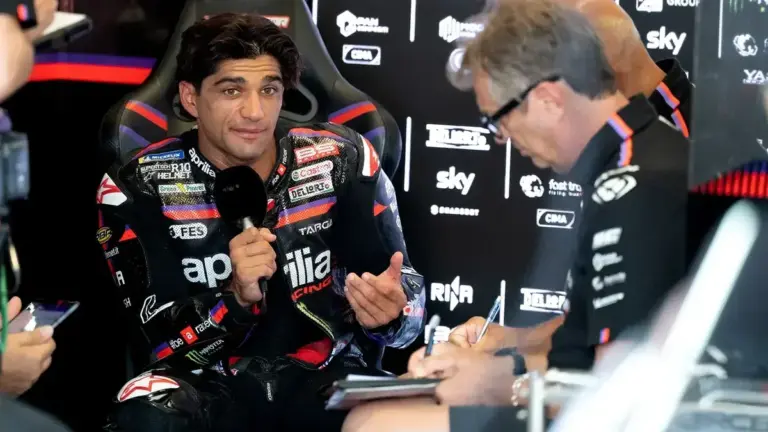
Pedro Acosta arrived at the Red Bull Ring under pressure and left it as a MotoGP race winner for the very first time. It is a result that looked unlikely less than 24 hours earlier.
The weekend started to unravel on Saturday, when Acosta crashed out of the sprint race in front of his home KTM crowd. He didn’t look for excuses afterwards. “This is on me,” he said, taking full responsibility rather than pointing to the bike, the tyres or anyone else in the garage.
That honesty matters to supporters who have followed him since his title-winning days in the smaller classes. Acosta has always worn his emotions openly, and Saturday’s crash clearly stung. Our report on his sprint race crash covers just how costly that setback looked at the time, coming at a circuit where confidence counts for almost as much as pace.
For KTM, the timing could hardly have felt more fraught. Spielberg is close to home for the Austrian manufacturer, and two crashes inside one weekend threatened to turn a home race into a damage-limitation exercise rather than a genuine title push.
Then came Sunday morning’s warm-up session, and a second crash. Two falls inside barely twelve hours would have rattled most riders heading into a Grand Prix start. Acosta needed a completely different mindset by the time the lights went out for the main event.
What followed was one of the most complete rides of his young career. Acosta kept his KTM upright through the early laps, managed pressure from the riders behind him, and crossed the line first at a track that has punished plenty of title hopefuls before him. We covered every stage of his Austrian Grand Prix triumph as it unfolded on Sunday afternoon, from the opening laps through to the podium celebrations.
Inside the Father-Son Bond Between Acosta and Trevathan
Ask Acosta what changed between Saturday’s crash and Sunday’s win, and the answer keeps coming back to one man: Paul Trevathan, his KTM crew chief. After the race, Acosta described Trevathan as a father figure, a phrase that says a lot about how this partnership works away from the cameras.
It isn’t the kind of language riders use lightly. Crew chiefs manage setup sheets, tyre strategy and radio calls under real time pressure through a race weekend. A father figure does something else too. He absorbs the emotional weight of a bad crash and helps a rider reset before the next session begins. Not every rider on the grid speaks about a crew chief in those terms, which makes Acosta’s choice of words at Spielberg stand out even more.
That reset looks to have been decisive at Spielberg. Acosta needed to walk back into the garage on Sunday morning, shake off a second crash in less than a day, and trust the work Trevathan and the rest of the box had already put in. Our piece on his mental focus during the race looks at how Acosta talked himself through that pressure once the lights finally went out.
Trevathan, for his part, was clearly moved by what he watched from the pit wall. In the Motorsport.com interview with Paul Trevathan that followed the race, he didn’t hide his admiration for how his rider had turned the weekend around. That trust, built over shared setbacks as much as shared wins, is the part of this story that lap times alone can’t explain.
Trevathan’s Technical Pedigree and Acosta’s Unlocked Potential
Trevathan didn’t arrive in Acosta’s garage without a track record of his own. Over a long career in the paddock, he has served as crew chief for Miguel Oliveira, Mika Kallio and Pol Espargaro, three riders with very different styles and very different demands. That range of experience is part of why Acosta trusts him with decisions that go beyond raw setup numbers.
Oliveira needed a bike built around late braking and strong drive out of corners. Kallio, long a KTM test rider as well as a Grand Prix competitor, brought development knowledge that helped shape how the factory approached new parts. Espargaro wanted stability at high lean angle above almost everything else. Trevathan worked through all three profiles across his career, and that adaptability now shows in how quickly he and Acosta have built a working method together.
When asked just how much more there is left in Acosta to give, Trevathan didn’t reach for a neat soundbite. “It’s a scary question,” he said, a response that reads as respect rather than caution. Crew chiefs who have already guided multiple front-runners tend not to hand out that kind of praise casually. It also explains why so many in the paddock see Acosta’s ceiling as still rising, not levelling off, even after a maiden win of this magnitude.
It’s worth remembering Acosta is still only in his early twenties and already a Grand Prix winner. If Trevathan, with his history of shaping title contenders, sees more room still to grow, the rest of the grid should take that seriously too.
What Acosta’s Shift to Ducati Means for KTM’s Future
Fans inside the Red Bull Ring grandstands got to see both sides of that story this weekend: the raw disappointment of Saturday, and the release of Sunday’s celebrations on the podium.
The timing of this breakthrough adds an extra layer to the story. Acosta is leaving KTM at the end of the season to join Ducati, which means Spielberg could stand as his first, and only, MotoGP win in Austrian orange. For KTM, that is a bittersweet moment: proof the project can produce winners, arriving just as their biggest talent prepares to walk out the door.
Losing a rider of Acosta’s calibre is never simple for a factory team, especially one still working to close the gap on Ducati at the front of the grid. KTM will need to manage that transition carefully, both on track and in how they present the project to supporters who have followed Acosta since his Moto3 title. Our round-up of changes in the MotoGP paddock looks at how often moves like this reshape a team’s plans well beyond a single season.
KTM’s junior ladder has produced plenty of talent, but replacing a rider who wins on effectively one full attempt at the top step is a different challenge altogether. Whoever eventually sits on Acosta’s bike will inherit both the machine Trevathan has helped build and the expectation that now comes with it.
What Spielberg does confirm is that the Trevathan partnership works, even under real pressure and after the worst possible start to a weekend. Whatever KTM builds next, replacing that dynamic won’t be straightforward. For now, this weekend belongs to Acosta, to Trevathan, and to the box that helped turn two crashes into a maiden MotoGP win.