The detail that says most about Marc Marquez’s 2026 season is not a lap time. It is the fact that he has to think about which side he sleeps on. The seven-time MotoGP champion has spent the year managing a right shoulder that has never properly settled since he broke it last October, and in a new interview he has laid out the small daily accommodations it demands — nights on his left side or his back, physiotherapy appointments “more than I would like”, and padel, once a fixture of his week, given up altogether.
Why it matters now: MotoGP restarts at MotorLand Aragon from 28–30 August with the championship finely poised, and the Marc Marquez shoulder injury is the single largest variable in Ducati’s title campaign. He has clawed a deficit that once stood at 102 points down to 40, and he has done it on an arm he openly admits is not letting him ride the way he wants to.
An injury that never quite went away
The history is well known. Marquez shattered his right humerus at Jerez in 2020, an injury that required four major operations over the following two years and very nearly ended his career. What is less understood is that the current problem is a separate one: a complicated right shoulder fracture sustained in a collision at the Indonesian Grand Prix last October, days after he had wrapped up his seventh premier-class crown.
The arm itself escaped further damage. The shoulder did not. As Crash.net reports, an undiagnosed nerve issue hampered him through the opening months of 2026 before further surgery in May finally addressed it. Three grand prix victories have followed.
Adapting rather than recovering
Speaking to the i Paper, Marquez was unusually frank about where that leaves him. “I have some limitations, but luckily, I can adapt my riding style and be competitive at the moment,” he said. “Not as I would like, because I feel I can do more. But enough to fight for the top.”
It is a revealing distinction. Marquez is not describing a rider waiting to get back to full strength; he is describing one who has rebuilt his technique around a permanent constraint and is quietly quick anyway. “In daily life, I don’t have many physical limitations if I take care of it in the correct way,” he added. “I go to the physiotherapist more than I would like. But that’s the only way to have a normal life.” Ahead of the British Grand Prix earlier this month he had summarised the situation more bluntly still: the shoulder, he said, “is what it is”.
What it means for Aragon
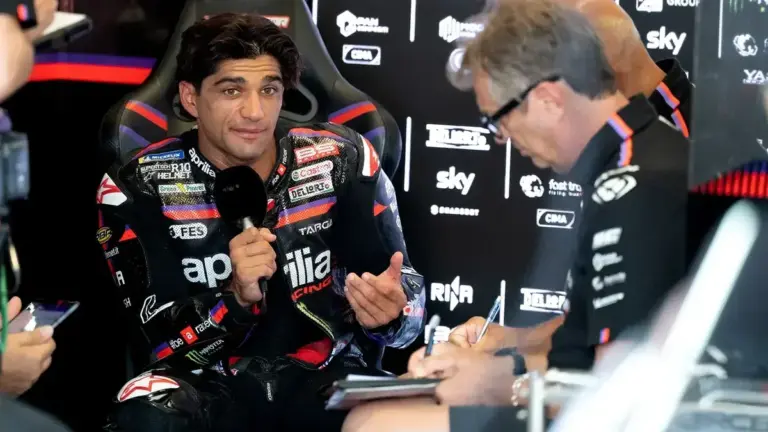
The timing is awkward for Ducati. Aragon is a circuit where Marquez has traditionally been formidable, and Crash.net’s own paddock podcast has framed the weekend as potentially make-or-break for the manufacturer’s title hopes. He arrives fourth in the standings after Silverstone, behind an Aprilia trio led by championship leader Jorge Martin, with Marco Bezzecchi and Ai Ogura between them — a reminder that the bike to beat in 2026 has not been the red one.
Forty points is recoverable across the run to the end of the season, but only at a rate of scoring that leaves no room for a weekend lost to discomfort. That is the calculation facing a rider who is simultaneously the fastest man in the paddock on his day and the one spending most time on a physio’s table. Elsewhere on the grid the margins are being chased through hardware, from KTM’s mid-season engine rebuild to Aprilia’s relentless development curve. Ducati’s biggest gains this year have come from a man learning to sleep on his left side.