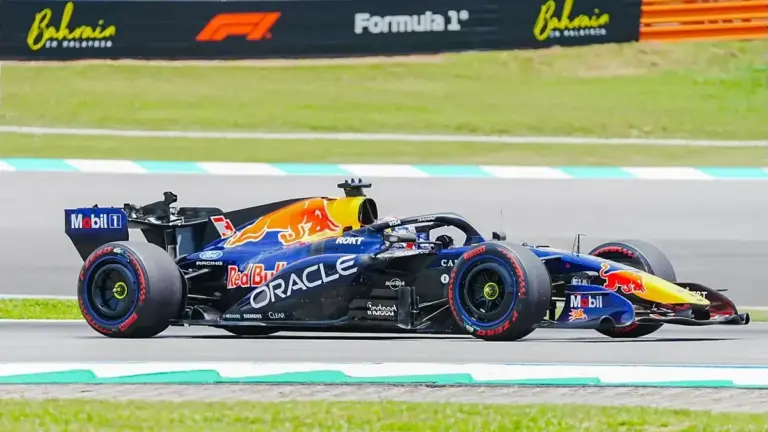
It took a Ferrari team principal with a sense of humour to name the defining device of the 2026 Formula 1 season. When Frederic Vasseur looked at the rotating rear wing his engineers had bolted to the back of the car in winter testing, he called it the Macarena wing — and the nickname stuck harder than any technical designation ever could. Six months and eleven rounds later, the joke has become the most closely watched piece of bodywork in the pit lane, and on Tuesday the FIA finally delivered its verdict on whether it gets to stay.
It does. Single-seater director Nikolas Tombazis told a select group of media, including Motorsport.com, that the governing body has no objection to the overall concept and will not intervene against it. That matters enormously heading into the Dutch Grand Prix at Zandvoort on 21–23 August, because the teams that have not yet built one are already building one anyway.
Why the Macarena wing came under the microscope
The scrutiny was never really about legality. It was about Max Verstappen. Two consecutive weekends, at Spielberg and then Silverstone, ended with the Red Bull in the barriers, and the sport’s newest aerodynamic trick sat squarely in the frame. The FIA asked both Red Bull and Ferrari for additional information — not as a shot across Maranello’s bows, but because they were the only two outfits racing the concept at that point, and treating them identically was the only defensible approach.
The two systems are not the same, which is part of what made the exercise worthwhile. Red Bull technical director Pierre Waché has been clear that his team was working on its own interpretation before Ferrari revealed theirs, and the Milton Keynes version rotates in the opposite direction. Red Bull simply could not get it race-ready for the opening rounds and did not run it until Miami. Ferrari, having shown its hand first in testing, caught rivals including McLaren flat-footed — a rare thing in the modern era.
Red Bull had to do “more work”
The nuance in the FIA’s position is the interesting bit. Clearing the concept is not the same as clearing every execution of it, and Tombazis made plain that Red Bull had to do “more work” following those Verstappen crashes. In other words: the idea is fine, the governing body simply wanted to satisfy itself that each team’s hardware behaves the way its designers claim it does under load.
That is a familiar Formula 1 pattern — a clever solution arrives, the paddock panics, the regulator studies it, and the device survives with conditions attached. We covered the moment the pressure peaked in Macarena Wing Crisis: Why Max Verstappen’s Crashes Forced FIA Action, and the direction of travel since has been steadily towards acceptance rather than prohibition.
The copycats are already coming
Which brings us to the real consequence of Tuesday’s ruling. McLaren has already tested a rotating wing and, per the same briefing, intends to race it at “one of the first weekends after the summer break” — the natural next chapter to its long-delayed Hungary upgrade. More teams are developing their own versions. With the FIA declining to legislate the idea out of existence, there is now no reason for anyone to hold back.
The delicious irony is that neither pioneer is leading anything. Kimi Antonelli tops the drivers’ standings for Mercedes after Hungary, with Lewis Hamilton second for Ferrari and George Russell third; Mercedes leads the constructors’ championship from Ferrari and McLaren, while Verstappen sits sixth. The cleverest wing on the grid has not yet won its inventors a title. What the FIA has confirmed is that they will get the rest of the season to try — and that by the time the paddock reconvenes in the Zandvoort dunes this weekend, they will not be the only ones dancing.