
Speilberg is known for directing thrilling Hollywood blockbusters. Austria’s Speilberg – or more precisely the Red Bull Ring – is similar, except instead delivering box office Formula 1 spectacles.
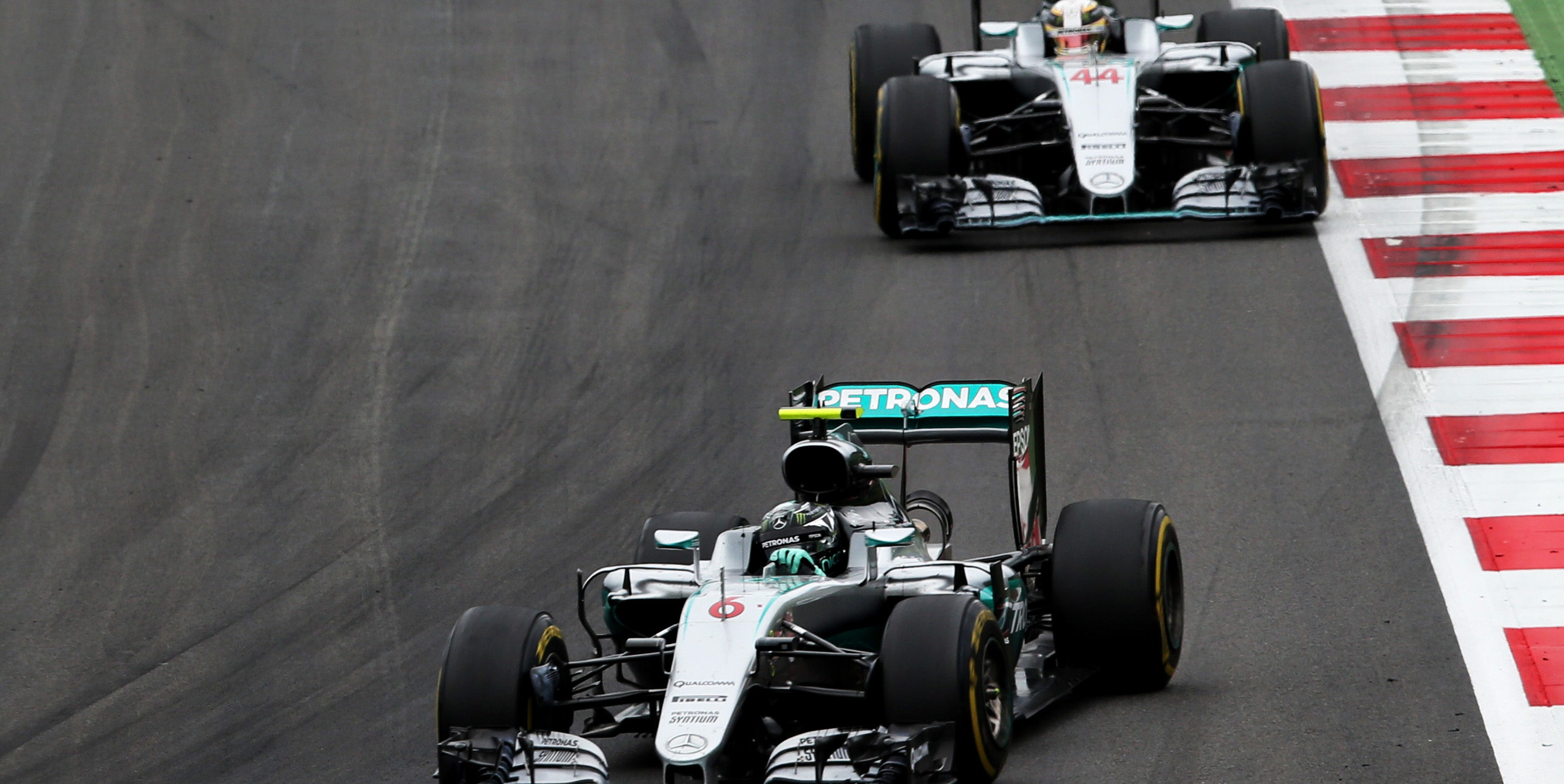
The 2016 Austrian Grand Prix was no exception, as Lewis Hamilton and Nico Rosberg’s intra-team rivalry reached another flashpoint, with a collision on the final lap of the race proving decisive.
The story of how the two championship contenders reached their last lap showdown is equally as compelling.
With three long straights, three heavy braking zones and five sweeping turns, the Red Bull Ring sounds simple to master. However, stringing a perfect lap together takes remarkable precision.
When precision escaped drivers in 2016, disaster awaited on the other side of the kerb. The FIA had installed aggressive ‘sausage’ kerbs on the exit of Turns 5 and 8 in order to prevent track extending.
When Max Verstappen tested out the new kerbs at Turn 5 in practice, they caused the suspension to fail on his RB12.
Drivers later complained about the intensity of the kerbs and the vibration exerted on suspension components, but the criticisms were met with defiance – stay on the track was the FIA’s message.
The kerbs became acutely relevant to the Mercedes battle on Saturday morning. During FP3, Rosberg’s rear-left top wishbone failed and pivoted him into the wall. With his race gearbox damaged, Rosberg was slapped with a five-place grid drop for the required change.
Hamilton duly scooped pole position as a result. Rosberg qualified second, but would instead start in seventh place.
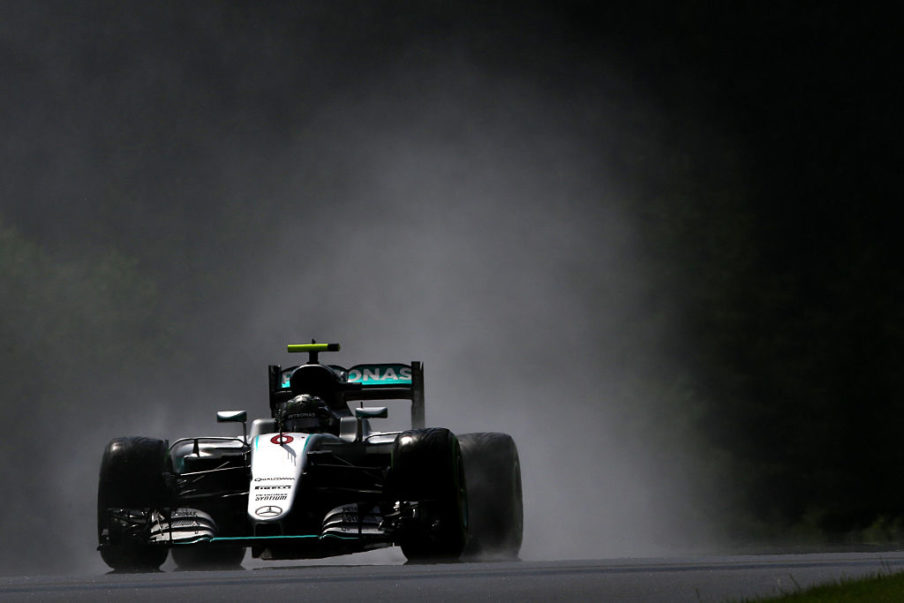
An extra sprinkle of Speilberg spice was added to the qualifying session in the form of a rain shower at the end of Q2. It led to a drying track during the final moments of Q3 and gave a huge advantage to those who had timed their last laps to perfection.
Nico Hulkenberg profited and lined-up on the front row of the grid for the first time since the Brazilian Grand Prix in 2010. Jenson Button scored McLaren’s best qualifying result of the Honda era in third place.
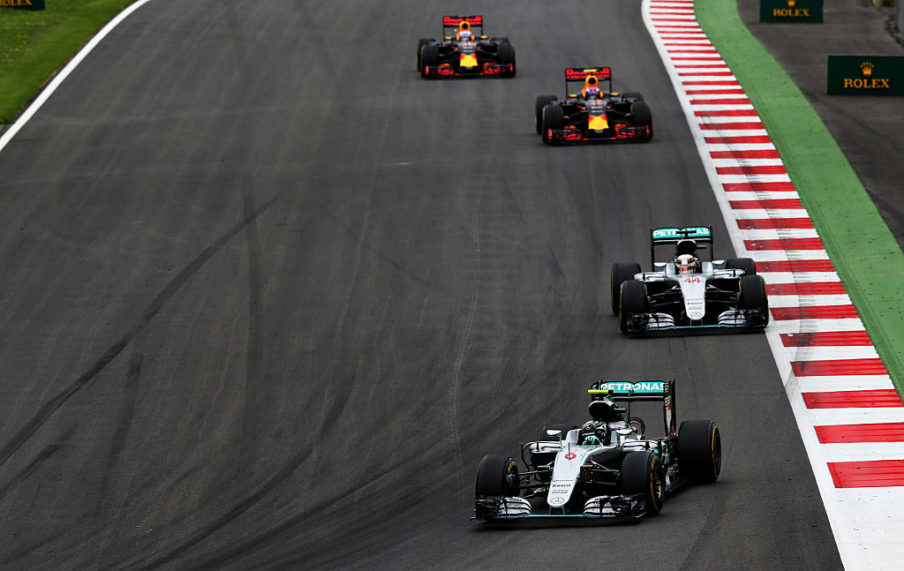
Both were swiftly dispatched by Rosberg in what was a race unaffected by the fickle Speilberg weather. While Hamilton had managed to build an early lead, a mid-race safety car after a Sebastian Vettel tyre blow-out cancelled his advantage and made it a straight shoot-out to the finish between the two Mercedes.
Verstappen may have grabbed the lead when Rosberg and Hamilton made their second pitstops, but his audacious one-stop was no match to repel the Mercedes duo.
Rosberg had the lead over Hamilton entering the closing stages. He was, however, on the supersoft compound and struggled with degradation to a greater extent than Hamilton on the soft rubber.
Entering lap 71 – the final tour of the Red Bull Ring in 2016 – Rosberg hit the inside kerb at the 90-degree right-hander Turn 1. Hamilton’s run was perfect. He picked up his team-mate’s slipstream in the run to Turn 2.
Rosberg defended the inside. Hamilton attacked on the outside, pulling wheel-to-wheel with his team-mate and title rival. At the apex, Rosberg ran deep. Effectively forced off the circuit, Hamilton was left with nowhere to go and the two made contact.
Rosberg’s front wing was badly damaged, hanging onto the nose by a thread. Hamilton swooped passed, undamaged in the incident. Rosberg would lose places to Verstappen and the sole-remaining Ferrari of Kimi Raikkonen on the run to the line.
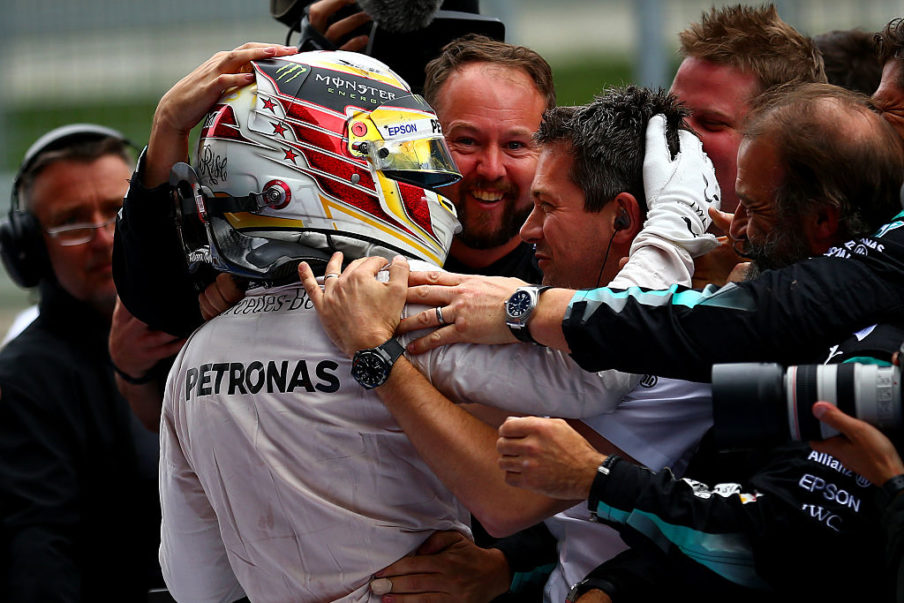
Hamilton claimed a dramatic victory, in what is only the second race this decade to be decided by an overtake on the final lap.
Rosberg attributed his failure to make the apex at Turn 2 to “passive” brakes – with the discs having overheated to the point prior to failure. His heavily worn supersoft rubber could also have played a part.
The stewards, however, did not believe that these factors carried sufficient weight in order to pardon Rosberg for the collision. He was handed a 10-second time penalty and two superlicense points for failing to provide Hamilton with racing room.
He was then further reprimanded for completing the final lap with a damaged car.
In November, the events of Austria were forgotten as Rosberg sealed his first and only F1 world championship. Had Hamilton edged him in the title fight, the legacy of the infamous Speilberg clash would have been far greater.
In 2018, F1 heads to Austria with one of the most competitive championship battles in years. Mercedes, Ferrari and Red Bull are separated by mere fractions at the head of the field. While the title contenders appear to be Hamilton and Vettel, Red Bull’s Ricciardo is a peripheral challenger who is not ready to rule himself out yet – and quite rightly so.
With a third DRS zone added for this season, overtaking into Turn 3 – the corner referred to as Turn 2 prior to the 2017 re-numbering – will now be even more probable. Perhaps the corner will be the scene of another rivalry flashpoint this season.

Comments.
Loading comments…