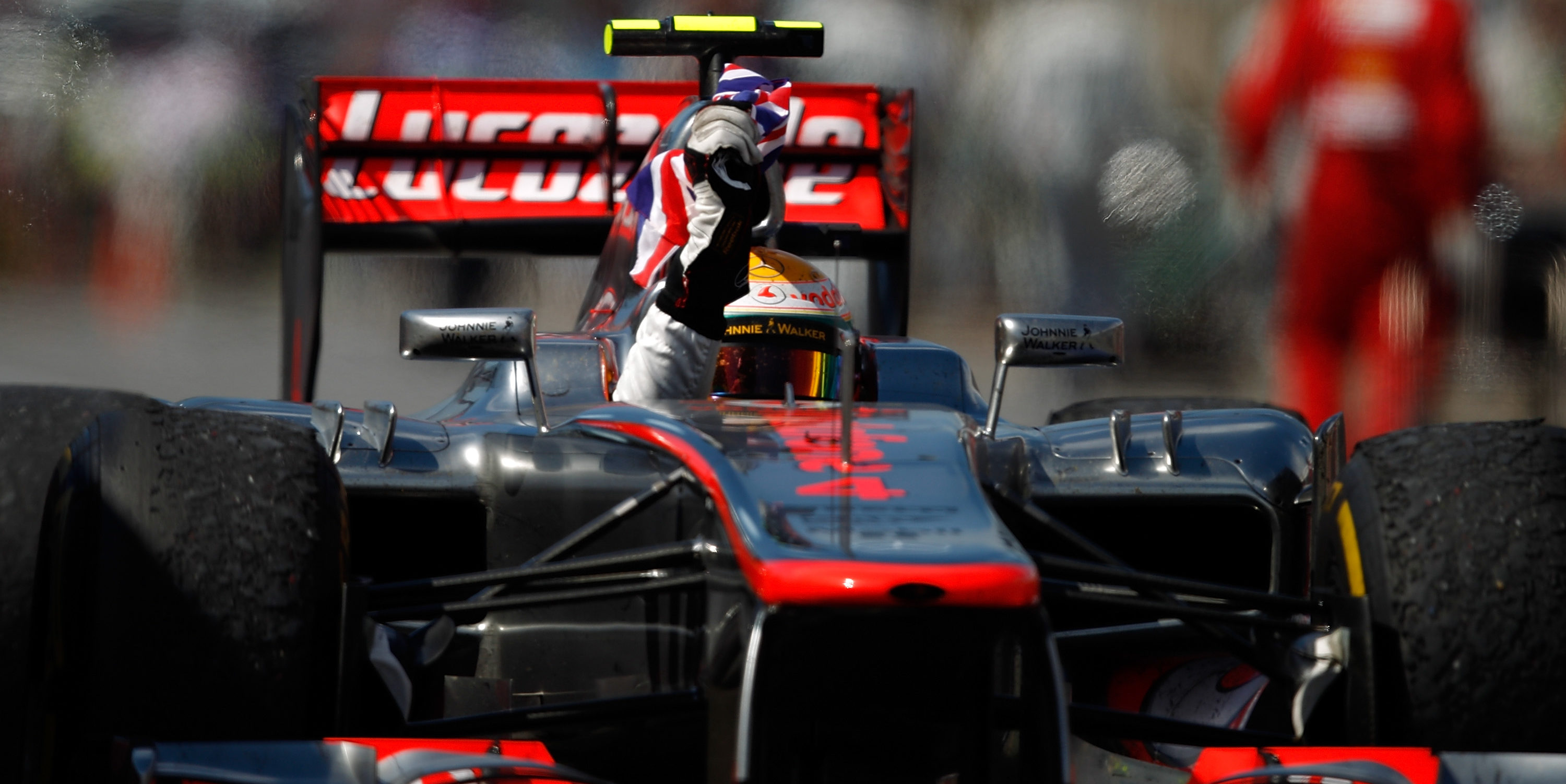

His 64th and most recent race victory at last month’s Spanish Grand Prix was a comfortable cruise – Lewis Hamilton’s 18th career win at the 2012 Canadian Grand Prix was anything but.
In my view, that race was a modern classic. A strategic battle between multiple drivers from multiple teams and with all three podium spots hotly contested across a dramatic conclusion.
It was defined by a power struggle between the one and the two stop. The one stop was believed to be the fastest option ahead of the race. However, Pirelli had shaken up expectations in what was the manufacturer’s first season in F1, with tyres notoriously difficult to understand.
This had led to six different winners in the first six races, with the Canadian GP about to add another new name to that list.
Hamilton had managed to seize the initiative after the first pitstop, jumping prior race leader and polesitter Sebastian Vettel.
Fernando Alonso had jumped both of them by stopping later and performing the overcut. However, Hamilton managed to pass Alonso on track and take the lead.
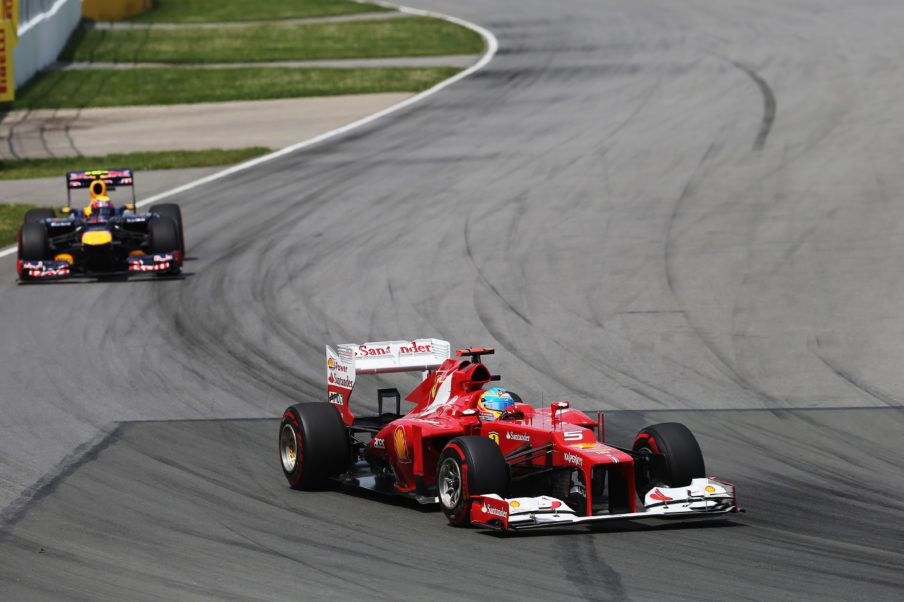
The three of them were then faced with a quandary – remain on the one-stop strategy and hope that the tyres make it to the end in reasonable condition, or complete an extra pitstop and attempt to recover the time on fresh rubber.
Despite leading the race, McLaren pulled the trigger and brought Hamilton in. With a fresh set of tyres, he emerged 13 seconds behind the new leader Alonso.
With Alonso and Vettel’s pace deteriorating rapidly, Hamilton reeled them both in within a handful of laps, passing them both within the space of three laps and regaining the lead with six laps remaining of the total 70.
Hamilton’s determined drive showcased how the strategy wasn’t black and white in 2012. Pirelli delivered a tyre that teams failed to truly understand until mid-season and even then, the competitive order was as close as it has ever been in the modern era.
The edge of my seat was worn out while watching Hamilton’s battling drive. Curiously, the race has somewhat been forgotten by most in comparison to other great F1 spectacles of the era.
For instance, it is not yet even available in full on Formula 1’s brand new online service ‘F1 TV.’ In 2015, the official F1 page did not include it in a poll to find the best Canadian GP.
That is a product of how eventful the race has been over the years. The high probability of safety cars, ease of overtaking and attrition rates – with the circuit being particularly demanding on brakes – rarely fails to deliver a spectacle.
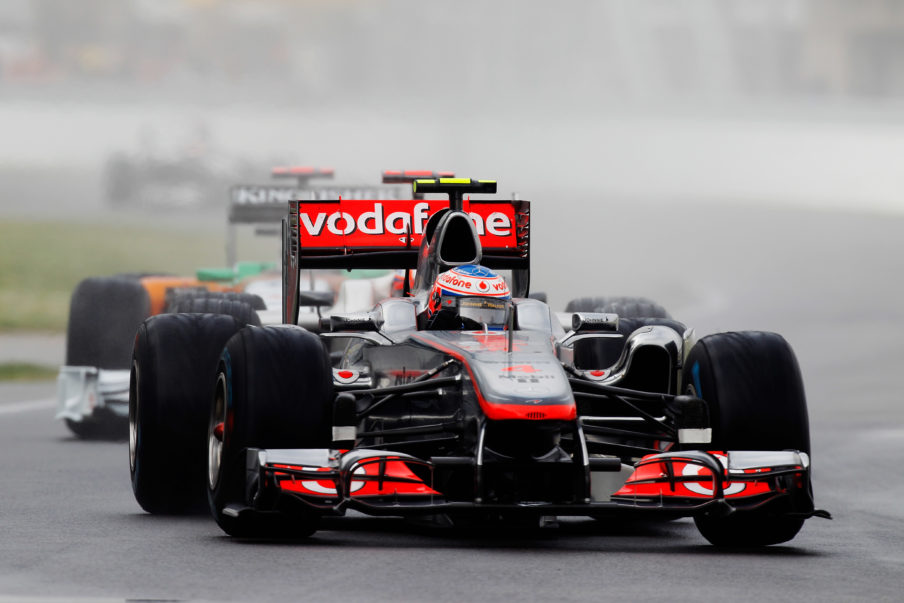
The 2011 Canadian Grand Prix is deemed by most fans to have been the greatest F1 race of all-time, with Jenson Button recovering from five trips through the pitlane to win on a day which featured a more than two-hour red flag delay after a persistent and heavy shower.
The 2010 race featured a titanic tussle between McLaren, Ferrari and Red Bull while Daniel Ricciardo’s first F1 victory in the 2014 race was snatched from Mercedes after both Hamilton and team-mate Nico Rosberg ran into reliability woes.
It goes back to the argument that too much of a good thing dilutes the product. The 2012 Canadian Grand Prix is less memorable because of how many other examples there are to detract attention.
The 2012 race was also one defined by tyre wear which has typically been a topic that fans are begrudged to talk about, which no doubt had a negative impact on the race’s ‘legacy.’
However, attitudes have changed and a similarly strategic race would be welcomed this season. While the hypersoft tyre in Monaco failed to shake up the strategy in the manner hoped for by fans – with all of the frontrunners sticking to a one-stop strategy – the same hypersofts could add huge intrigue in Canada.
Monaco is a unique track which failed to provide a fully accurate reflection of the true traits of the hypersoft compound.
“Monte Carlo is quite a difficult circuit,” Isola said in an interview with Autosport. “It’s not so wrong to make conclusions, but we need to collect more information.”
Canada will provide that information and on a rear-limited circuit, where traction is critical to overall lap time, the high value of fresh tyres in the race will likely encourage teams to take an aggressive approach to the strategy.
Not to mention the fact that the pitlane geography means that a driver cuts out the final chicane and the first corner by pitting, resulting in the lowest overall pitlane loss time of the season at around 17 seconds.
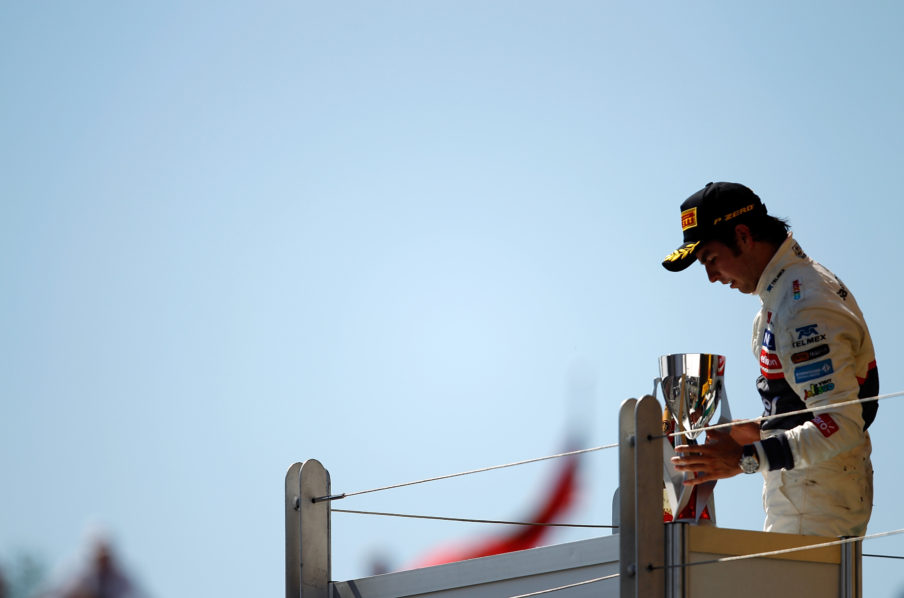
Track position is also less valuable in Canada than almost any other venue on the calendar. In 2012, Sergio Perez climbed from 15th on the grid to finish third using the same strategy as race winner Hamilton.
The 2018 Canadian Grand Prix could well draw comparisons to the forgotten classic of 2012. Strategies could well play out in a similar way and deliver a blockbuster climax to a race filled with wheel-to-wheel action – the type of thrills which fans were deprived of in Monaco.
An epic in 2018 drawing comparisons to a race from six years ago will no doubt serve as a reminder as to how entertaining Hamilton’s 18th career win really was.

Comments.
Loading comments…