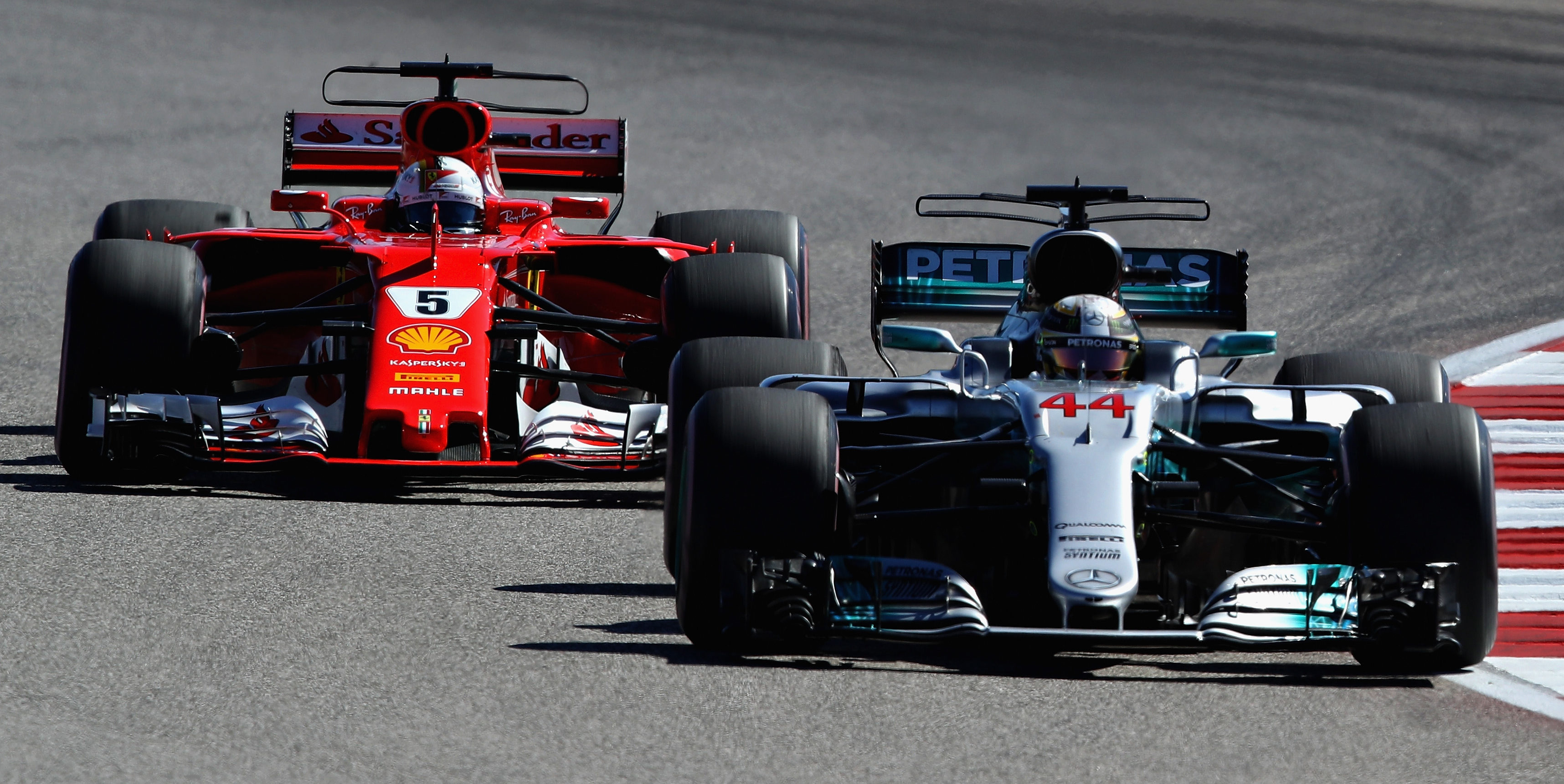

Sport doesn’t always provide the exact narrative craved by fans. A promising race can be anti-climatic and end without the showpiece battle for the lead that viewers crave.
Lewis Hamilton and Sebastian Vettel emerged early as 2017’s title contenders. Two drivers considered by many to be the greatest of their generation would finally deliver the duel that was formerly the work of fan fiction.
For two-thirds of the season, it seemed that the evenly matched scrap would lead to a captivating finale between the two protagonists to thrill fans in Abu Dhabi. However, Ferrari’s bubble burst in spectacular fashion just as Hamilton realised form befitting of a four-time world champion.
With Vettel vanquished, Hamilton claimed the title with two races to spare. In the eyes of a pessimist, the 2017 season could be viewed as a promising title fight that turned into a damp squib.
But 2017 was the year of the optimist.
F1 entered it’s first full season under new ownership – the Liberty Media triumvirate destined to give the category a renewed sparkle.
Their cause was no doubt aided by Ferrari’s resurgence. Domination is an impressive feat to witness but for the good of the category, Mercedes needed a strong adversary in 2017.
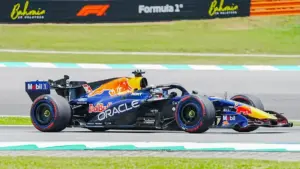
Red Bull was believed to be the chosen one to topple Mercedes from it’s lofty pedestal. New regulations which placed an emphasis on aerodynamic performance played to Red Bull’s strengths.
The opening day of pre-season testing, however, was a microcosm for Red Bull’s early season form. Daniel Ricciardo’s RB13 rolled out of the pitlane, only to return on the back of a flatbed truck not long after.
With Red Bull at least temporarily out of the equation and 1.5 seconds adrift of the pacesetters in Melbourne, it was up to Ferrari to mount an assault on the Mercedes juggernaut.
After a winless 2016, Vettel left Mercedes rattled by grabbing victory in Australia, the opening race of the season. Ferrari may have been beaten by Mercedes in qualifying but superior race pace forced Hamilton into a sub-optimal strategy that allowed Vettel to gain all important track position at the first and only pitstop.
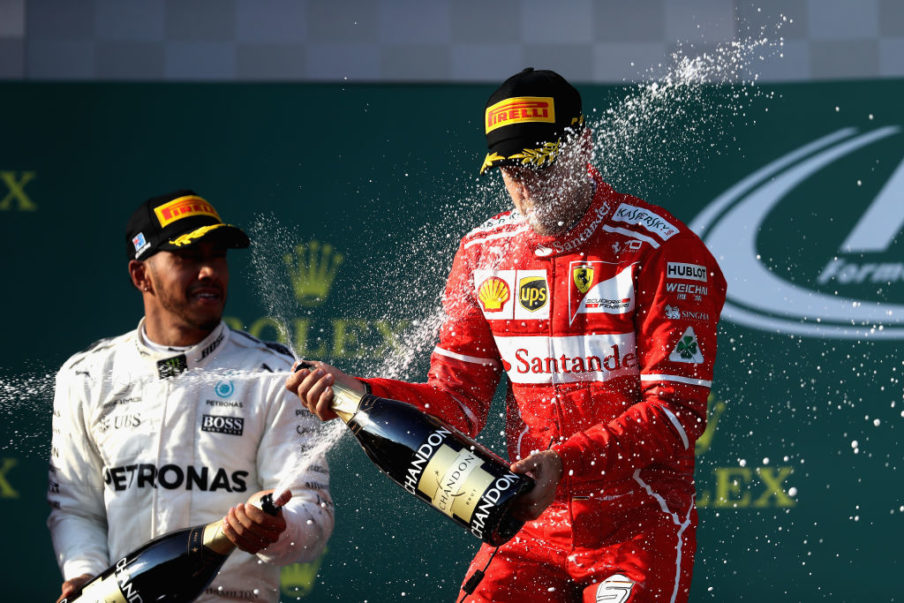
Mercedes team boss Toto Wolff was pragmatic in defeat. “When the days come where another team has done a better job, you need to accept that with humility and recognise their performance,” he said. “Today, Sebastian and Ferrari were well-deserved winners.”
The vanquished Hamilton added; “This shows we’ve got a real race on our hands this season and it’s a challenge we will relish.”
For the first time in five years, F1 fans were about to be treated to a championship battle featuring two teams and two drivers at the top of their game.
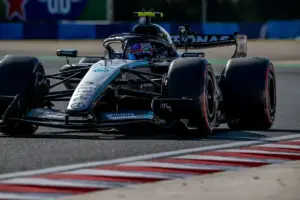
Mercedes was forced to demonstrate champion’s resolve in the early stages of the campaign, as they looked to overcome the challenges presented by the W08.
The car was devastatingly fast, but difficult to set-up. Meanwhile, Ferrari enjoyed consistency in this area. Hamilton noticeably struggled with his car in Russia. The package, however, was at its most capricious on the streets of Monaco.
Ferrari locked-out the front row of the grid, with Kimi Raikkonen claiming his first pole since the French Grand Prix in 2008. After languishing in the drop-out zone throughout Q2, Hamilton was robbed of a chance to improve his time when Stoffel Vandoorne slammed into the barriers at the exit of the swimming pool to trigger a late red flag.
Recovery drives at the Principality rarely reap big rewards and seventh place for Hamilton on a tortuous weekend was as high as he could hope to finish after Saturday’s woes.
Nonetheless, Ferrari won the Monaco Grand Prix for the first time since 2001 and race winner Vettel extended his championship lead to commanding 25 points.
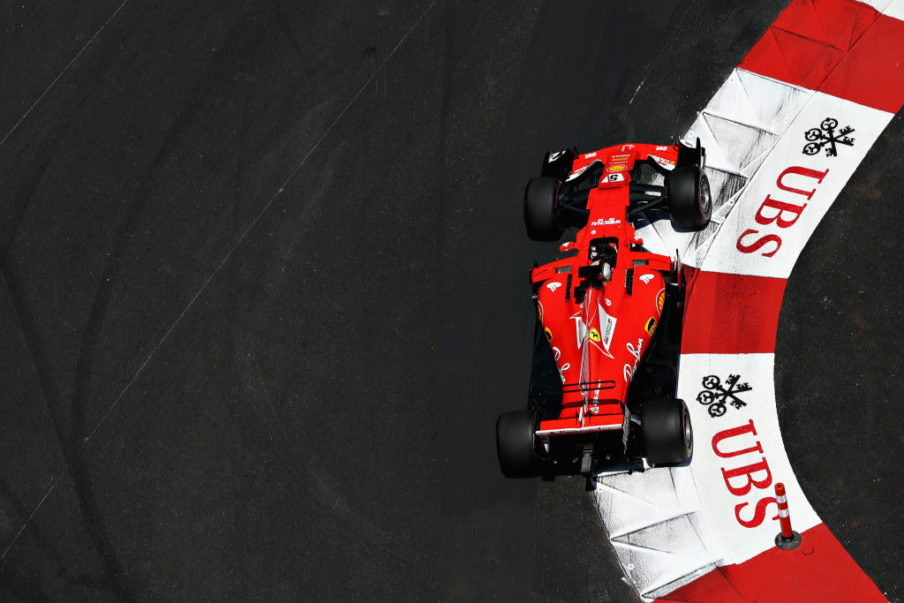
Mercedes believed that a breakthrough was made between Monaco and the next event in Canada, which served to tame ‘the Diva’ and make the machinery more predictable. A one-two led by Hamilton supported the notion.
Sure enough, Mercedes had mastered their flaws. Key victories came after the summer break in Belgium and Italy. Hamilton’s tally of victories reached six for the season and allowed him to seize the championship lead for the first time.
It’s difficult to knock champions down and even harder to keep them there. Mercedes rekindled form seemingly pushed Ferrari to breaking point in the subsequent key moments of the title battle.
Unreliability in qualifying was the catalyst of a painful fourth place finish for Vettel in Malaysia on a day in which he demonstrated race winning pace. The disappointment was followed by mechanical retirement in Japan.
Meanwhile, Vettel himself was also fallible for Ferrari’s capitulation. A brace of bizarre misjudgements produced two of 2017 most memorable and dramatic moments.
Victory in Azerbaijan was sacrificed in a moment of petulance. The Baku bust-up was an example of tensions boiling over as an enraged Vettel was unable to keep tabs on his emotions after suspecting foul play from Hamilton.
Nevertheless, deliberately driving into a rival is far from behaviour befitting of a world champion, even if you’re convinced that you were “brake-tested”. The subsequent stop-go penalty cost Vettel a certain victory following Hamilton’s headrest drama and as a result, the stewards had issued a suitably costly penalty.
As if the 13 sacrificed points in Azerbaijan were not painful enough, the 40 point ‘Singapore Swing’ cast the most damaging blow of all to Vettel’s title aspirations.
Following Hamilton’s back-to-back wins after the summer break, Vettel needed to take the bounce out of the Brit’s bungee with haste. Singapore presented the best opportunity, with the venue historically causing Mercedes headaches.
Friday and Saturday followed Singapore’s form guide. Mercedes languished and Hamilton was seemingly marooned in fifth after qualifying – easily beaten by Red Bull and Ferrari. He “needed a miracle” to win at Mercedes’ bogey track.
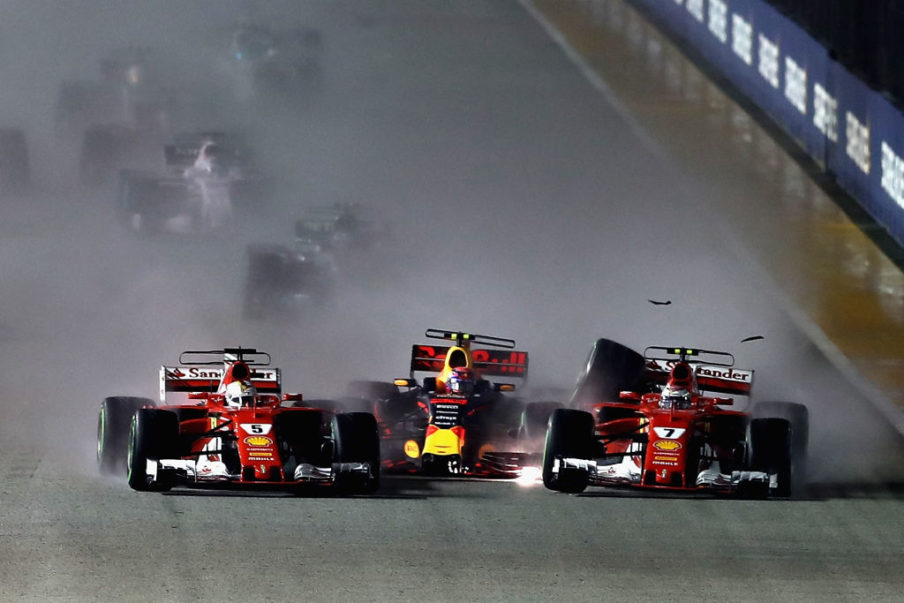
Vettel’s collision from pole with Max Verstappen and Raikkonen just meters into the race was just the plot twist that Hamilton needed. Vettel was overly aggressive and much like in Azerbaijan, lost sight of the bigger picture for a brief moment.
Hamilton stole victory in an event which was Ferrari’s ace card in the second half of the season. The 40 point swing was unrecoverable given Hamilton’s stunning form and the incident which took both Ferrari’s out of a grand prix on the opening lap for the first time in the team’s history, marked the beginning of the end for the title battle.
Hamilton ended the year with nine victories compared with Vettel’s five. His fourth championship crown to match Vettel’s tally was a fitting reward following one of his best campaigns to date.
A thrilling title decider under the Yas Marina flood lights would have been a spectacle, but it was not meant to be in 2017.
What we were served instead was a season-long struggle. While ‘plucky underdog’ would not usually be a term associated with the mighty Scuderia, Ferrari was the underdog in 2017’s battle. For the first time in the V6 hybrid era, Mercedes was on the ropes.
The team was forced to extract every ounce of performance from their package, with minor weaknesses being exaggerated due to the intensity of the fight. When they raised the game in Canada, Ferrari was forced to follow suit.
Eventually, the underdog ran out of steam. Mercedes dragged Ferrari to their breaking point and Hamilton’s relentless pursuit of a fourth title coaxed Vettel to his.
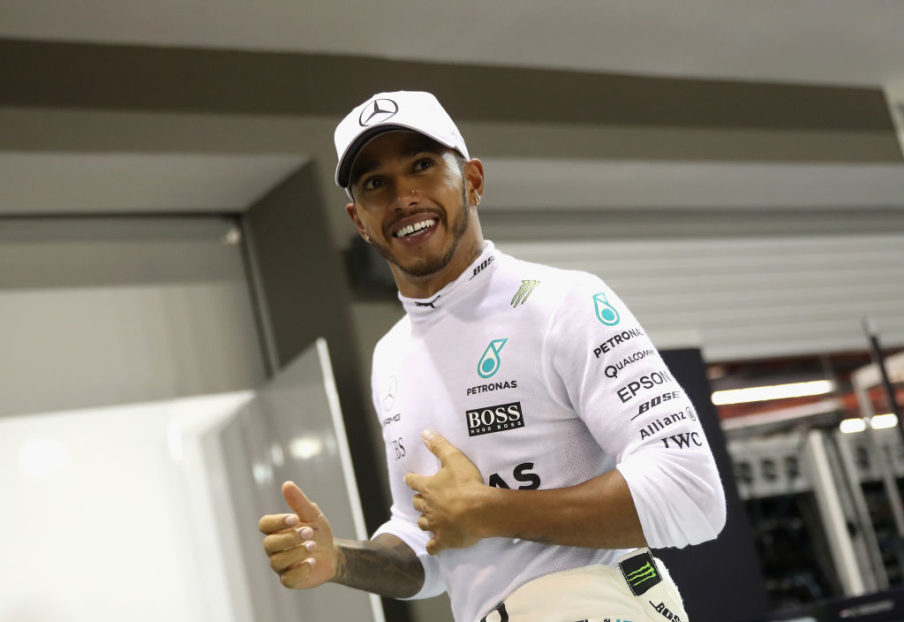
Combined with the intense development race, it was the human drama which made the 2017 title fight a battle to remember. From hugs in China to brutal finger-pointing by Baku, Hamilton and Vettel’s amicable relationship deteriorated in dramatic fashion to add zest to the Mercedes-Ferrari rivalry.
Two characters in total contrast off circuit, but so evenly matched on it, while they duelled to claim motorsport’s big prize.
A duel in the desert to decide the victor would have been a treat, but merely a cherry to go on top of an already impressive cake.

Comments.
Loading comments…