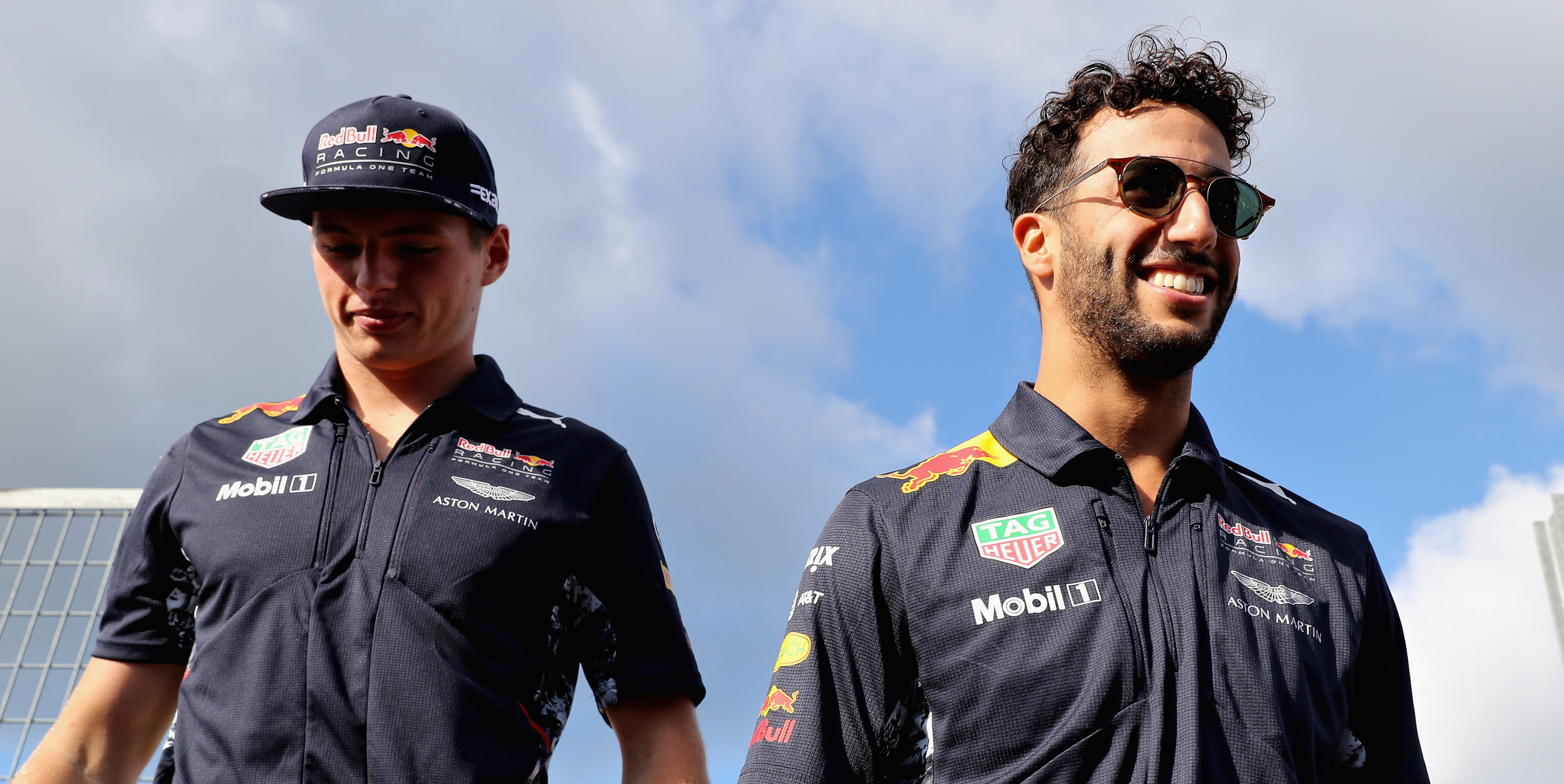

In sport, it is possible to be a victim of your own success. Following a remarkable run, in which they claimed four consecutive drivers’ and constructors’ titles between 2010 and ‘13, it could be argued that Red Bull is now forging some supporting evidence to back up this cliche.
A lot has changed, of course, since their glory days. Formula 1 has moved away from normally aspirated engines into a more road relevant hybrid era.
Renault started the 2014 campaign behind the development curve versus rival manufacturers Mercedes and Ferrari and while the gap has closed over time, the French manufacturer still face a performance deficit that is painfully felt by customers Red Bull.
Sebastian Vettel – the man who claimed the quartet of title honours and a record nine consecutive victories at the end of 2013 – left the team at the conclusion of the 2014 season. Similarly, Adrian Newey took a step back from F1 design duties to pursue other projects at the end of 2015.
This season was touted as a year in which F1 would be treated to a Red Bull resurgence. Aerodynamics would once again take precedence over engine performance in dictating the pecking order, and in Daniel Ricciardo and Max Verstappen, the team could claim to have the strongest driver pairing on the grid.
Once again, however, the perils of expectation have been realised.
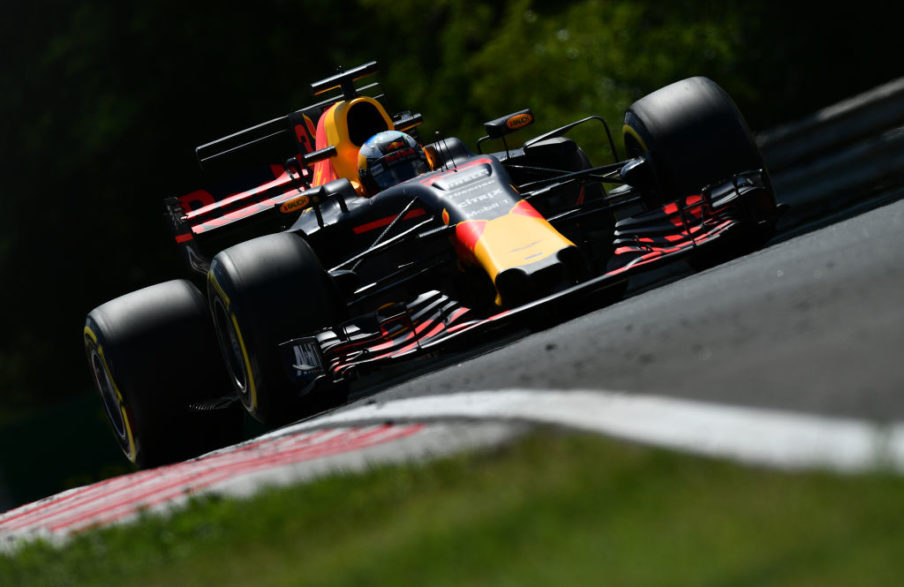
At the halfway mark of the season, Red Bull sit third in the constructors’ standings with 184 points. While they command a comfortable 83 point margin over fourth place Force India, the 134 point deficit to second place Ferrari is a dagger to the heart for Red Bull fans.
As early as pre-season testing, it was clear that the winter optimism regarding Red Bull’s chances may have been misplaced. When the RB13 ground to a halt in the hands of Daniel Ricciardo within moments of the green flag on the first morning in Barcelona, the tone was set. The team grappled with unreliability throughout testing and when the RB13 was circulating, the pace was unspectacular.
Curious was the fact that the car appeared to be less aerodynamically advanced than rivals’ machinery. Many anticipated that Red Bull would unveil their true package featuring some suitably ambitious technical devices at the first race in Melbourne, but as it turned out, there was no winter bluff.
Correlation issues were to blame for the team’s lackluster performance, as results generated in the wind tunnel did not match the findings gathered when the car hit the circuit.
What this translated to was Red Bull being the third fastest team – a distance clear of the fierce midfield battle, but a significant margin adrift of Mercedes and Ferrari.
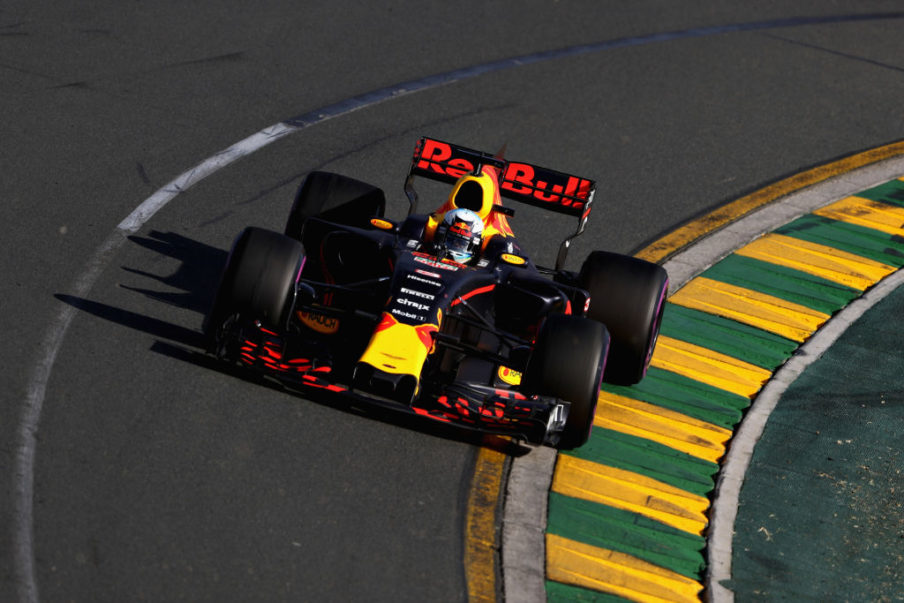
In Australia, Verstappen – the lead Red Bull on a day when Ricciardo broke down – finished nearly 30 seconds behind race winner Sebastian Vettel’s Ferrari. In China, the margin was 45 seconds to Mercedes’ Lewis Hamilton at the chequered flag. This was a trend that continued until a somewhat breakthrough weekend at Monaco, where Ricciardo could match the front-runners en route to third.
Red Bull’s upturn in fortunes could be attributed to a couple of factors. Firstly, Monaco is a circuit that historically favours Red Bull’s car characteristics and minimises the negative effect an underpowered Renault power unit has on overall lap time. Secondly, Adrian Newey had, at this point, been fully re-engaged in the team’s F1 conquest for three months.
Speaking at the time of the Monaco GP weekend, Newey stated; “I had stepped right back, but it became obvious that the car under a more delegated, or a committee way of operating, wasn’t performing.
“As a kind of a duty to the team, to try and bring things forward, I have been quite busy since the second test, getting back involved to see what I can do to help.
“It’s not what I want to be doing long term, but I’m happy to be doing it for a period of time.”
Ricciardo delivered five consecutive podiums between the Spanish and Austrian GP’s, including his fifth career victory in Azerbaijan, in which he took advantage of Hamilton’s headrest drama and Vettel’s moment of road rage which removed both title protagonists from the equation in Baku.
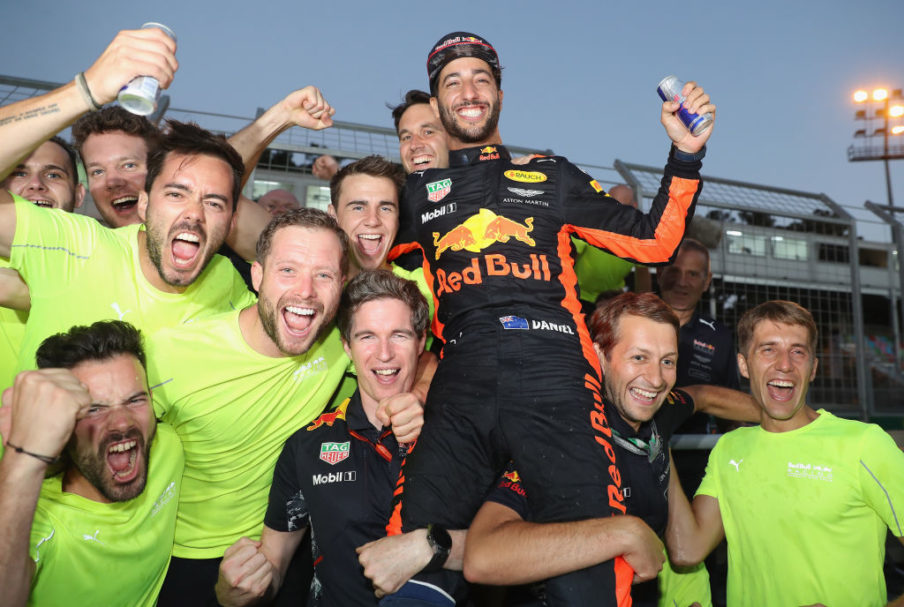
More significant was that at the Red Bull Ring Austria, a venue where power unit deficiencies can often be magnified, Ricciardo was competitive and finished the race just six seconds behind race winner Valtteri Bottas and even managed to repel a late assault for P3 from a fast-charging Hamilton.
However, Red Bull are not out of the woods yet. Reliability has seriously hampered their progress in 2017 and both Ricciardo and Verstappen will face the grim reality of grid penalties in the second half of the season.
Ricciardo has used his full allocation of internal combustion engines, turbo’s and MGU-H’s. Verstappen has also used his entire supply of MGU-H units, with nine races remaining. Red Bull are certainly not the only team facing penalties, but they are certainly compromised versus Ferrari and Mercedes.
Verstappen has been the man most negatively affected of the two drivers thus far, in relation to unreliability. Power unit issues curtailed promising races in Canada and Azerbaijan, which contributed to a dire spell of five retirements in seven consecutive races.
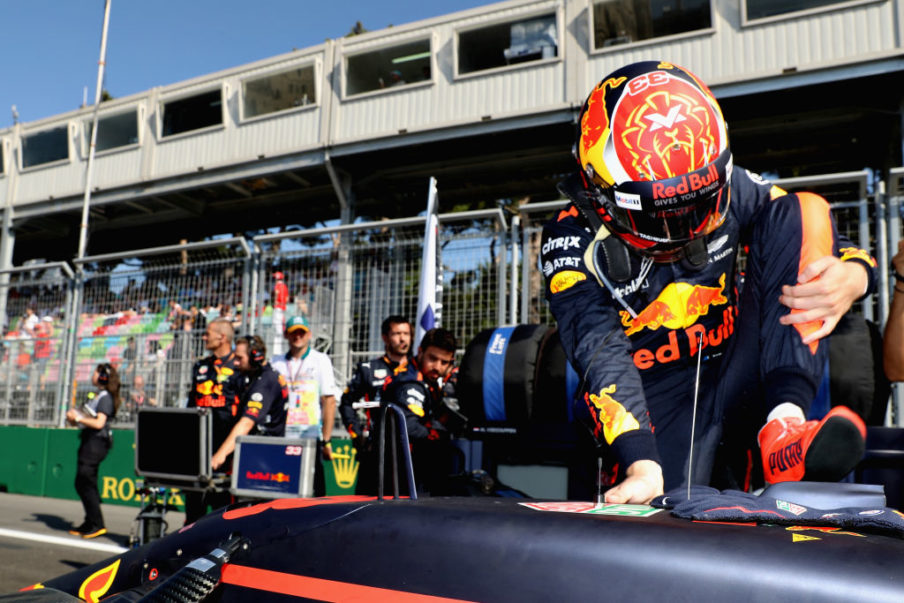
2017 is most certainly not a write off for Red Bull. Both Ricciardo and Verstappen are entitled to be disappointed, given that they were tipped by many to be title protagonists over the winter and have arguably been further from championship glory this season than last.
Red Bull’s correlation issues were no doubt exaggerated in stature by Ferrari’s incredible winter which served to propel them to pre-eminence and displace the Milton Keynes squad from their position as Mercedes’ closest threat.
Be it the power of Newey or merely coincidence, the past few months have been promising for Red Bull. Both Ricciardo and Verstappen have proved that the team has the required talent behind the wheel and both are beginning to find themselves piloting a car that is closer to what their skills warrant more often than not. That is, of course, assuming that unreliability does not intervene.
Championship glory will have to wait for another year. Red Bull will look to use the remainder of 2017 to build a better 2018. Though, they may be wise to downplay their chances this time around.
Comments.
Loading comments…