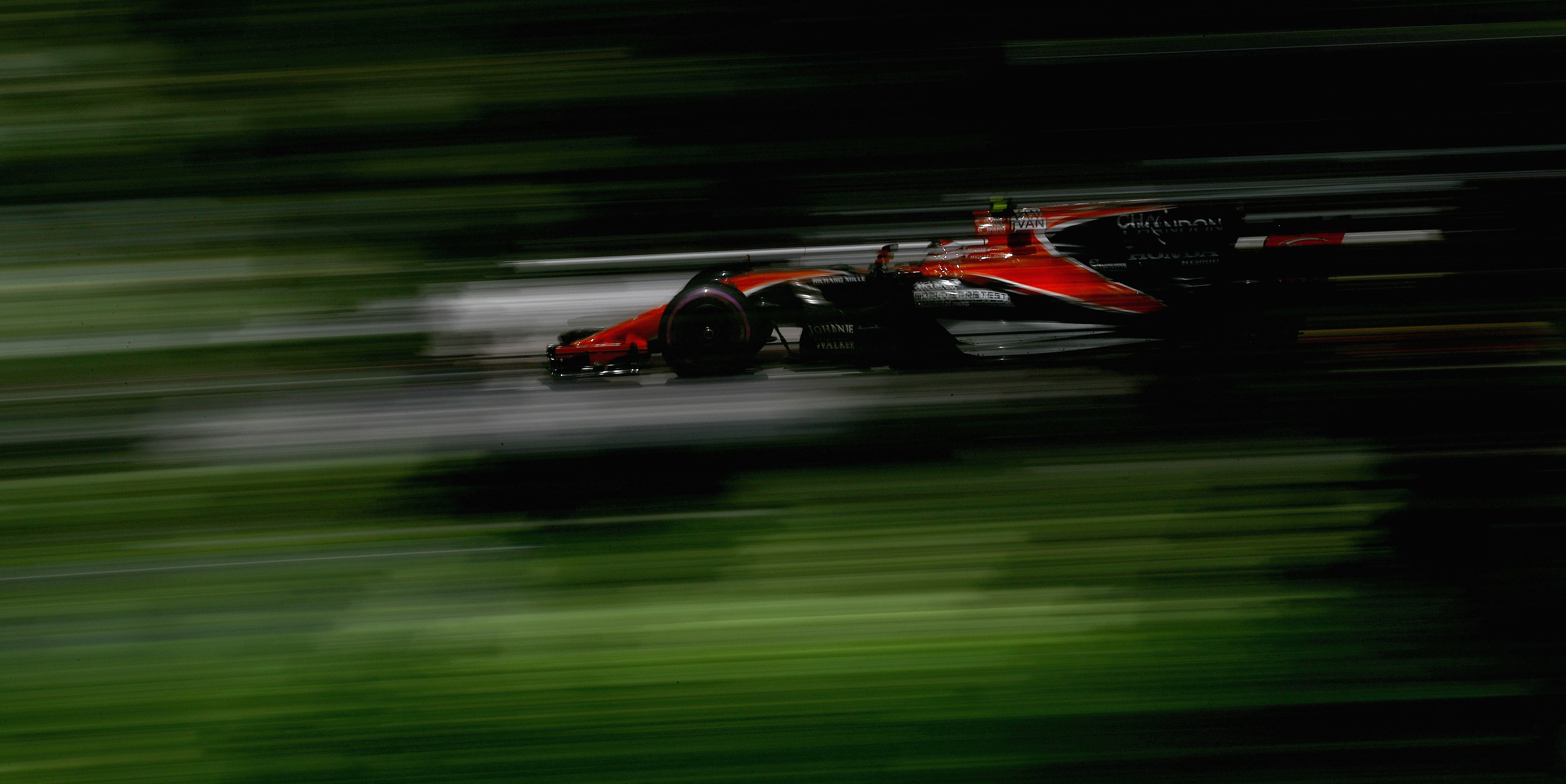

Honda boss Yusuke Hasegawa has admitted that the engine manufacturer currently faces correlation issues, as reliability improvements tested on the dyno are failing to translate to the track.
McLaren-Honda’s trials and tribulations continued in Canada with two power unit failures across the course of the weekend, with the latter costing the team its first point of the season.
These came during a weekend in which Honda had initially forecasted a power unit update to be delivered. This much-needed revision has been delayed and Hasegawa offered some clues as to the potential reasons why when speaking to Motorsport.com.
“We can’t create good conditions on the dyno,” he admitted. “We need to create the same conditions from the track on the dyno. The operational conditions are different so we need to understand why that makes a difference to the reliability.
“Last year, we could prove engine reliability on the dyno so we need to understand why now there is some difference from dyno to the circuit running – it’s not easy.
“We need to improve the accuracy.”
This assessment somewhat explains how Honda appear to have taken a step backwards in 2017.
Despite McLaren suggesting that this year’s chassis is both an improvement on its predecessor and comparable to Red Bull’s RB13 package, the Woking squad sit at the bottom of the constructors’ standings without a single point to date.
At this stage last season, with a supposedly inferior aerodynamic package, they sat seventh in the standings with 24 points.
While Honda’s correlation issues continue, McLaren are reported to be investigating alternative power unit options for 2018. With Mercedes having a spare supply after Manor’s demise, the divorce paperwork for the McLaren-Honda partnership could be imminently inked.


Comments.
Loading comments…