
As we near closer and closer to the start of another Formula One season, the debate on what rules and regulations the sport should implement or bring back rumble on year after year between fans. V10 engines, freedom of on-track battles, track limits, free-to-air coverage, the list is endless; but what about DRS?
Ahead of the 2011 season, the FIA announced the introduction of the so-called ‘drag reduction system’ to the regulations. The idea had been influenced from McLaren’s F-duct invention the year before. McLaren had cleverly found the system was a benefit for straight-line speed, the device was copied by the other teams, but due to the drivers being reliant on blocking a gap in the cockpit it was judged unsafe.
Although 2010 had witnessed a fascinating year – with four drivers going into the final of the season with a chance of winning the championship – the FIA decided they wanted to enthral the fans with an increase in overtaking. The DRS was an adjustable rear wing that could be operated by a simple push of a button by the drivers, giving them around 10-12 km/h more on the straights.
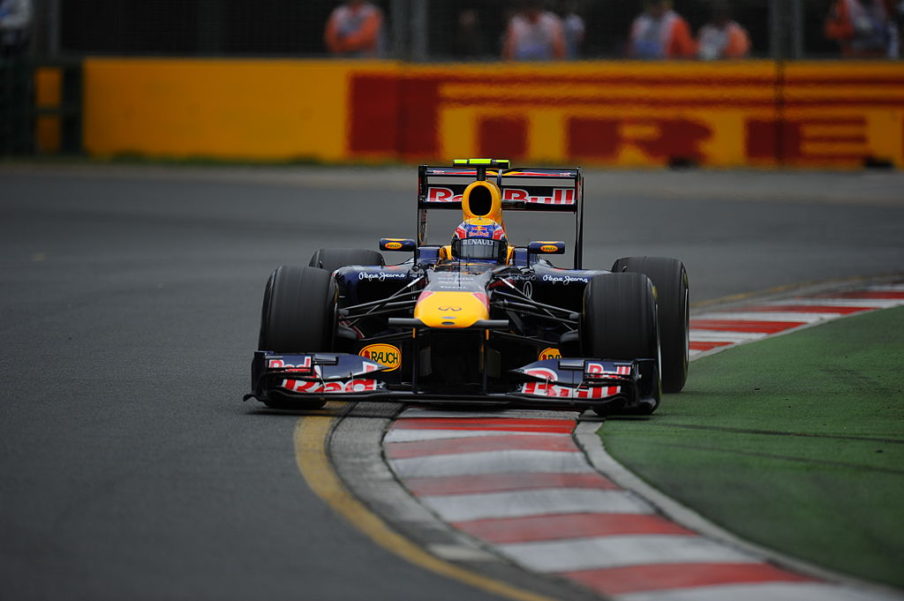
Indeed, since the introduction of DRS in 2011, overtaking figures considerably increased from 2010, going up from 452 to 821. That figure went up again the following year, 2012’s 870 recorded overtakes is still a record to this day, just four ahead of 2016. From these statistics, you may be forgiven that DRS has been a success and has solved F1’s overtaking problems.
No. Despite this, fans consider it a gimmick and feel it has further confused the viewers at home – it is hard to tell if an overtake was done through pure driver skill, through using the DRS, or the overtake button – a power boost which is used to overtake or defend on the long straights. This debate was brought up recently at the Autosport Show by 1997 world champion Jacques Villeneuve.
The Canadian highlighted one of F1’s issues as being that it began to listen to the fans. With DRS there are plenty of overtakes during a Grand Prix, but as he puts it, overtakes that we don’t remember and reminisce too well.
“Where F1 went wrong was, sadly, when it started listening to the fans, because the fans complained there was not enough overtaking,” he went on to say.
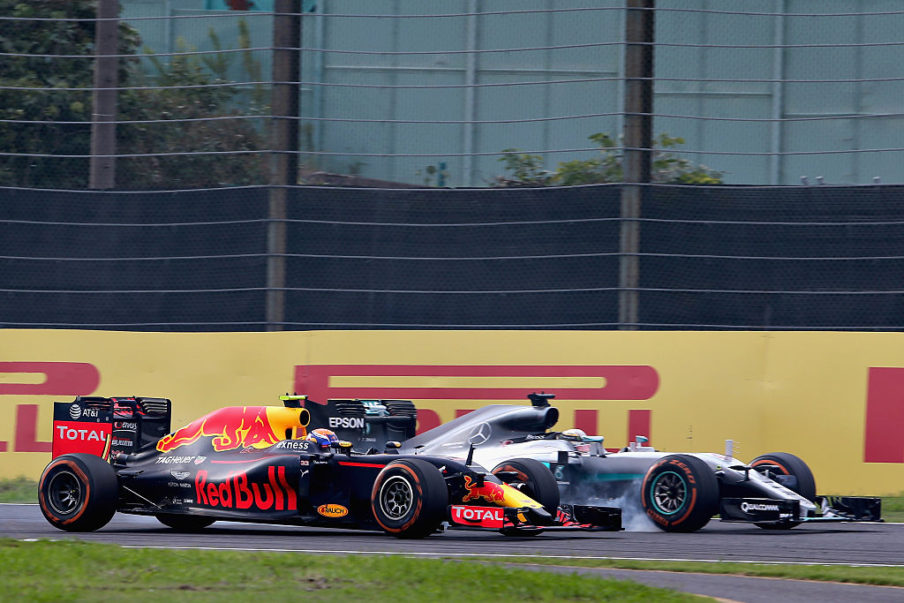
“By listening to that, what did F1 do? Put in DRS. Because that way we’ll have a hundred overtakes in a race. But name me one overtake you remember since DRS. You don’t, because you don’t see the driver work.
“In a motorbike race, sometimes it takes a rider 10 laps to overtake another rider. But in these 10 laps you see the work that goes with it. When the overtake happens, wow. All these 10 laps you’re on the edge of your seat. Now you aren’t; next straight line, press a button, overtake. That’s it.”
He continued: “You want to see a great competition. You want boxers to really hurt each other, and see who the strongest one is. You don’t want them to have big gloves so they don’t hurt themselves. That’s a bit what DRS is like – let’s not take a risk, let’s press a button. It’s like overtaking on a highway.
“You don’t actually see proper racing because of that. You get tons of overtaking, but it’s boring. So it defeats the purpose.”
The majority of the audience agreed with the one-time champions opinion, as do I. I have been watching F1 for 16 years and, although overtaking has improved, there are not as many overtakes as you’d think that you would remember since DRS’s inception in 2011 and that we’ll remember for a very long time like in the yesteryear.
Max Verstappen’s overtake around Blanchimont at Spa on Nasr, Webber on Alonso into Eau Rouge, Ricciardo on Vettel at Monza in 2014 and Hamilton effortlessly passing Alonso around the outside at the Nurburgring immediately spring to mind, but the pre-DRS overtakes/battles seem to be more memorable, as a whole, due to the fact they were harder to execute.
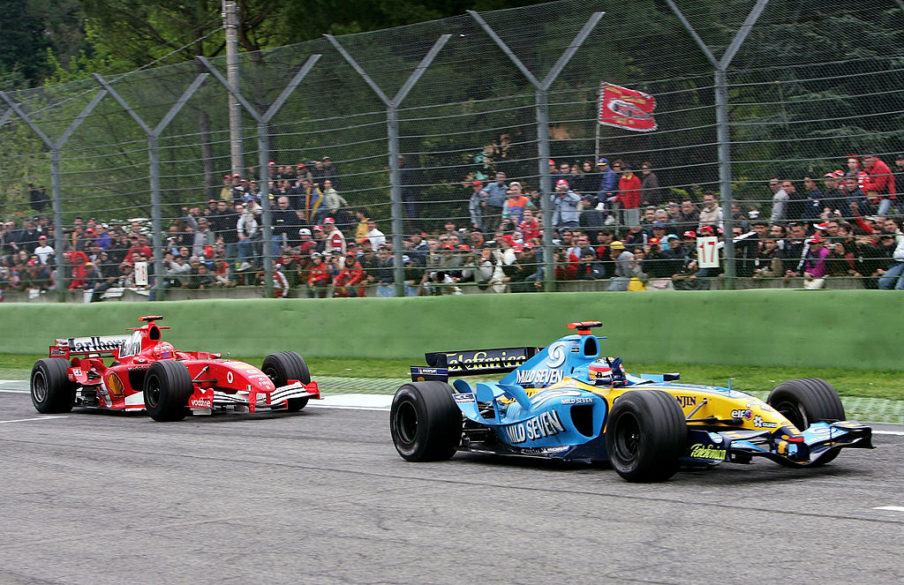
I was lucky enough to witness the V10 and V8 era, during that time we saw plenty of memorable overtaking manoeuvres and battles.
Take the image of Michael Schumacher and Fernando Alonso, fighting hard against one another at the 2005 San Marino Grand Prix. No DRS, no driver aids, all man, all machine, in perfect harmony. Yes, Michael never overtook Alonso, but does that matter? That fact he was right up the Spaniard’s gearbox, and you didn’t know what he was going to do next, made it exciting.
Gilles Villeneuve and Rene Arnoux banging wheels at Dijon in 1979 is arguably the greatest example? The pair fought hard, maybe too hard, during frantic final few laps that saw both run each other off the track several times. Even Ayrton Senna chasing Alain Prost for 40 odd laps at Suzuka in 1989 – before there famous coming together – was considered exciting because, as with Schumacher vs Alonso, you had no idea what would happen as you sat glued to your TV screen.
And how about Kimi Raikkonen and Lewis Hamilton furiously battling for the lead of the Belgian Grand Prix in 2008 during those bottom clenching final couple of laps in the tricky conditions? The fall in TV-figures says it all. It wasn’t the lack of overtaking that drove the fans away but because the drivers are so much more reliant on their cars and fans feel they don’t see a Lewis Hamilton or a Sebastian Vettel under intense physical and mental strain.
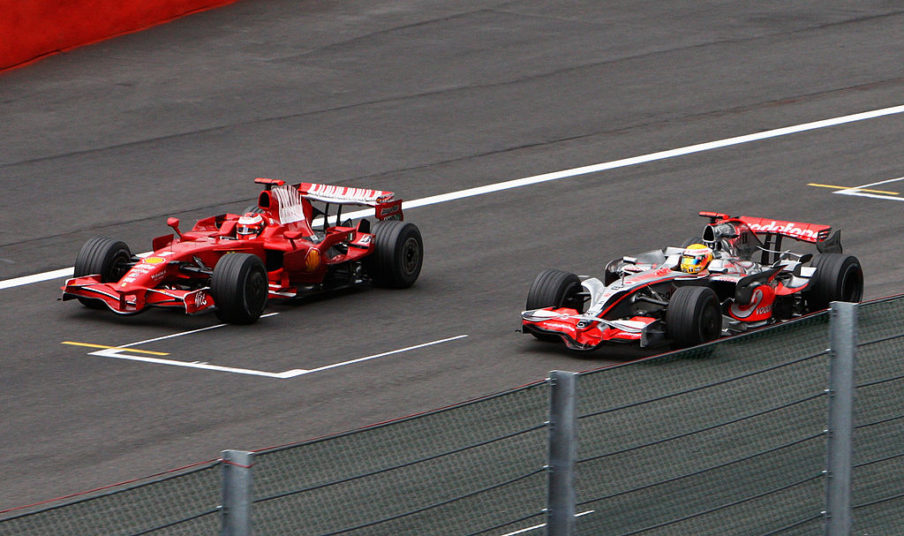
The sight of a driver exhausted or mentally drained after a race is actually a bigger factor than you might think, maybe the 2017 regs will solve this? It needs to in my view.
Potentially, we need the race stewards to back away from taking action when it comes to drivers pushing each other wide and blocking one another at the last moment? Let the drivers have freedom to race hard and entertain us, only intervene when someone clearly steps over the line. We’d love nothing more than watching a hungry, motivated, youngster like Max Verstappen, take on a fired up, elder statesman such as Fernando Alonso, the fans love racing.
F1 is ever changing, the quest for perfection is the race that never ends. The sport is my no means as perfect as it once was but with a bit of tinkering, we may get there sooner rather than later.
Comments.
Loading comments…