When the five lights go out on Sunday at the German Grand Prix, who exactly will the home crowd be cheering for?
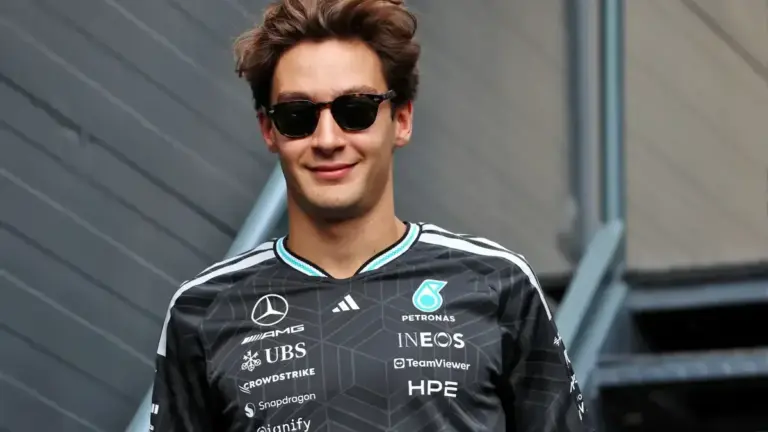
In a normal dry race, we suspect that no-one will be able to match the two Silver Arrows. This means the best chance for a German win lies once again with Nico Rosberg.
But while Nico has been the leading German on the grid for the past three seasons, that isn’t necessarily translating into a swathe of new fans.
It is the complete opposite of his teammate Lewis Hamilton who uses his celebrity status to open up Formula One to new audiences.
Some may not like the way he does it but when he’s chilling with Justin Beiber or at a fashion show somewhere he’s actually giving the sport some much-needed free exposure.
We also saw the connection he has with his fans as he crowd-surfed after taking victory at the British Grand Prix.
Germany has had a problem with fans switching off in droves since Michael Schumacher retired for the second time after 2012.
Both Hockenheim and Nurburgring have also struggled to sell out because of high ticket prices. It’s this that has created the high level of uncertainty over the future of the race.
Sebastian Vettel’s success did maintain a certain level of interest and he, along with teammate Kimi Raikkonen, are said to be the two most popular drivers among the German fanbase.

Vettel is also a much different character to Rosberg, often cracking jokes at the expense of the Mercedes pair while entirely focused towards racing.
That along with his success has earned him fans not just in Germany but around the world.
To get a better perspective as to why Rosberg wasn’t giving F1 a boost in his home country, I asked a fellow young motorsport writer from Germany, Tobias Bluhm.
“Nico is fairly ‘oozy’ if that makes sense. Still more popular than Lewis, though,” he said.
“Many think he’s quite arrogant, slimy because of his good car and so on and so forth. Plus he seems to be pretty fake when talking to the media – even more so to the German than he does the English press.”
One area of contention that was even brought up the last time F1 visited Germany back in 2014, is Rosberg’s fairly loose connection to the country.
While he was born there, he has lived nearly all his life in Monaco so some go as far as to say he isn’t really German.

Despite that, however, Bluhm says that isn’t a factor in his lack of connection.
“No, not all,” he said. “He’s 100% German to German fans.”
Even comparing Rosberg to his two countrymen further down the order he faces stiff competition.
Nico Hulkenberg may not have had the success in F1 that he is certainly capable of, but he has always had the respect of fans as being one of the most underrated drivers on the grid.
His victory with Porsche in the Le Mans 24 Hours last year only bolstered that perception even more.
And while Pascal Wehrlein may not have been well known coming into F1, German motorsport fans are well aware of the 21-year-old’s abilities after being crowned DTM champion last year.
This weekend at Hockenheim, the nearer of the two circuits to Vettel’s hometown of Heppenheim, we can expect a large amount of red to dominate grandstands in the Stadium section.
Mercedes will, of course, have their fans, including their own grandstand on the outside of Turn 8.
But as Rosberg and Germany’s most famous carmaker enjoy a first home race in two years, it will be interesting to see just what impact their success, or perhaps lack of in the case of Nico, has had.