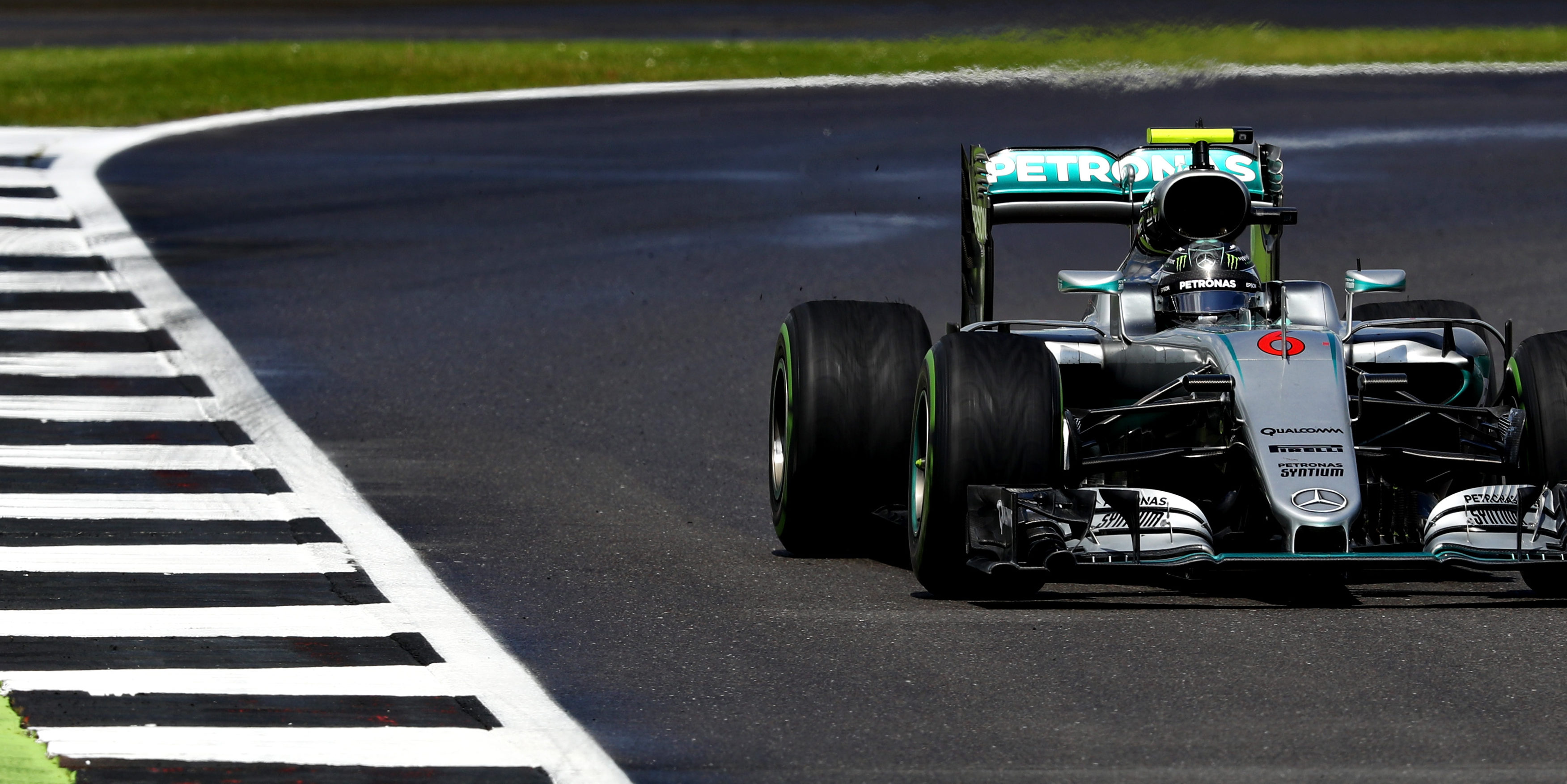

Having been told how to nurse his limping Mercedes to the chequered flag at the British Grand Prix, Nico Rosberg became the first driver to fall foul of F1’s newly established radio restrictions. The German ceded his second place finish to Max Verstappen, dropping to third following a ten second time penalty.
Opponents to what is a largely unpopular regulation have been given new ammunition in their fight against it, with the scale of Rosberg’s penalty making a mockery of the regulation itself.
It was five laps before the end of the race when the German’s W07 ran into difficulties. He briefly became stuck in seventh gear and faced an imminent and race ending gearbox failure. A panicked Tony Ross, (Rosberg’s race engineer,) swiftly took to the radio, identifying the change of setting required to help solve the issue.
Crucially, Rosberg looked to clarify what he, the driver, had to do in order to successfully complete the final laps. “You should shift through it [seventh gear],” was the advice provided and the information that ultimately cost Mercedes their one-two finish.
A 10-second penalty was deemed to be the appropriate sanction. Unsurprisingly, the events triggered yet more debate regarding whether it is right to penalise a team for intervening to get their car to the finish. Conversely, the penalty issued to Rosberg could be the beginning of the end for the rule itself.
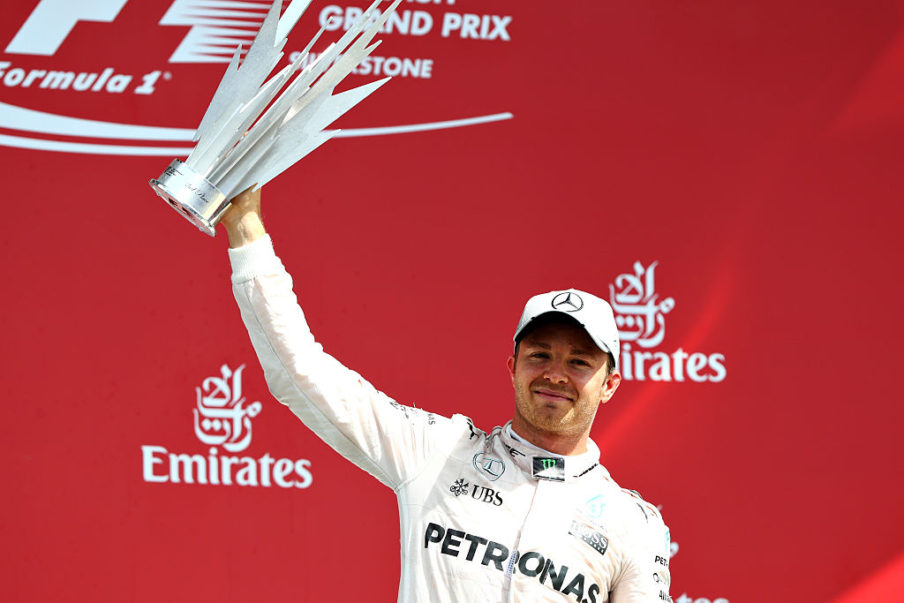
Being the first clear cut contravention of the rule, this was a litmus test for it, defining what the penalty for breaking it would be. Teams prior to this had no case study to refer to. As such, some anticipated that Rosberg would receive no penalty at all, while others predicted disqualification.
The latter is the penalty that would have fitted the crime. Being excluded from the result for a team helping a driver to the finish might seem exceedingly harsh, but in the final assessment, Rosberg would have retired had the regulation not been broken. He would have left Silverstone pointless.
Mercedes broke the rules as they are written and it essentially earned them 15 points.
As a result of this verdict, the rule is now fundamentally untenable. This stewards decision has set a precedent for teams, who now know that if a driver stands to lose more than ten seconds due to an issue, it is worth breaking the radio regulations to aid his progress, as the penalty received can be counter-balanced by improved performance on track.
With this knowledge, it would be intriguing to see how Mercedes will have dealt with Hamilton’s engine map issues during the European Grand Prix. Would Hamilton have received a response from his team, informing him of the correct setting, in the knowledge that he would eventually profit?
A rule that can be strategically broken for eventual gain is one destined to the scrap-heap. Those opponents to the radio restrictions should be rubbing their hands. It is ironic that the FIA, who have reportedly been in favour of further tightening the communications, have doomed the rule to the skip.

Comments.
Loading comments…