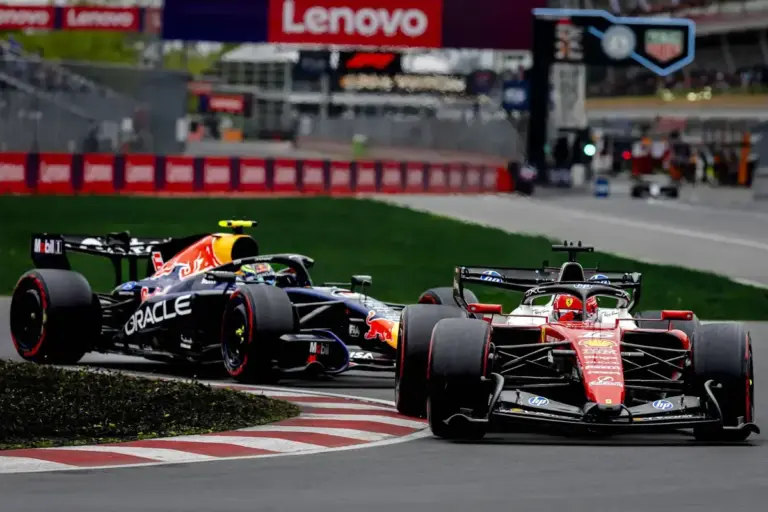
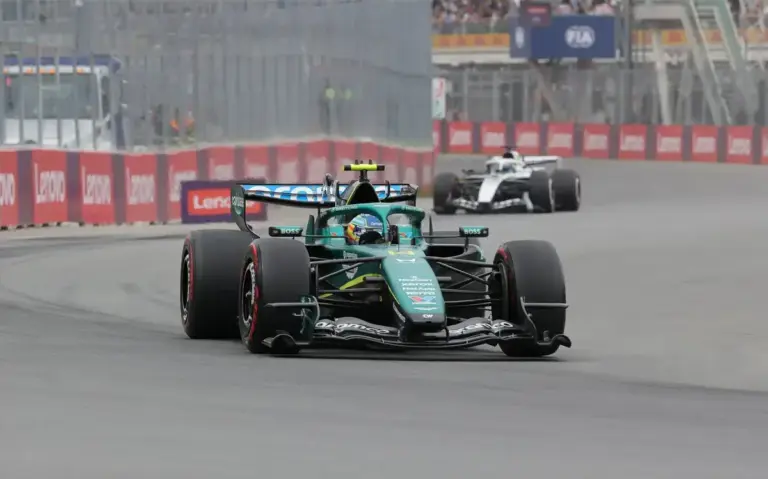
The Canadian Grand Prix is always spectacular, whether it’s in qualifying or the race. The nature of the track has two very long straights with a kink in them, with three chicanes over the circuit for added difficulty. Due to the long straights, team’s slim down the bodywork of the cars with lower wing angles too.
Here are the technical changes for this weekends Canadian Grand Prix.
Williams
 The British team brought a subtle change to the rear, which has a big effect. The Y100 winglet (Monkey Seat) was modified so it ran better with the rear wing lower mainplane. The new design was a very simple low-drag concept. Due to the straights you want to get your car to its highest top speed. Therefore slimmer rear bodywork goes a long way.
Toro Rosso
For less drag of the rear wing of the STR10, Toro Rosso had taken away 2 louvres of the endplate. Reason being is that they create a pressure different on the inner and outer section of the endplate. By this the car will have less downforce at the rear, so the car is able to go quicker in a straight line.
Red Bull
Meanwhile Red Bull slimmed their rear engine cover for better straight line speed. It’s now very tight to the rear exhaust pipe. This therefore means less surface area, so the car can go quicker.
Secondly on the RB11, was a new set of turning vanes under the chassis, above the T-tray. This is what collects the wake of the front wing. It was a much lower downforce design. It features and extra slit for air to pass through it, creating a vortex underneath the chassis. Which is then lost as high pressure flow under the car deteriorates it.
Lastly Red Bull won’t run its blow front axle this weekend. The concept works by having larger than normal brake ducts which pass air through the hub and out via the wheel nut. What this does is feed low pressure with high pressure that blow outwards thanks to the speed it exit’s the wheel nut. By doing this it creates a huge wake that stop’s the tyre wake from going over the back of the car. The tyre wake is very turbulent and will lose downforce at the back of the car, hence why they push it away. As you can see above is a very messy velocity stream lines coming of the wheel and the brake system.
Red Bull don’t need downforce but top-end speed, so don’t need the concept in action. The Renault power has been a real issue for them, so need the fastest car possible.
Lotus
 The Enstone basted team came with new front wing adjuster, of which have been re-designed for the Canadian Grand Prix. Although it’s not an aerodynamic gain, it would have been designed for better use from the pit lane mechanics.
Lotus also had a new rear wing in place. The lower section features more serrations than normal. The reason behind this is that it will pass the high pressure air flow away from the car, so less drag is what they will gain, so a higher top speed.
Pictures courtesy of Red Bull Racing, Williams Martini Racing, Patrick Hanley CFD and Lotus F1 team.