
In what is an unusual and possibly unprecedented act, the Monaco Grand Prix will see F1 drivers survey the fans on what they feel is needed to spruce up the sport. The Grand Prix Drivers’ Association – chaired by former Williams driver Alexander Wurz – will run the global enquiry from 20th to 24th May – a week tomorrow when practice for the Monaco round of the season begins.
Top @GPDA_ action coming! We want to hear from you the fans, what u think about our sport! Global fan survey details next week #RacingUnited
— Daniel Ricciardo (@danielricciardo) May 13, 2015
Viewing figures in major countries around the world have begun to decline – most notably in Germany, despite the dominance of German manufacturer Mercedes. A decline in viewing figures could lead to a decline in TV money, and with most teams already struggling just to remain on the grid that is the last thing the sport needs.
The new V6 turbo hybrid engines introduced last season have been blamed by many – including Bernie Ecclestone – as the main reason. The cars a quieter and slower than previously, although they do have a higher top speed. Engine prices have also tripled due to the complexity of the power units.
Some issues, though, go further back than that. For years the work of art front wings have meant turbulent air prevents cars from following each other and lowers the ability for cars to pass each other. In 2011, DRS was introduced to counteract the problem – but many see this as artificial.
2014 appeared to bring an end to the issue. Although the nose cones looked awful, cars were able to follow each other easily. With the revised rules introduced this season, though, it appears the turbulent air problem is back.
It was noted during last year’s German Grand Prix that the stands at Hockenheim were almost empty. This leads us on to another problem with the sport – the ease of access for the fans. Ticket prices are too expensive, access to the drivers is nearly impossible and paddock access is only for team personnel and celebrities. In protest to the lack of paddock access, Ferrari boss Maurizio Arrivabene watched a day of testing from the stands at Catalunya during the pre season.
The fans are not the only ones disillusioned with the current era of cars. 13 time Grand Prix winner and BBC Sport pundit/commentator David Coulthard recently revealed that the drivers are not happy with the sport at the moment – jelly like tyres prevent drivers from running flat-out, whilst slower cars mean the cars are easier to drive.
So, here are my suggestions on how the sport could be improved:
Engines
Despite the criticisms, I am actually a fan of the new power units – I adore the technology involved in them. I do admit, though, we need more power. Currently the power units produce around 700-800 BHP. This needs to be increased to at least 1000. By 2017, engineers reckon development through the token system will see the figure around their naturally, but to assist this the fuel flow limit could be increased. More power makes the cars more difficult to drive.
Mercedes boss Toto Wolff warned that increasing the fuel flow limit would lead to increased prices, as parts would need to be redesigned to cope. This could be counteracted by introducing standardised parts. A standardised turbocharger and fuel rail would be a good place to start, but the more the better as it would lead to more equal engines. Mass production would also lower the prices. The FIA missed a trick here – this could (should?) have been done when the engines were introduced.
The British Touring Car Championship – ran by TOCA – allows teams to purchase a ready-made competitive engine for a set price. Surely FOM should be able to offer a similar system for some parts – allowing teams to choose whether to build their own or simply buy an off the shelf model.
I’d also increase the engine limit up to six of each part – encouraging teams to run what they have at full power more often.
Once the power issue is dealt with, we can turn to the noise problem.
Aerodynamics
The aero rules desperately need an overhaul. I’d recommend going back to 2004 style front wings – simpler. The less downforce produced by a front wing, the less turbulence effects it and the easier it is for cars to follow each other. To counteract the loss of surface downforce, teams should be encouraged to use ground effect – utilising the flow of air underneath the car to drag the car to the floor.
This could be used to kill several birds with one stone. Cars that can follow close can pass each other, providing great racing and meaning DRS can be abolished. Cars that have more ground effect produce more downforce, and that allows for higher cornering speeds.

The aesthetics of the cars also come under this category. The teams and FIA are in discussions to go back to a maximum 2 metre width from 2017 – last used in 1997. This would allow for teams to fit lower but wider rear wings – which I personally think look fantastic.
My priority, though, would still be on helping cars to follow each other. Close racing allows for great action – pardon me for once again mentioning the BTCC, but it proves my point entirely.
Tyres
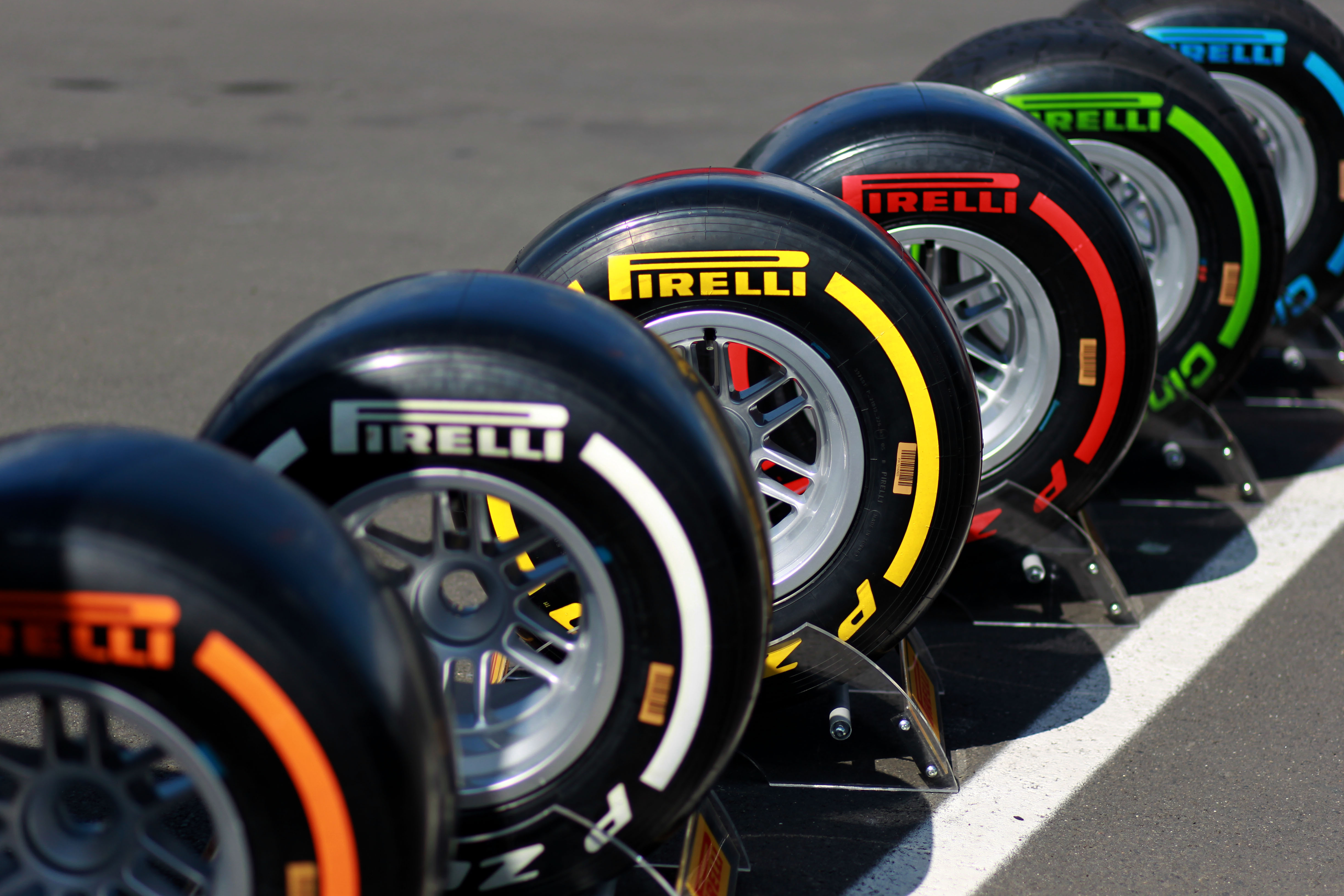
I’m tired of the tyre talk. Pirelli came into the sport in 2011 tasked with making the sport more exciting. For 2011 and 2012, they were by and large successful. 7 different winners in the first 7 races of 2012 set a new record, and it was partly down to the lack of understanding of the Pirelli tyres that led to the feat.
2013, however, was not so successful. “Pijelly” tyres, as they were nicknamed, led to drivers not running in the final part of qualifying to save rubber – as they wore out so quickly in races. Monaco 2013 springs immediately to mind, with Nico Rosberg being told to race to a certain lap time in order to make the stint last.
Pirelli’s contract is up at the end of next season, and it is believed the FIA want to begin a whole new bidding process rather than just renew the existing contract. Personally, I don’t care who provides the tyres. All I ask is that tyres are made to last.

Allowing the drivers to race flat-out from lights to flag is crucial for increasing the physical challenge, and it would also improve the appeal to the fans.
If I were given the choice, I’d mix the 1980s with 2005 rock hard tyres. Teams would be provided with two sets of soft qualifying tyres for each practice and qualifying session – similar to what we used to see in the 1980s. The tyre manufacturer would choose the compounds for each race, just as Pirelli do now.
For the race, all cars run the same compound of extremely hard tyres. Each set is capable of lasting a race distance, but to bring an end to tyre preservation I’d introduce a compulsory pit stop. Obviously, this wouldn’t apply for wet races.
Once again, there is an opportunity here for increasing the physical challenge of the cars. The construction of the tyres should be changed. I’d switch to at least 18 inch low profile tyres, whilst also increasing the width of the rear tyres to increase mechanical grip.
The Circuits
A fan complain bandwagon that I have jumped onboard is the criticising of the modern breed of F1 tracks. The FIA and Bernie Ecclestone have employed Hermann Tilke to design every new track for almost 2 decades, and it’s beginning to show.
Almost all the circuits look the same – a couple of long straights, a twiddly “Mickey Mouse” section and some swooping corners.
Malaysia, the USA and Russia have worked well – China and Bahrain also produce the odd entertaining race.
Hermann Tilke also oversaw the redesigns of the Red Bull Ring and Hockenheim – tracks that also have worked well. I do, though, prefer the old Hockenheim ring.
Other works of Tilke include the Bus Stop chicane at Spa – not one of his finest moments – and the Autodromo Hermanos Rodriguez rebuild, which we shall be able to judge later this season.
In general, though, the “Tilkedromes” have not produced the thrillers we want – unlike the classic European races that we have lost in their place. As more and more Arab countries use their oil money to buy a slot on the calendar, we lose the likes of San Marino and Magny Cours.
Even the legendary Italian Grand Prix at Monza and Belgian Grand Prix at Spa are under threat, races that it would be a tragedy to lose.
I would go back to the legendary circuits in place of the Tilkedromes. Great racing should always take priority over money.
The Access
Fan access has been a problem for years. Ticket prices are extortionate just to sit in a grandstand, let alone access the paddock or pit lane. If Bernie insists on such high ticket prices, teams need to do more to give fans access to Formula One.
Meet the team days at racetracks around the world would be one suggestion, but more simple access like question and answer sessions over social media would be a more than satisfactory start (although most teams have begun to do this).

Access to the drivers is hard to come by for most fans
Access to archive footage would be welcome too. Although there is a wide selection of classic highlights available through a well-known F1 broadcaster’s website, very little archive footage is legally out there (although I have viewed a lot of classic races on video sites).
A small fee per session or race weekend would be welcome amongst many F1 fans, including me, and the odd bit of rare footage being released would cause a lot of excitement amongst the die-hard F1 community.
Of course, these are all just my opinions and few will get implemented. Do you agree? Do you disagree? Voice your opinions and tell us your ideas in the comment box below or via social media, we’d love to here from you!
Images courtesy of Sauber F1 Team and Pirelli Media




Comments.
Loading comments…