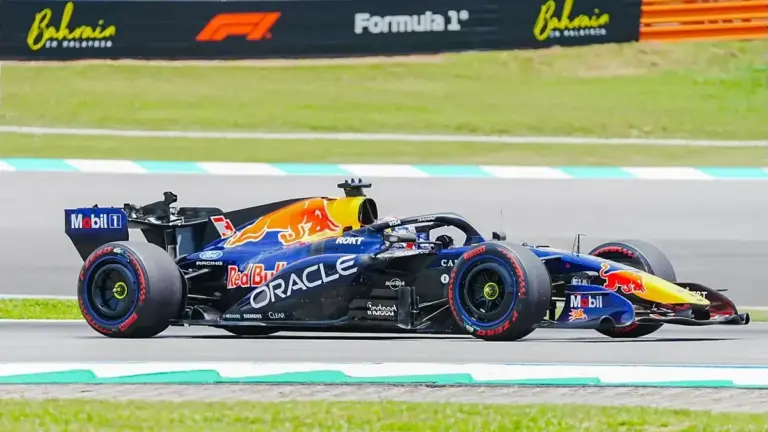
Energy Recovery Systems are not new to Formula One. But this feature has now been heavily relied on this year more than ever. We have several types of ERS which have been used this year in ways the cars are moving can create power to use on the lap constantly.
ERS has two energy recovery systems (Motor Generator Unit – Kinetic or MGU-K and Motor Generator Unit – Heat or MGU-H, plus Energy Store (ES) and control electronics all in rear and sidepod area of the cars. They are mainly small cylinder like and are mounted under the radiators on either side of the car depending on the Power Units (PU) instillation. The motor-generator units convert mechanical and heat energy to electrical energy
MGU-H is an energy recovery system connected to the turbocharger of the engine and converts heat energy from exhaust gases into electrical energy. It is a small fan which lies in the tail pipe of the car. As hot gases flush towards it will therefore spin creating energy which is then harvest, much like a huge wind turbine but allot smaller. On the development side of things, we have not seen much – only exhaust wrapping so that less heat is lost and that more travels to the fan. It can also control the speed of the turbo, speeding it up to prevent turbo lag or slowing it down in time of a more traditional wastegate solution. This is unlimited at what it can do whereas MGU-K is caped of a 4MJ a lap.
A maximum of 4MJ per lap can be returned to the MGU-K and there to the drive train, that’s ten times more than with 2013’s KERS system we had. This also means drivers should have an additional 160bhp for 33 seconds per lap, whereas KERS lasted 7 seconds.
MGU-K converts kinetic energy generated under braking into electricity. Under acceleration 120kW of this electricity, which is stored in batteries in the Energy Store (ES)MGU-K which is connected to the crankshaft of the engine and in turn helps propels the car. They are mounted towards the front of the engine and almost right behind the driver. They weigh ten kilograms and sit almost under the manifold of the Power unit, only more snug and more mounted into the side walls of the engine.
ERS will continue to develop strongly not only the 2014 cars but 2015 also. We may see two individual systems working together in each sidepod of the car. We will know when the full 2015 regulations are released.